Feeding Her Future: A Mother’s Fight Against Malnutrition
"Look at my baby. Before she was sick, and now she is healthy. If you don’t bring your child, how will you know if they are okay", says Clemencia.

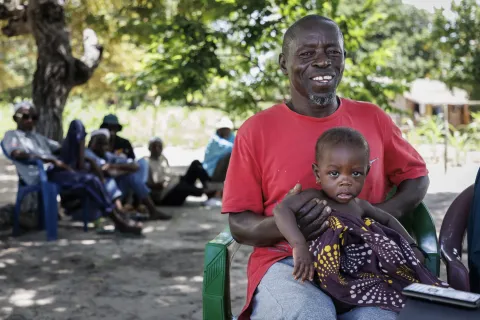
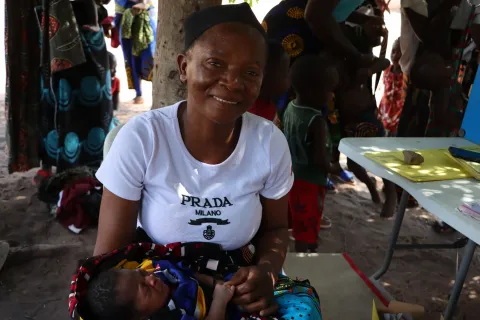
In the heart of Nivenevene, a remote village in Cabo Delgado, northern Mozambique, dozens of mothers cradle their babies under the shade of a thatched grass roof, waiting their turn to see the community health workers. Among them is Clemencia Arlindo, 25, gently clutching her 14-month-old daughter Admira.
“I didn’t know what was wrong before,” Clemencia says. “Admira was eating, but she was very skinny. I was worried about her.”
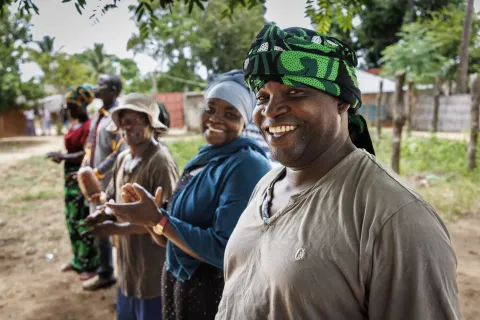
Each month, health workers visit Nivenevene as part of the Nutrition Interventions Package programme, known locally as PIN. The monthly sessions reach more than 50 children under the age of two with growth monitoring, micronutrient supplements, breastfeeding advice, and cooking demonstrations. For parents like Clemencia, it is often the only access to regular child health services.
“I heard about the programme from other mothers,” she says. “They told me it came once a month and that they help children like mine.”
At her first session, Admira was screened and diagnosed with malnutrition. She was enrolled in the treatment programme for acute malnutrition, which includes monthly follow-up visits from community health workers and the provision of ready-to-use therapeutic food (RUTF). Clemencia was given packets of the high-calorie peanut-based paste for Admira to eat at home.
“I gave the packets to her every day. Now I look at my child and I am not worried anymore. I am happy because I see the big change in her. She is fat and strong now!”
The monthly sessions also teach families how to make nutritious meals using local ingredients. Clemencia has since adapted her daughter’s diet. “I learned to make porridge with peanuts, moringa leaves, oil, and maize. It makes a difference.”
Mozambique has one of the highest rates of child malnutrition in southern Africa, with 15 per cent of children under five suffering from acute malnutrition. In Cabo Delgado, where many communities are hard to reach, early detection and treatment is critical.
For Clemencia, the most important part of the programme is trust. “I like the work they do here,” she says. “If my child has an illness, I trust that the health workers will help her get better.”
She now encourages her neighbours to come too. “Some mothers still don’t come. I tell them, ‘Look at my baby. Before she was sick, and now she is healthy. If you don’t bring your child, how will you know if they are okay?’”
In a place where health services are few and far between, Clemencia’s voice is part of a quiet ripple of change. A mother, empowered with knowledge and care, is helping her daughter grow strong and urging others to do the same.
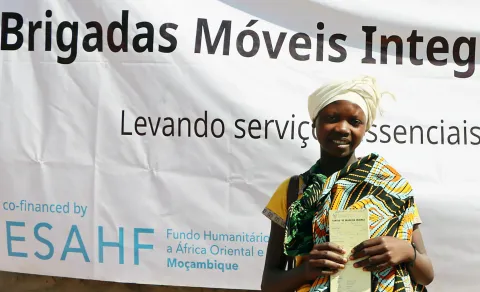
With the support of the European Civil Protection and Humanitarian Aid Operations (ECHO), UNICEF is delivering RUTF to communities across the province of Cabo Delgado. The PIN programme is implemented in partnership with the Mentor Initiative and local NGO APDS, with funding from the Government of Germany through the KfW Development Bank.