Bringing care closer to Ana and Juvêncio
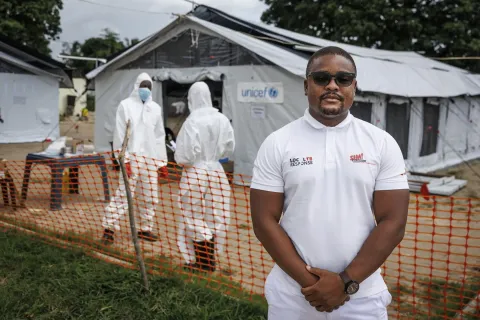
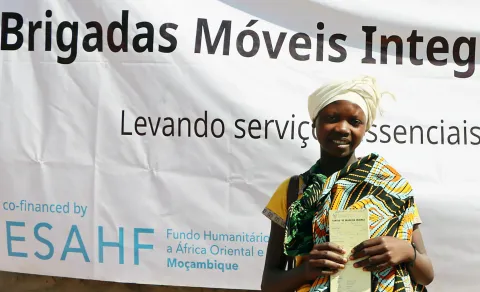
UNICEF, with financial support from the Eastern and Southern Africa Humanitarian Fund (ESA HF), is supporting the Mocímboa da Praia Health Sector to operate mobile brigades.

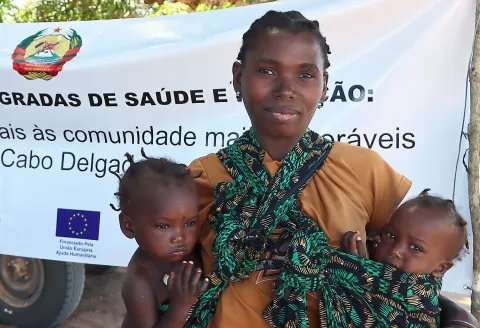
Mocímboa da Praia, Cabo Delgado - Seven days after giving birth at home, 39-year-old Ana Augusto Jamal was still waiting for a health worker to examine her newborn son, Juvêncio Raimundo.
Ana had wanted to reach the hospital, but it was too far from her community.
“I gave birth at home because the hospital is very far from our community,” she says. “There was no way for me to get there at that moment.”
For many women living in remote communities in Cabo Delgado, distance remains one of the biggest barriers to health care, especially during pregnancy, childbirth and the first days of a child’s life.
Pregnancy care closer to home
Although Ana could not reach the health facility easily, she did not go through her pregnancy alone. During the nine months, integrated mobile health and nutrition teams visited her community and provided regular antenatal care.
“All my antenatal check-ups were done here by the mobile team,” Ana says. “I received medicines, vitamins, and HIV and syphilis tests, which are part of the normal care for pregnant women. This helped me a lot because I could not afford to travel to the hospital every month, and it is very far away.”
The visits helped Ana feel more confident during her pregnancy.
“I felt relieved because I was receiving care without having to travel long distances,” she says. “Every month, the nurses checked me and confirmed that my pregnancy was going well.”
Juvêncio’s first health check
During his first week of life, Juvêncio had not yet received any vaccines or been examined by a health professional. Ana had also not received postnatal care.
That changed when the mobile team returned to Nanile community.
“When I heard that the mobile team was coming to our community today, I felt very relieved,” Ana says. “I could not get to the hospital, and finally my baby was able to receive his vaccines.”
That day, Juvêncio received his first vaccines and a growth assessment. Ana also received a postnatal check-up to support her recovery after giving birth.
Distance remains a challenge
For Ana and her family, the mobile team brought essential services closer. But some health needs still require follow-up at a health facility, and reaching the hospital remains difficult.
“The nurses advised me to go to the hospital,” Ana says. “Now I need to find money for transport because it is impossible to walk there.”
Her experience reflects the reality for many families in remote areas, where long distances and limited money for transport continue to make health care difficult to reach.
Bringing health services closer to families
In communities like Nanile, mobile brigades help bring essential services closer to families who live far from health facilities. By providing antenatal care, vaccination, nutrition screening and medicines directly in the community, they help mothers and children receive care at critical moments.
For Ana, the visits made a difference before and after Juvêncio’s birth. They helped her receive regular care during pregnancy, ensured her son received his first vaccines and growth assessment, and connected both mother and child with services that would otherwise have been difficult to access.
UNICEF, with financial support from the Eastern and Southern Africa Humanitarian Fund (ESA HF), is supporting the Mocímboa da Praia Health Sector to operate mobile brigades that bring essential health and nutrition services to remote communities in the district.
For Ana and Juvêncio, that support means care can come closer, even when the hospital remains far away.