Cultivating health and knowledge in Patone
The Nutritional Rehabilitation Programme, funded by the Japan Committee for UNICEF and FUJI TV is crucial in reducing severe acute malnutrition rates in children under 5.

- Português
- English
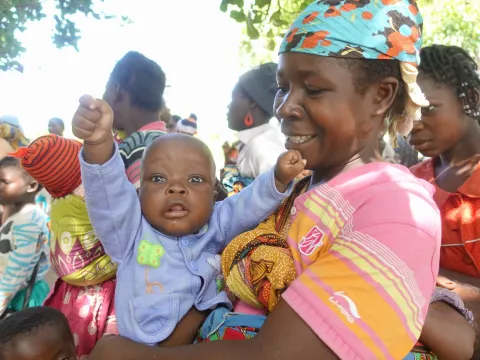
Nampula, Mozambique - "These community sessions help us a lot. We used to suffer a lot before. By coming to these sessions, I don’t need to travel to the health unit which is very far away. By coming here, I have more time to be with my children."
Lisma Sadique, a 39-year-old mother of six children, is an active participant in the Nutritional Rehabilitation Programme (PRN) sessions in the Patone community in Nampula province. Lisma finds the support and guidance in these essential sessions particularly useful for her delightful 6-month-old baby, Soninha Gabriel.
The PRN sessions provide Lisma with important information about child nutrition and health. They include careful weighing of little Soninha, nutritious cooking classes, as well as instructions on personal hygiene and childcare, providing simple practices to prevent diseases.
With three small farms, Lisma grows the necessary sustenance for her family, and sells the surplus. As a farmer, she recognizes the importance of keeping her family well-fed and healthy.
Lisma emphasizes the importance of vaccinations, ensuring that all her children are protected against diseases. This preventive practice is a key part of her commitment to her family’s health.
The Nutritional Rehabilitation Programme, funded by the Japan Committee for UNICEF and FUJI TV through UNICEF, in collaboration with the Provincial Health Directorate (DPS) in Nampula, is crucial in reducing severe acute malnutrition rates in children under 5. The focus on treatment, healthy eating, and education directly within communities like Lisma’s demonstrates a commitment to a robust and resilient childhood.