Clean water brings relief to families in Mihiriri
UNICEF supported the installation of the new water point and deep borehole in Mihiriri, helping Arinta, Nilza and approximately 1,600 people from Mihiriri and neighbouring communities access clean water closer to home.

Mihiriri, Nampula - For Arinta Acamos, 24, and her eight-month-old daughter, Nilza Salimo, drinking water no longer brings the fear of stomach pain.
“Before, we had pains in our stomachs from drinking the water from the traditional hole,” Arinta says. “Now we do not have those pains because the water is clean.”
Arinta lives in Mihiriri, an isolated coastal farming community in Memba, Nampula Province. The sea is visible from the community, and the beach lies a short walk beyond the traditional water hole. Large ships and smaller boats pass the headland offshore.
Until recently, families collected their water from a shallow hole dug into the ground. The water was brown, unclean and salty because of the community’s proximity to the sea.
For families with young children, the poor quality of the water was a serious concern. Fiquiri Omar, 28, President of the Mihiriri Water Committee, says stomach problems and diarrhoea were common among both children and adults.
“The water from the traditional hole was always brown,” he says. “It was also salty and bad for our health. Many children and adults in the community suffered from stomach problems or diarrhoea.”
Seeking medical care can be difficult for families in Mihiriri. During the rainy season, the roads become extremely difficult to pass. Fiquiri says people who need hospital care may have to travel a long distance by boat to the port of Nacala.
In September 2025, a new water point was installed in the community.
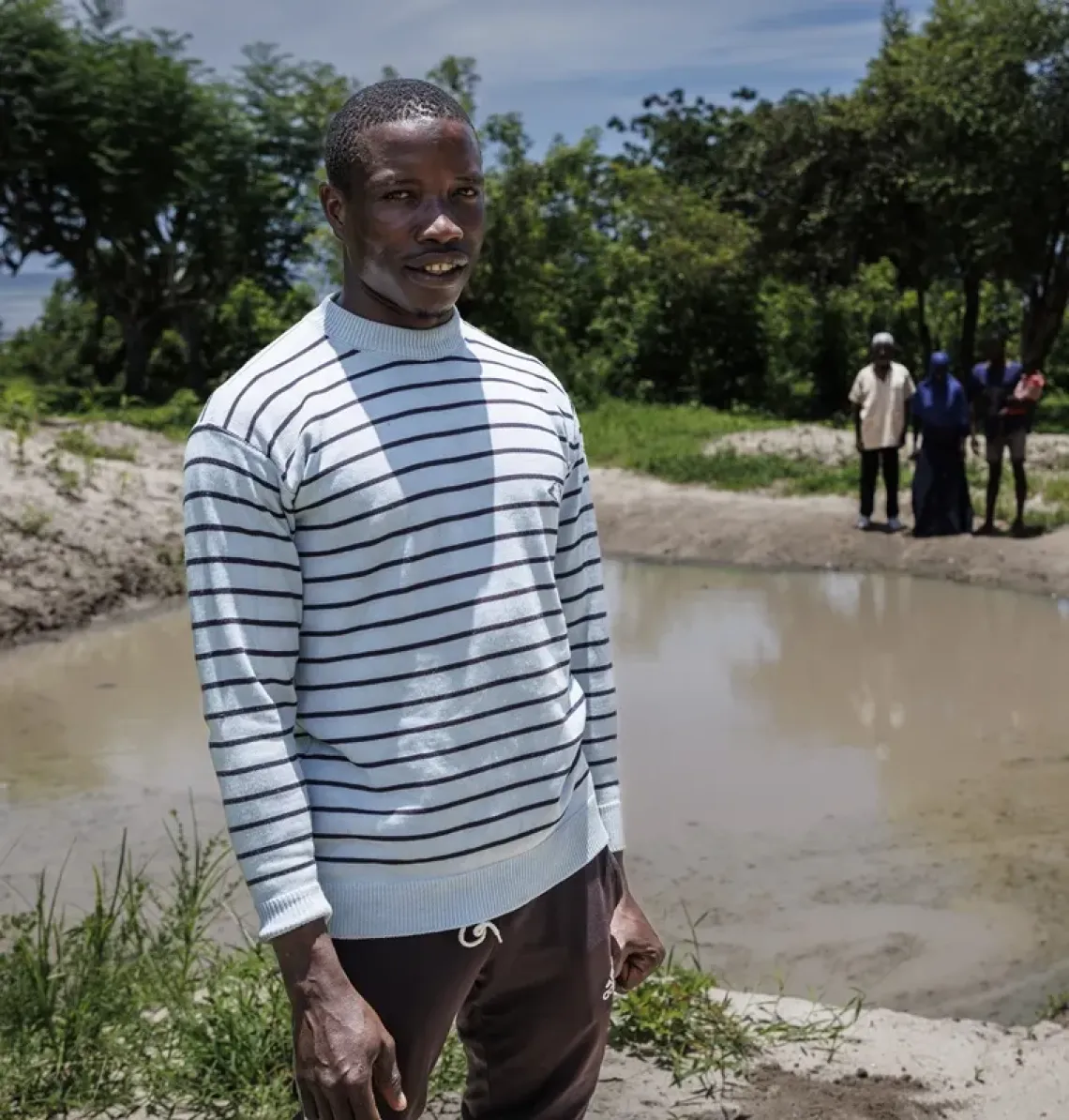
The situation is much better now. The water from the old hole was salty, but the water from the new water point is fresh and tastes good. People are no longer suffering from diarrhoea as they did before.
“The situation is much better now,” Fiquiri says. “The water from the old hole was salty, but the water from the new water point is fresh and tastes good. People are no longer suffering from diarrhoea as they did before.”
Around 1,600 people now use the water point, including residents of neighbouring communities who travel to Mihiriri to collect water.
The community established a water committee to manage and maintain the facility. Fiquiri believes the stronger structure will also help Mihiriri remain better prepared for future emergencies.
“A cyclone hit this community three years ago and destroyed most of our houses and crops,” he says. “The new water point is strong. We believe it will survive another cyclone, so we will still have clean water after a storm.”
For Arinta, the change is simple but significant. She can now collect water that her family can drink without boiling it and without worrying that it will cause pain.
“We are grateful to have this water point because we struggled for a long time to find good water in this community,” she says. “It has made a big difference, and we are very happy.”
UNICEF supported the installation of the new water point and deep borehole in Mihiriri, helping Arinta, Nilza and approximately 1,600 people from Mihiriri and neighbouring communities access clean water closer to home. The project was implemented with support from the Government of Germany through KfW Development Bank.