Equality, non-discrimination and inclusion in digital environments
Call for a holistic approach to children’s best interests
How do inequality, discrimination and social exclusion manifest in digital environments? And how can they be addressed so that children can enjoy their rights?
Children’s digital experiences are shaped by a multitude of factors such as the design of digital services (including considerations for disabilities and accessibility), children’s digital literacy and skills, parental support and supervision, socioeconomic circumstances and cultural norms. Children with disabilities are among those most at risk of being excluded online, while practices such as paid features in games can deepen socioeconomic disparities.
Digital environments can both help address or amplify inequalities and systemic patterns of discrimination that children face. The best interests of the child principle (Article 3) in the United Nations Convention on the Rights of the Child (UNCRC) is closely related to the right to non-discrimination (Article 2), which is not a passive obligation but requires appropriate protective measures to ensure equal opportunities for all children. This includes in digital environments.
One of the Sustainable Development Goals of the United Nations is to reduce inequalities, and UNICEF’s goal of “no child left behind” is a reflection of this commitment. Upholding children’s best interests and meeting these goals require attention both to digital environments and to wider circumstances of children’s lives.
As part of the Children's Best Interests in a Digital World project, UNICEF Innocenti consulted children aged 10 to 17 years about their best interests in relation to the digital environment in Brazil, India, Malaysia, Sierra Leone, Spain, Uganda and the United States of America. Inequalities, discrimination and social exclusion were among the topics children often raised. This article unpacks those perspectives and calls for a holistic approach to policymaking that would address these concerns raised by children.
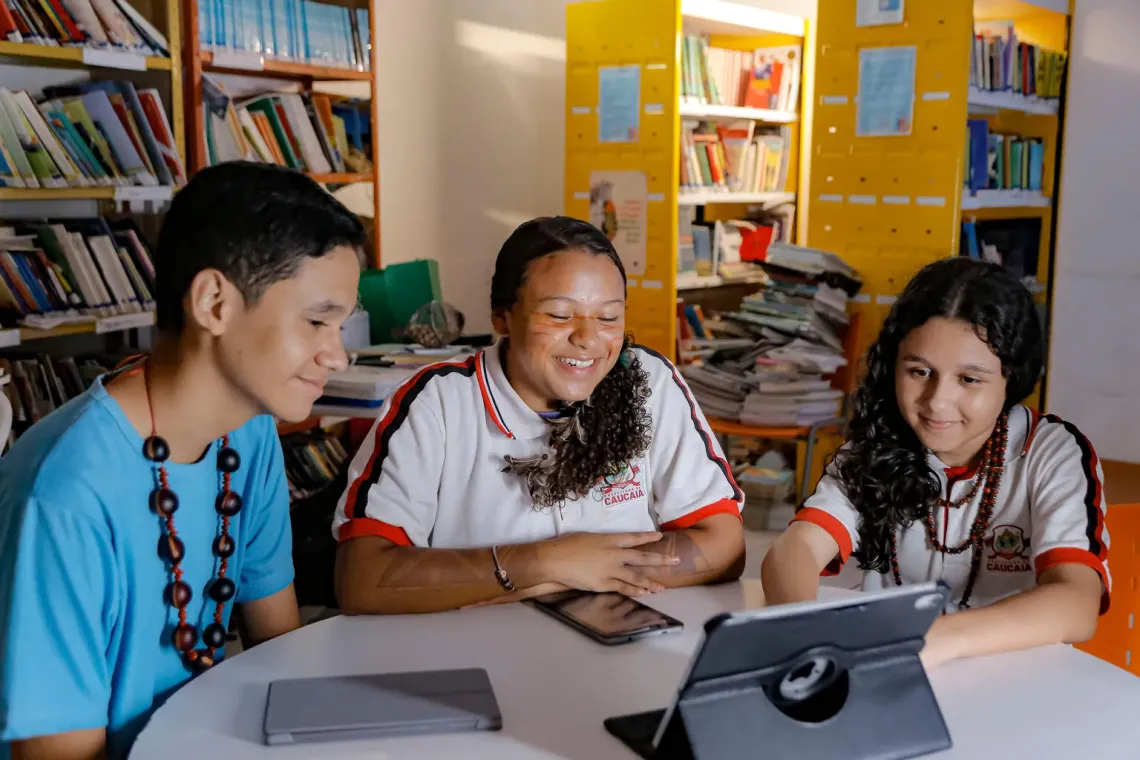
Digital environments can play a role in the realization of children’s rights through equality and participation
The Committee on the Rights of the Child (the Committee) recognizes the internet and social media as central to the realization of children’s right to rest, leisure, play, recreational activities, cultural life and the arts while acknowledging potential risks of digital environments. To realize the benefits, UNICEF recommends a shift from thinking just about access to digital equality – that includes access, skills and relevant content – to ensure positive developmental and well-being outcomes for every child. Many children still lack these conditions, leading to exclusion, inequalities, and higher exposure to risks online.
Children, who took part in the best interests consultations, acknowledged existing inequalities. They felt that digital environments should be designed in ways that benefit all children equally and shared a common concern about inequalities and their right to education.
The following quotes highlight the importance of access to digital technologies to support all children with learning:
“The Internet is good for us because whatever we don’t know, we can search it up on the internet,” said a child in Malaysia, age group 14–17 years.
“Allowing us children to stay online for educational purposes, like for help with our assignments,” said a child in Sierra Leone, age group 10–13 years.
To be able to protect themselves against potential harms online and to self-regulate their use of digital technologies in the long run, children asked to be taught about digital technologies earlier in their lives.
“I wish [my older sister] gave me chance [sic] to learn about digital technology earlier. We are living in a modern world now,” said a child in Sierra Leone, age group 14–17 years.
This is not the same as starting to interact with a technology early on, but to learn how it works, how it can benefit them and how it can harm them. Digital environments should be designed in ways that would allow all children to access it equally and be prepared to navigate it safely.
Digital environments can amplify existing inequalities, create digital inequalities, and reinforce systemic patterns of discrimination
Amplification of existing inequalities and discrimination can be based on a range of factors, such as children’s location, race or ethnicity, religion, language, disability, gender identity or socioeconomic status.
Digital inequalities may be felt in levels of access, literacy, skills, and linguistically and culturally relevant content. Such inequalities impact children’s lives negatively by undermining their right to non-discrimination, to be heard, to privacy, safety and to education, among other rights.
Disabilities and inaccessible online experiences
The Committee highlights that children with disabilities belong to one of the most vulnerable groups of children. They face many barriers that exclude them from society, and Article 2 of the UNCRC explicitly mentions disability as a prohibited ground for discrimination. Children are themselves aware of inequalities, exclusion and discrimination that children with disabilities experience.
“When videos have no subtitles, it [sic] is not deaf-friendly,” said a child in Malaysia, age group 10–13 years.
This highlights the exclusion of children in digital environments, and the need for such spaces to be designed in ways that are accessible and inclusive of all abilities.
Socioeconomic inequalities
While discussing how paid levels in games (as a monetization strategy) can amplify existing socioeconomic inequalities, one child explained how it can stop some children from participating or playing, which would have a negative impact on their right to play:
“Some kid will buy the new level, whereas other one wouldn’t… like the one that didn’t, like, they'll get shamed for like not being like, they’ll be like, ‘oh, you're broke, you're poor, you can’t afford the rest of the game!” said a child in the United States of America, age group 14–17 years.
This highlights that decisions regarding not only design but also of business models can exacerbate socioeconomic inequalities among children, impacting their right to play and reinforcing patterns of exclusion and discrimination.
Digital access and usage gaps
Some of the children were highly aware of inequalities about digital access. They expressed their wish that such divides based on access be closed so that all children benefit from digital technologies equally:
“I wish that some good digital applications that are used overseas will be made available in Sierra Leone,” said a child in Sierra Leone, age group 14–17 years.
However, digital inequalities should not only be understood in terms of access to digital technologies (i.e., haves vs. have-nots), but also in terms of inequalities among children with access to digital technologies, such as gaps in usage patterns that may be due to factors such as differences in digital literacy and skills, or parenting and different cultural understandings of what children should be allowed access to.
In this regard, children that were consulted would like to be trusted by their parents and families while using digital technologies. Sometimes parents’ actions to protect their children from direct harm by limiting access to digital technologies can indirectly result in lost opportunities to develop their skills or exercise other rights. However, the same restricted technology could be a means of learning or doing homework for those children. One of the children from the consultations explained how such limitations can have a negative impact on their right to education:
“When I was between classes 5 and 6, I stayed with my aunt. I was restricted from having access to a phone, and at that time, I needed to complete my assignments…. That was a sad experience for me. […] My aunt restricted my phone usage, and I can’t use phone [sic] for learning, that affected my academic performance. I feel bad,” said a child in Sierra Leone, age group 14–17 years.
Children recognize that digital inequalities extend beyond access, encompassing disparities in skills, parental trust, and cultural attitudes, all of which can significantly impact their ability to fully realize their rights, particularly their right to education.
Pervasive discriminatory practices
During the consultations, some children highlighted a failure in protecting their right to non-discrimination within digital spaces. Children identified pervasive discriminatory practices – ranging from systemic racism to homophobia – as primary barriers to their safety and well-being. They discussed online discrimination and provided examples especially from users of social media and online messaging applications as part of things that they would like to see change:
“Daily we see racism, homophobia, and so on on the internet,” said a child in Brazil, age group 14-17.
This illustrates that digital environments can mirror and amplify discrimination, and highlights children’s asks for more rights-respecting spaces.
A holistic approach for digital futures that do not leave any child behind
The Committee asserts that “addressing discrimination may require changes in legislation, administration and resource allocation, as well as educational measures to change attitudes”.
This requires a holistic approach where government policies and initiatives about the future do not differentiate between digital and non-digital environments. When policies on education, health, social security or planning and infrastructure do not primarily consider children’s best interests, attempts to ensure that all children equally and safely enjoy the opportunities that the digital technologies have to offer will fall short of achieving this goal. This was evident from the consultations in Brazil where children discussed how restrictions in access to public playgrounds push them to be online because of ‘exclusion’ of their age group from public play and sports areas:
“I want to go out to play soccer. I don't have a place to play soccer, I go inside the house, I play video games, I stay on my phone. […] So, I think this affects a lot regarding the exclusion of teenagers. Like, not playing freely outdoors, and we end up playing video games, on the computer, social media,” said a child in Brazil, age group 14–17 years
The online and offline aspects of children’s lives are interconnected, and inequality, discrimination and social exclusion must be addressed in both spheres. Policies and initiatives about digital technologies that holistically address these issues will be essential to ensuring that all children can enjoy their rights equally and that digital environments serves their best interests.
Learn more about the Best Interests of the Child in the Digital Environment project.