A Safe Place to Grow
What it takes to care well for every child
This International Day of Care and Support, new evidence from UNICEF Office of Strategy and Evidence-Innocenti and partners makes the case for investing in prevention of family separation and strengthening family-based care.
Millions of children worldwide are not in the care of their parents. Poverty, parental ill-health, displacement and discrimination can all push families apart – pressures that often overlap and reinforce one another, and which are becoming increasingly common in the context of climate change and conflict.
Care shapes children’s lives. Quality care provides secure relationships, responsive caregiving, learning and play, and emotional warmth and protection, adapted to children’s evolving needs and contexts. Children’s own views add what policy definitions of quality care often miss: feeling loved by caregivers is vital. Quality care is fundamental to the achievement of a range of related rights – children in safe, stable, nurturing families are less likely to experience violence, and more likely to attend and do well at school and develop to their full potential.
The Convention on the Rights of the Child recognises the family as the natural environment for children’s growth and well-being, and decades of research across cultures reaffirm it: children’s long-term care is best provided in safe, stable and nurturing family environments. Understanding of family is not restricted to one particular form or type – it includes any caregiving arrangement in which children receive consistent care, protection, nurturing and emotional support, including nuclear, extended and multigenerational households, single‑parent families, kinship care, foster care and adoptive families and other locally recognized family forms.
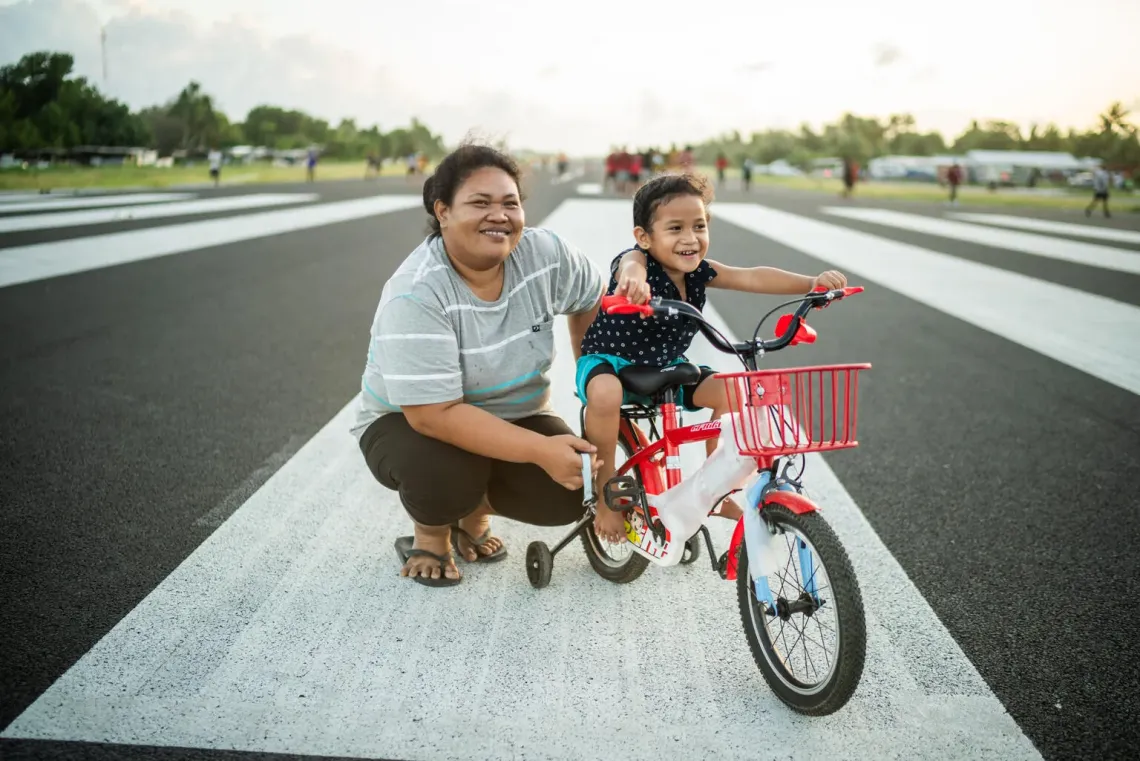
Children may separate from natal families for reasons beyond their control. In such cases, many are taken in by grandparents, aunts, uncles or close family friends. Where this is not possible, children may end up in institutions, where they are at risk of violence and cared for collectively in large groups with their individual needs ignored.
Since 2025, UNICEF’s Office for Strategy and Evidence – Innocenti, together with Child Frontiers, the Centre for Evidence and Implementation and Johns Hopkins University, with support from the UK Foreign, Commonwealth & Development Office, has been examining how children’s care can be strengthened through investment in services and systems.
The project outputs are diverse and include: a global review of progress and challenges in relation to care reforms, an analysis of the political and economic forces that shape these reforms, systematic reviews of the evidence on kinship care, and care for adolescents and children with disabilities, case studies from Kenya, Jordan and Cambodia, and a foresight analysis of the pressures and contexts likely to shape care reform ahead.
What the evidence shows
Research drawing on interviews with children suggests that kinship care is generally preferred by children, and studies associate kinship care with better outcomes than other forms of alternative care. There is also longstanding unequivocal evidence that institutional care is intrinsically harmful to children’s wellbeing and development. Findings point to some progress: residential and institutional care has declined substantially in some countries, humanitarian practice has shifted towards family-based responses, and people with lived experience of care are gaining a voice in reform. However, while governments in many countries continue to invest in residential care, state support for kinship carers remains minimal.
The evidence therefore calls for investment in prevention of family separation, which remains underfunded, alongside strengthening kinship care as the closest familial arrangement that can support children best. Key messages relating to kinship care emerging from this body of work:
- Kinship caregivers provide most alternative care, with little support. Care reform has often concentrated on residential care and formal alternatives, while the relatives and friends caring for the largest numbers of children remain insufficiently recognised and supported.
- Kinship caregivers themselves often have unmet needs of their own – many are elderly, managing health problems and financial insecurity; some are raising several children at once;
- Caregiving is typically gendered, with women and girls disproportionately providing care in most settings.
- Children in kinship care need safeguarding too – it is the preferred option but not automatically a safe choice; children placed with distant relatives, or taken in out of obligation rather than willingness, remain vulnerable without assessment and follow-up.
Of course, kinship care is not right for, or available to all children. Children outside of family care should have a range of quality alternative care choices, with their views taken into consideration in determining the best option.
What caring well for every child takes
The evidence points to practical measures to strengthen family-based care including supporting parents with services and resources, treating kinship care as the first option to consider when children cannot be cared for by parents – and make it safe; connecting kinship families to social protection, health and education, so that taking in a child does not push a household into deeper hardship; providing financial and practical assistance, and case-management support where needs are complex and let children’s and caregivers’ own views shape how arrangements are recognised and supported. Moreover, to support planning, further investment is needed to strengthen data on all forms of alternative care, particularly on forms of family-based care such as kinship care, that are aligned with the International Classification of Alternative Care of Children (ICare).
Taking the evidence to Manila
Safe, nurturing care and protection from violence go together – which is why this evidence will also be presented next month at the Second Global Ministerial Conference on Ending Violence Against Children in Manila (16–19 November), where governments will gather to act on a sobering estimate: around the world, 1.6 billion children – or 2 in 3 – regularly endure violent punishment by caregivers at home, the most common form of violence experienced by children (UNICEF 2025). At the Conference’s satellite event on care, the research team will share what the evidence says about care reform efforts, gaps and opportunities.
To join this event, register here. Details below:
- Session title: A Safe Place to Grow: Presenting evidence on children’s care reform efforts, gaps and opportunities
- Date: 17 November 2026
- Time: 12:15–13:30 (lunchtime session)
Sources
1. WHO (7 November 2024), “Countries pledge to act on childhood violence affecting some 1 billion children”: who.int/news/item/07-11-2024
2. UN Convention on the Rights of the Child: ohchr.org/en/instruments-mechanisms/instruments/convention-rights-child