Seeing Tomorrow: Digital futures through children's eyes
Across seven countries, children envision safer, kinder and more inclusive digital futures
How do children envision future digital technology?
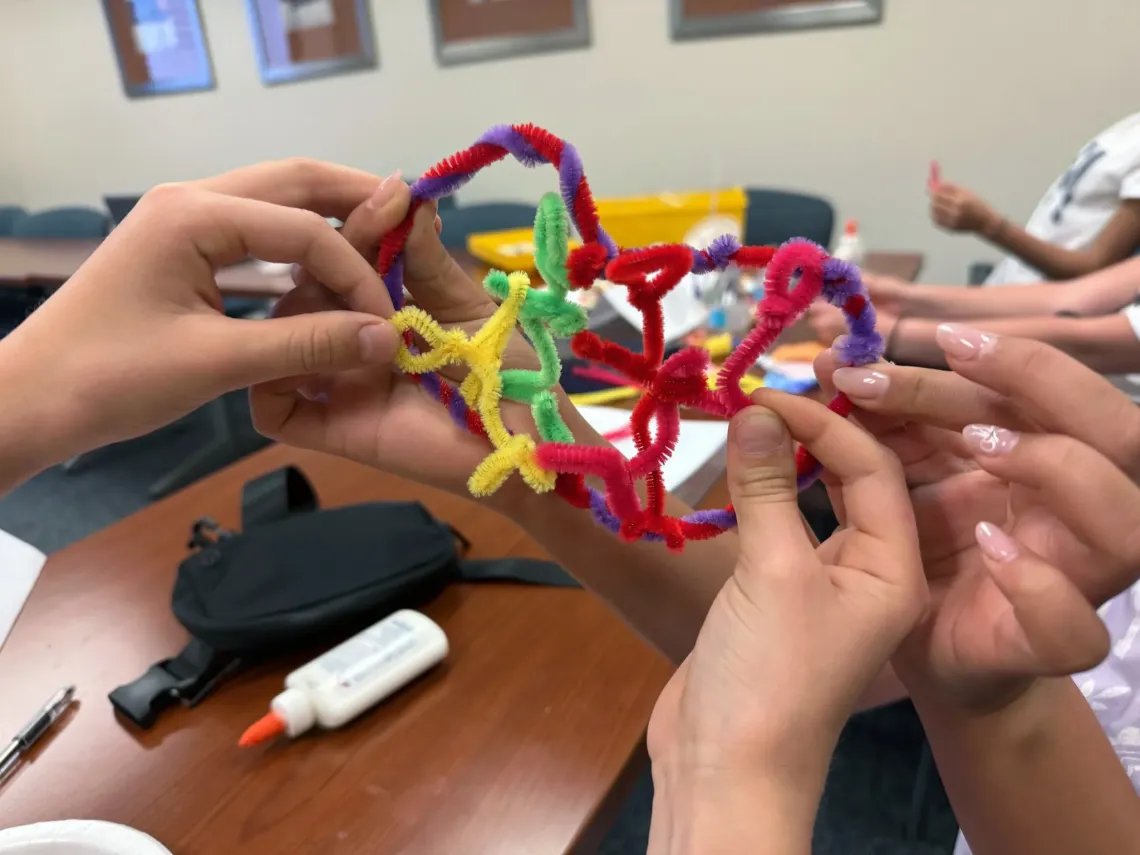
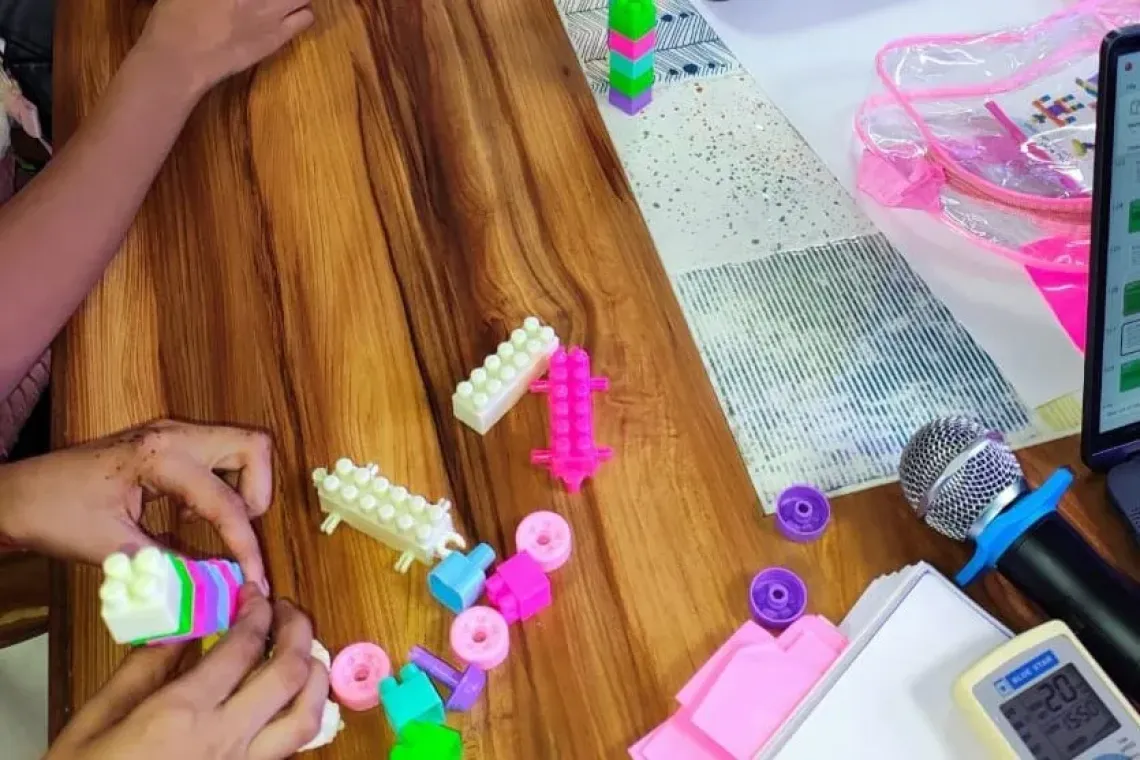
The children (ages 10 to 17 years) we spoke with in Brazil, India, Malaysia, Sierra Leone, Spain, Uganda and the United States of America shared their ideas and brought them to life in creative ways. They used Lego bricks, pipe cleaners, drawings and clay to show us imagined futures where robots are woven into everyday routines, digital technologies are kinder and more human-centred, and the internet is safer – all as ways to better support children’s best interests.
Even as children imagined positive and empowering futures, some scenarios were notably bleaker. This suggests that, for some children, envisioning a future shaped by technology that truly serves their well-being is not as straightforward.
For children, envisioning a future shaped by technology that truly serves their well-being is not as straightforward.
For children, Artificial Intelligence is here to stay
While AI was not the central focus of the consultations, it emerged organically in nearly every country. Children frequently incorporated AI into the futures they imagined, portraying it in both positive and negative ways.
Some models reflected underlying anxieties about digital technologies, particularly the fear of AI ‘taking away’ future jobs.
“[A] robot that replaces all people. This would end badly because I don't know how people would earn money if they were being replaced by robots,” said a 10- to 13-year-old from Spain who built a model of a talking robot.
A 14- to 17-year old child from India echoed similar concerns about automation, extending them to everyday life and education: “In the future, robots will teach us. Because of this, students will be busier on their mobiles. There will also be greater distance between people. Even in cooking, for example, when our parents are busy, a robot could cook for us.”
Others imagine AI as a more supportive presence, for example, a 10- to 13-year-old from Spain shared how “an application with artificial intelligence will help you like a psychologist. Robots will be considered a species like humans.”
Children seek balance between digital and real worlds
Some children expressed concerns about becoming overly immersed in digital life and losing connection to the physical world around them. For example, a child from Brazil created a model illustrating how attention to devices can overshadow real-world risks: “[This is a] demonstration of a girl in a chair, she's on her cell phone and behind her there was an accident, in front of her a snake and she didn't notice. A way of observing how we don't focus on things when we're on our cell phones,” explained the 10- to 13-year-old from Brazil.
Another child explained how real-life relationships will morph into connections that are distant, yet seemingly close, existing only in cloud-based spaces. “We will have more online friends than physical ones, and AI will become our friends,” said a child from India (14- to 17-year-old ).
Children envision inclusive and kind digital futures
One of the key findings from the child consultations was that many children experience cyberbullying and discrimination online. Some also shared that the fear of being bullied limits their willingness to express themselves or present their authentic personalities online. It is therefore not surprising that many children imagined futures that were more inclusive, kind and supportive.
An American 10- to 13-year-old described their idea of a digital future as “little people holding hands… everyone would work together and social media would build people up instead of putting them down.”
Another 14- to 17-year-old child from India hoped “people will be able to showcase their talents… without receiving hateful comments, thanks to filters”.
Children also envisioned technologies that would enable greater inclusion, particularly for children with disabilities. A 10- to 13-year-old from Spain created a model of “a wheelchair to go to different places that, by pressing a button, the wheels can be changed to be able to pass through architectural barriers.”
Such creative expressions reflect how real-world inclusion challenges are carried into children’s visions of digital futures. Across countries, the idea of positive online communities emerged as a central theme, highlighting that, for children, technology is meaningful only if it fosters dignity, safety, and human connection.
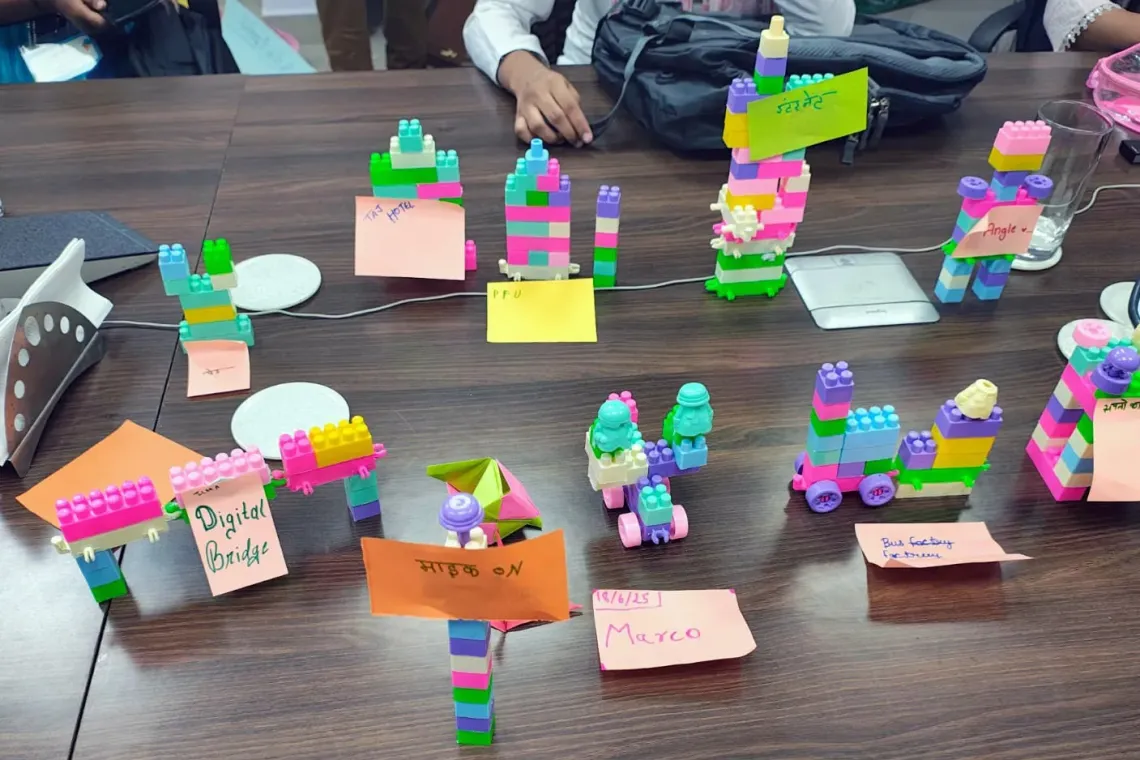
For children, technology is meaningful only if it fosters dignity, safety, and human connection.
A green future for every child
Across child consultations in several countries, environmental protection emerged as a shared concern, regardless of where children lived. Children often link technological progress with the need to care for the planet, emphasizing that innovation or growth should not come at the cost of environmental harm.
“We have to move forward. But nowadays, deforestation is happening a lot. People should live in harmony with the environment without destroying forests. Like it was before. Development is good, but not by destroying [sic]. Development should happen by creating," said a child from India (14- to 17-year-old).
According to children, technology that has children’s best interest at its core will actively support sustainability and combine innovation with environmental responsibility. “A solar and water powered car: this car helps reduce pollution and can be on autopilot. It can also tell you fun facts about the places you pass by,” said a child from Sierra Leone (10- to 13-year-old).
Technology that advances gender equality
Children highlighted the potential of digital technologies to promote gender equality and expand opportunities for girls and women. One child in India imagined a future where access to technology and education enables women to overcome traditional barriers and achieve greater independence and representation.
“This [the model] is a woman who has progressed so much with technology that she has become a very powerful woman,” said a 10- to 13-year-old from India.
One thing is clear: children are thoughtful observers, critics and designers of the worlds they inhabit. For digital futures to truly serve children’s best interests, they must be shaped with children.
Futuristic visions
Some children imagined more speculative digital futures. They combined technological innovation with governance, communication and everyday life. A child from India envisioned a data-filtering system in which both parents and governments play a role in shaping children’s online experiences. “Parents purified it [online content] and gave what they should have given… the government will also refine it,” said the 14- to 17-year-old from India whose model reflected a nuanced view of digital governance, where responsibility was shared across families and institutions in ways that respected children’s rights.
Others imagined a world where digital tools are deeply embedded in daily life. For example, one 10- to 13-year-old from Spain described how “a chip is installed in the brain and with the chip you will be able to listen to music, watch videos and read messages.”
Another 14- to 17-year-old from India anticipated shift in communication patterns, “right now we are all talking verbally, but I think in the future we will communicate mostly through the internet.”
Some ideas blended multiple innovations into everyday systems. A 10- to 13-year-old from Spain expressed an idea of “a traffic light that tells you to stop or pass. A card that you can press, and your food order arrives at the kitchen. A tattoo like a tattooed barcode to pay and a mobile phone with like 800 cameras and ultraviolet light.”
Throughout such creative futuristic models, children’s imagination moved across themes of innovation, inclusion, environmental sustainability, safety and human connection. Some futures were optimistic and empowering, while others reflected uncertainty and concern.
One thing is clear: children are not passive users of digital technologies, but thoughtful observers, critics and designers of the worlds they inhabit. If digital futures are to truly serve children’s best interests, they must be shaped with children, not just for them.
Children's best interests in a digital world
This article showcases some of the findings from UNICEF Innocenti’s work on children’s best interests in a digital world. We consulted children in seven countries to understand how they perceive and define their best interests in the digital environment. Children were also invited to imagine what digital technology and digital futures could look like. To learn more about children’s ideas, concerns and aspirations for digital technologies, read the full report Children’s Best Interests in Digital Policy and Practice.