

Including children with disabilities in humanitarian action
Practical actions and tips
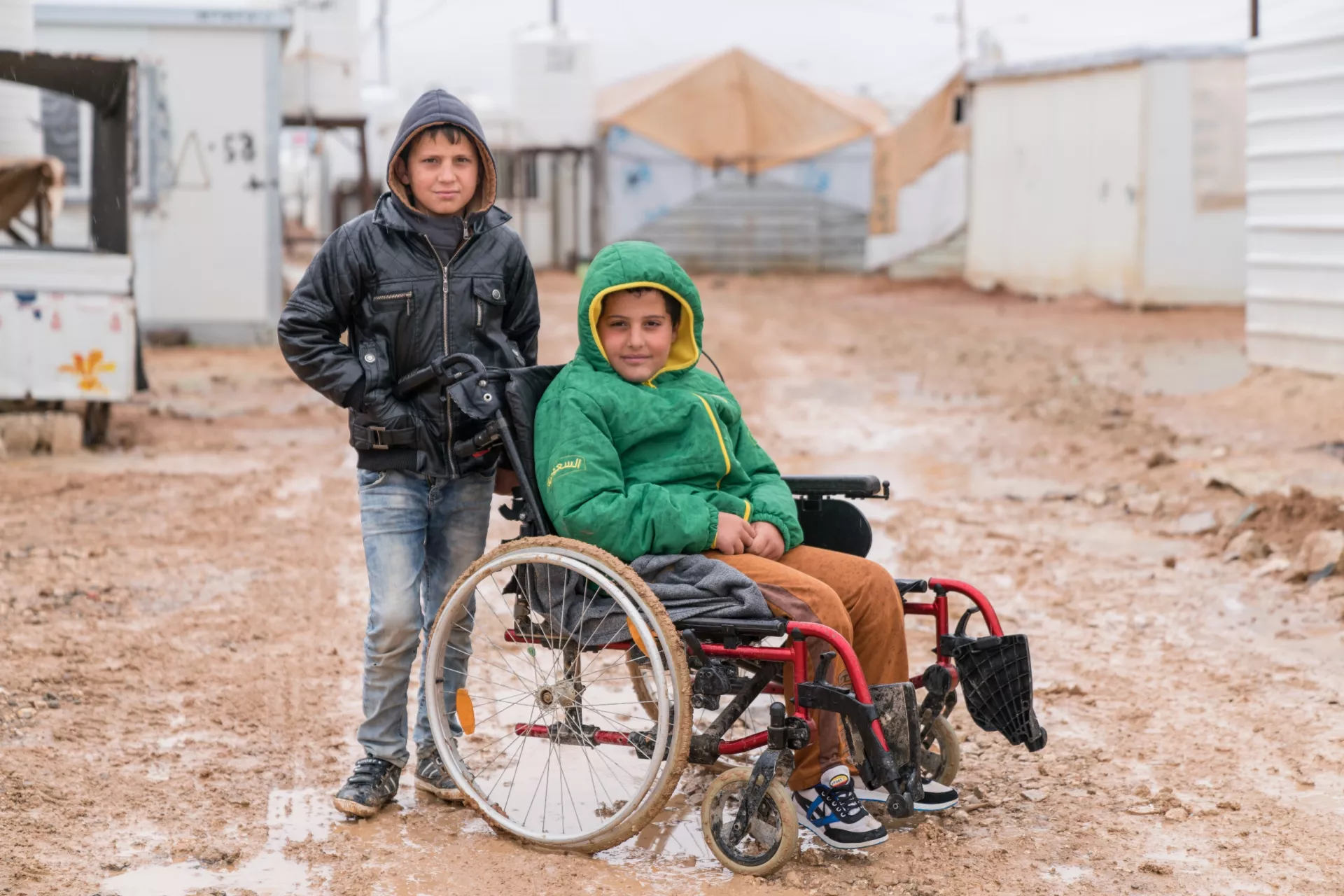
Worldwide, one in every 10 children has a disability – and the proportion is even higher in populations affected by armed conflict or disasters.
Children and adults with disabilities are among the most marginalized people in any community affected by crisis. Exacerbating this situation, they often are excluded from humanitarian assistance.
But while crises put children with disabilities at risk, they can also create opportunities. Damaged buildings and infrastructure can be rebuilt better and more accessible than before. Programmes and services set up to help people deal with and recover from the crisis can be designed to include children with disabilities from the outset.
UNICEF has developed guidance to help make sure that children and adolescents with disabilities are included in all stages of humanitarian action – from preparing for emergencies to recovering from them.
Including Children with Disabilities in Humanitarian Action consists of six booklets full of practical actions and tips.
Guidance
» For more UNICEF videos, please visit the playlist on inclusive humanitarian actions.