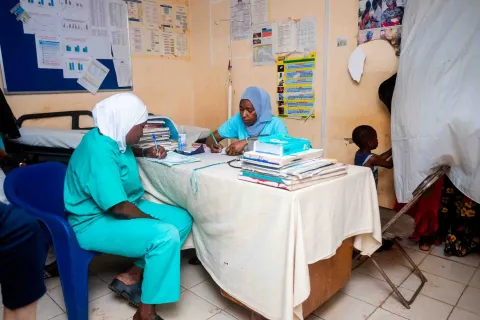
Health facility Registry Toolkit
a Toolkit to support the identification and deployment of a health facility registry service in countries

Highlights
The objective of this toolkit is to help public health managers and the stakeholders supporting them to identify and plan the deployment of the Information Technology (IT) solution to serve as Health Facility Registry Service (HFRS) to store, manage and share the country’s Health Facility Master list (HFML) and other associated data and information.
The toolkit proposes the following seven-step process to help decision-makers choose the adequate IT solution to serve as HFRS based on requirements and other factors as well as develop associated plans and finally understand and manage the risk associated with this type of project:
- Step 1: Establish a technical working group.
- Step 2: Define expected outcomes.
- Step 3: Assess the current enabling environment.
- Step 4: Define what the HFRS should do.
- Step 5: Find the appropriate IT solution.
- Step 6: Develop the implementation, monitoring and evaluation and communication plans.
- Step 7: Understand and manage risks.
This toolkit was developed by UNICEF, WHO and partners through the technical Working Group on health facility registry minimum requirements, a part of WHO’s Geolocated Health Facilities Data initiative (GHFD)