Seven crucial behaviors to save lives in communities in Angola.
Basic practices, such as safe water consumption, can prevent illness and reduce unnecessary demand for hospital care.

- Portuguese
- English
Luanda July 15, 2026 - In a decisive step to strengthen public health in Angola, the National Directorate of Public Health (DNSP), with the technical and financial support of the United Nations Children's Fund (UNICEF) and other partners, held a technical conference in Luanda in July for the development of the National Strategy for Social Change and Behavior in Health. The meeting brought together experts, decision-makers and cooperation agencies and made it possible to narrow down a list of 126 ideal behaviors to seven priorities. The purpose is to concentrate resources, guide professionals and help families prevent diseases before they require care in health units.
The day took place in the year that marks four decades of the Ottawa Charter, adopted in 1986, which consolidated health promotion as a process that empowers people and communities to exercise greater control over their health. This principle is particularly relevant in Angola, where prevention, trust in services, and community participation are essential to improve health outcomes.
For Dr. Frederico Brito, Head of Health and Nutrition Programmes at UNICEF in Angola, speaking at the opening of the Workshop, this initiative reaffirms that health is not only produced in hospitals and health centres: it starts in families and communities.
"We want to put health as a flag and not just manufacture it in hospitals or health centers. Health starts in families and communities," she said, highlighting UNICEF's commitment to supporting the priorities of the Ministry of Health, with technical assistance and teams prepared on the ground to protect children and women.
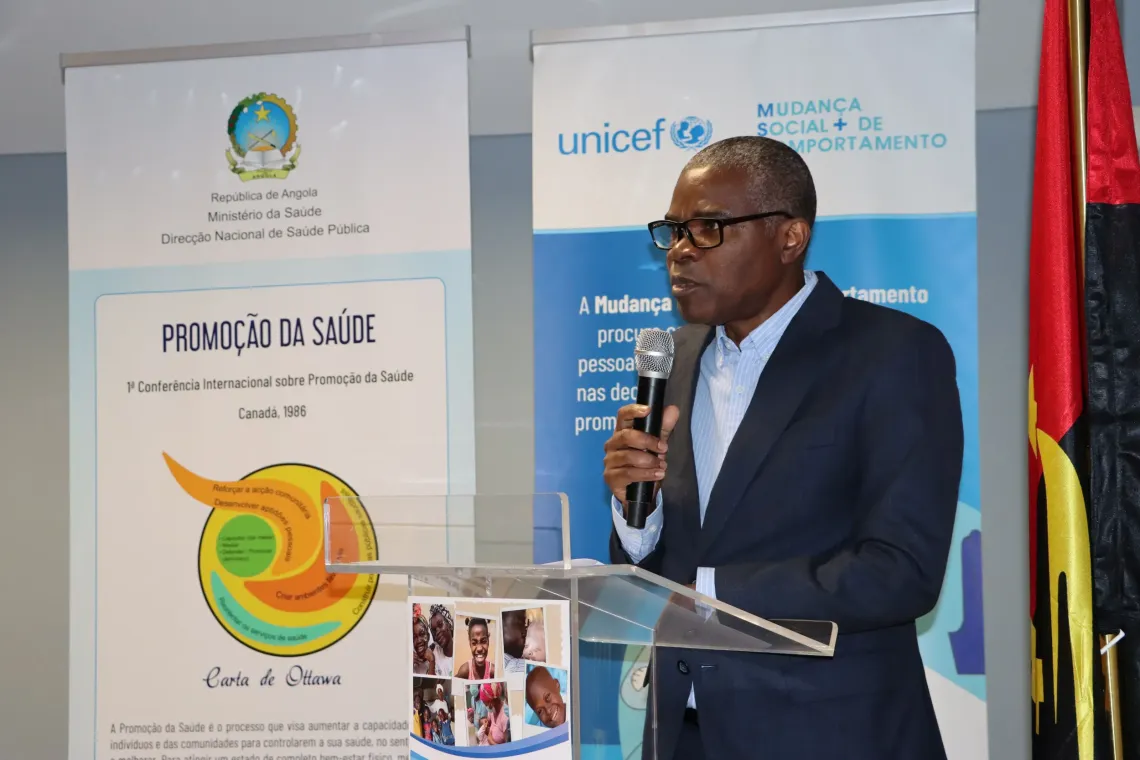
In turn, Dr. Helga Freitas, from DNSP, reinforced that health gains do not depend only on infrastructure, medicines, vaccines and qualified professionals. They also depend on living conditions, daily choices and social norms that influence behaviour.
"Our role is to teach, but also to learn from the communities, to harmonize their needs with our interventions," he explained.

From 126 practices to seven priorities
During the working sessions, the partners analysed an extensive list of 126 behaviours considered ideal, making it difficult to monitor and raise awareness among the populations. During the day, through debates and evaluations in working groups, the number was first reduced to 22 and, later, to seven priority behaviors.
Vagno Gomes, project manager at World Vision, stressed that the reduction will allow greater focus on professionals and partners. He also highlighted the participatory nature of the process: priorities were not imposed externally, but identified locally, based on the expected impact and the reality of Angolan communities.
According to Dr. Filomena Wilson, coordinator of the DNSP Health Promotion Office, the seven behaviors are: carry out all recommended prenatal consultations; start breastfeeding in the first hour of life; practice exclusive breastfeeding until six months; comply with the complete vaccination schedule; seek immediate care in case of illness; adhering to HIV treatment; and protect children against situations of risk and violence.
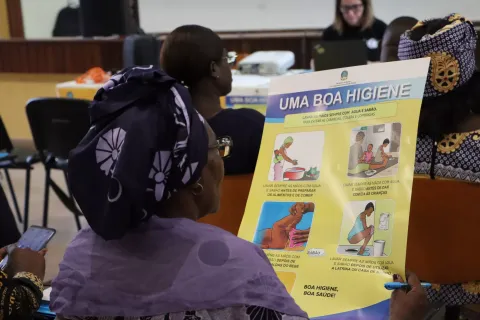
The family doctor also recalled that health must be analyzed in the light of social determinants. Basic practices, such as safe water consumption, can prevent illness and reduce unnecessary demand for hospital care. With clear priorities, he added, technicians will be better able to measure results and strengthen prevention actions.

Communities at the heart of the response
The approach adopted by Angola is in line with the World Health Organization (WHO) Regional Strategy for Community Engagement 2023–2030 for the African Region, which places communities at the center of prevention, preparedness, and response to health emergencies.
Olívio Gambo, WHO's communications officer in Angola, explained that this vision values people's ability to create conditions of protection in their own social structures. "When we prioritize behaviors based on local reality and evidence, resources and efforts are better applied," he said.
The end of the day marks the beginning of a new stage. The resulting document will serve as a basis for provincial consultations and dialogues with civil society, in order to integrate the country's geographical, social and cultural diversity into the strategy. This participation will be decisive in transforming the seven behaviors into practices understood, accepted and adopted by families.
The challenge is now twofold: professionals in the sector must make a technical commitment to incorporate these priorities into their daily work; and communities must actively participate in defining solutions, with the support of local authorities, community leaders, churches, schools, media and civil society organizations.
As Dr. Helga Freitas summarized, "social and behavioral change does not happen by decree, nor does it result only from the transmission of information. It is built through trust, participation and mobilization". It is in this combination of quality services, informed choices and community engagement that Angola can prevent disease, protect children and women and relieve pressure on health facilities.