"Safe Return to School" Campaign: A Commitment to the Future of Angolan Children.
The campaign includes simultaneous training in seven provinces to prepare education professionals to face health risks and protect children in schools.

- Portuguese
- English
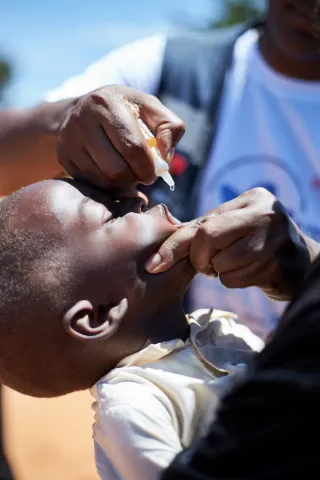
The beginning of 2025 brought great challenges for Angola in the field of public health. The cholera outbreak that has spread across the country has tested the ability of communities to protect health and ensure the continuity of education. Thanks to the joint efforts of the Government and partners, cases have been decreasing, but the fight against the disease continues. In this scenario, ensuring that children can learn in safe environments has become an urgent and essential mission.
To respond to this need, UNICEF, thanks to the support of The Church of Jesus Christ of Latter-day Saints, in partnership with the Ministry of Education (MED), launched the campaign "Safe Back to School". This campaign, more than a preventive action, represents a commitment to the life, learning, and future of Angolan children. It combines awareness-raising, training, and distribution of biosafety materials, with the aim of creating resilient schools, prepared to face health risks and promote well-being.
Building Capacity to Better Protect and Educate
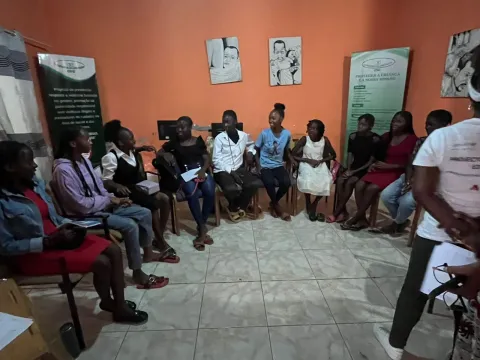
As part of the campaign, simultaneous training was carried out on 30 and 31 October for school managers and primary school teachers in six provinces, namely: Lunda Norte, Uíge, Namibe, Huíla, Cabinda, Cuanza Sul and Zaire. The training aimed to strengthen skills to ensure safer and more inclusive school environments, bringing together 240 education professionals, including 113 teachers, 113 school managers, 14 provincial trainers, appointed by the Provincial Education Offices.
Each participating school had a teacher and a school manager, ensuring that the measures learned are applied directly on the ground. Each participant became an agent of change, bringing knowledge and hope to thousands of children.
"After this training, I will guide the children on hygiene and basic sanitation, using the materials received from UNICEF for hand washing." Declared, Isabel Guimarães, primary school teacher in Cuanza Sul.

Learning to Save Lives
During the training, participants explored essential topics ranging from optimal standards for school sanitation, hygiene and cleanliness, solid waste management, water contamination and treatment, and healthy hygiene practices.
António Francisco Veloso, a primary school teacher in Uíge, one of the several teachers who benefited, shared with great enthusiasm how this experience transformed them.
"I learned about cholera, basic sanitation and waste management. Now I will sensitize students and the community to prevent the disease, promote cleaning, construction of latrines and access to drinking water." Told.
Ensuring a Sustainable Future.
These actions are aligned with the Sustainable Development Goals (SDGs), especially SDGs 3 (Good Health and Well-being), 4 (Quality Education) and 6 (Clean Water and Sanitation). A safe school is not just a place to learn, it is a space where children can dream and grow with confidence.
"My role will be to continue to teach students how to prevent themselves, talk about personal hygiene and the correct use of water." declared, Tamália Ntoto Muanda, a primary school teacher in Cabinda.
Ensuring a safe return to school is taking care of lives, strengthening ties and opening paths to new opportunities. With prepared professionals and well-organized schools, we are creating an environment where education and health go together, building a healthier and more hopeful future for all.