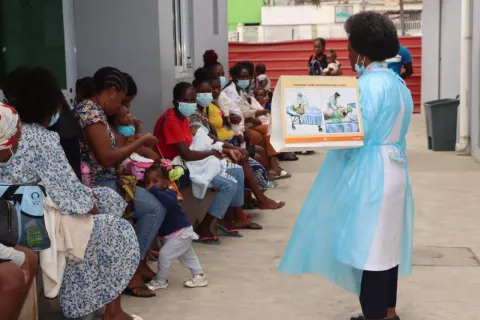
The role of the Child Friendly Hospital in the promotion and support of Exclusive Breastfeeding.
The initiative seeks to protect, promote and support breastfeeding through health units that meet specific criteria for the promotion of Breastfeeding.

- Portuguese
- English
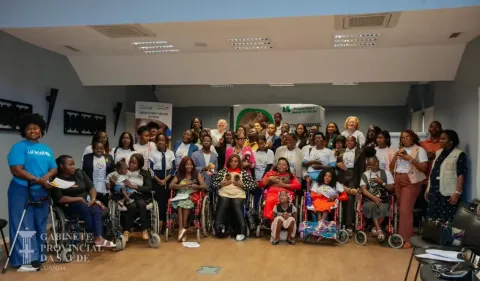
On 24 July, the UNICEF auditorium hosted a workshop on Awareness, Technical Alignment, and Strengthening the Implementation of the Child-Friendly Hospital Initiative (CFHI).
The event is part of the Maternal and Child Program "More and Better Health", through the "More and Better Nutrition" Project, implemented by World Vision Angola, in partnership with the Luanda Provincial Health Office (GPSL), with technical support from UNICEF Angola.
The Workshop on the Child-Friendly Hospital Initiative (CFHI) reinforces the commitment to breastfeeding in Luanda, within the scope of promoting breastfeeding and continuous improvement of maternal and child health. The event had 120 participants from all 16 municipalities of the province.
The CFHI is a global initiative of WHO and UNICEF that aims to protect, promote, and support breastfeeding, through the accreditation of health units that meet specific criteria for the promotion of Breastfeeding.
In Angola, the initiative has progressively advanced but requires the strengthening of technical and institutional commitments to consolidate adequate child nutrition practices in health services.
Breastfeeding is the act of feeding the child breast milk, directly from the mother's breast. This process is natural and fundamental for the health of the child and the mother. Breast milk contains all the nutrients that the child needs in the first six months of life, as well as antibodies that help protect against diseases.
Breast milk is a safe, nutritious, and sustainable source of good nutrition for children. In addition to the immediate health benefits, breastfeeding reduces infant overweight and obesity risk by 26%, providing lifelong protection against non-communicable diseases.
Idalina Cinge Cumbé, a technician from the Department of Public Health of the Municipality of Belas, stated that "we need to encourage breastfeeding in the child after birth, and remove some beliefs and taboos in society that have been factors that hinder the growth of populations". She also encouraged that each municipality should create baby-friendly hospitals to facilitate our work.

Currently, Luanda has two hospitals accredited as "Friends of the Child" and two in the application process. As a direct result of the workshop, 12 more health units expressed their intention to start the CFHI application process, which represents a significant advance for the province and the country.
If all children from 0 to 23 months of age were optimally breastfed, almost 600,000 children's lives could be saved every year. Scaling breastfeeding to a near-universal level could prevent 16 percent of annual deaths in children under 5.
"We need to take this same information about breastfeeding to society, especially our mothers who have been using artificial milk, because we cannot pass on information about how important breast milk is for the growth of the baby and its development, let's all save the lives of our children" highlighted Ângela Guilhermina Nunes Nutritionist.

Health professionals play a vital role in supporting breastfeeding, but many lack the tools, time, and training to provide adequate care. Only 19% of the world's countries include infant feeding topics (IYCF) in training for doctors and nurses before they enter the workforce.
This meeting was funded by the Government of Canada, with technical support from UNICEF and World Vision, strategic partners in the implementation of child health and nutrition policies. The Luanda Provincial Health Office thus reinforces its commitment to the promotion of breastfeeding as a fundamental intervention to reduce infant mortality, improve the nutritional status of children, and strengthen the bond between mother and child.