Investing in Prevention to Secure Angola's Future.
The true measure of progress is whether the last child has been reached.

- Portuguese
- English
Angola has made important progress in improving the survival and well-being of its children, from 69 to 52 deaths per 1000 live births, according to data from the National Institute of Statistics. In recent years, the Government's strong commitment to the support of partners has translated into effective leadership, in particular through the Ministry of Health, which has been boosting vaccination services, primary health care, and expanding maternal and child health and nutrition services.
However, it should be noted that, despite progress, significant challenges to access and quality of services persist, resulting from inadequate availability of services, especially in rural and peri-urban areas, reminding us that progress needs to be accelerated and shared more equitably.
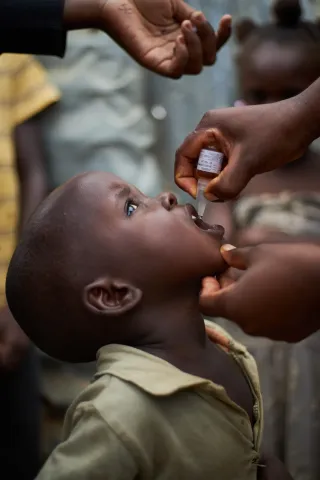
One of the most critical gaps has been zero-dose children, children who have never received a single routine vaccine. Before the COVID19 pandemic, nearly one in three children under the age of one had not received at least one vaccine, leaving them vulnerable to preventable diseases. Rather than conform to this reality, it encourages us to note that the Government of Angola has taken decisive action to overcome this problem.
With the support of UNICEF, WHO, GAVI, and with major support from the King Salman Humanitarian Aid & Relief Centre - KSrelief, Angola has expanded vaccination services, invested in the cold chain, strengthened data systems, and mobilized communities. On the other hand, recognizing the need to hit the pace to eliminate diseases such as polio, they have organized successive rounds of National Polio Vaccination Campaigns, the results of which have been encouraging. For example, the vaccination campaign launched in March 2026 reached more than 9 million children under the age of five in just three days. In many municipalities, coverage levels have approached or exceeded the 95 percent needed to stop transmission of the virus, a remarkable achievement that reflects coordination, trust, political commitment, and community engagement.

Vaccination, however, is only one of the pillars of child survival. Nutrition, especially during the first 1,000 days of life, from pregnancy to the child's second birthday, remains one of the most powerful investments a country can make. In Angola, according to data from the Multiple Indicators and Health Survey (IIMS) 2023-2024, published by the National Institute of Statistics, approximately 40 percent of children under five years of age are affected by chronic malnutrition, which limits physical growth, learning potential, and future productivity.

Recognizing this reality, the Government has prioritized nutrition services as an integral part of primary health care. Programs to promote breastfeeding, maternal nutrition, complementary infant feeding, micronutrient supplementation, and growth monitoring are being scaled up, ensuring that prevention starts early and reaches families before malnutrition becomes life-threatening.
Angola's experience increasingly shows that prevention is not a cost, but a return on investment. Vaccines are among the most cost-effective health interventions available. Proper nutrition in the first years of life generates health and economic benefits throughout life. Strong primary health care systems increase resilience, not only in the face of disease outbreaks, but also in the face of economic and climate shocks.
The Government of Angola has shown leadership in prioritizing these investments, even in a context of fiscal constraints and multiple competing demands. Investment has been made in health infrastructure, staff training, and the decentralisation of services. Sustaining progress will require continued national funding, reliable data, and a deliberate focus on communities that remain underserved.
The true measure of progress is whether the last child has been reached.
When Angola translates the evidence produced by science into policies and strategies to strengthen the prevention, diagnosis, and treatment of diseases, it protects children today and, at the same time, builds the human capital of tomorrow. No child should be invisible. And when all children survive and thrive, Angola's future becomes stronger.