Analysis of the 2024 State Budget Highlights Gaps in Education and Health.
The published analysis revealed that there was a nominal increase of 23% in the budget compared to the previous year, a positive sign at first glance.

- Portuguese
- English
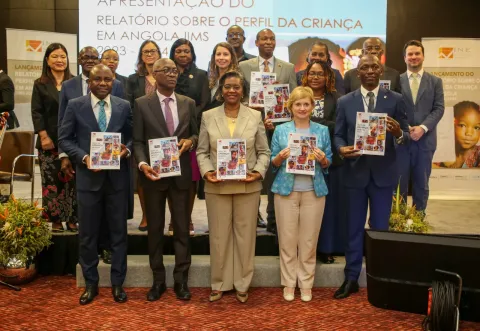
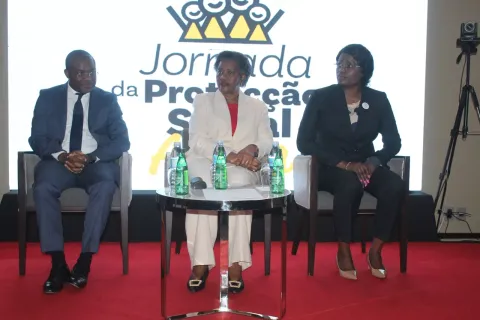
On September 12, 2024, the United Nations Children's Fund (UNICEF) held a Public Presentation of the Analysis on the General State Budget (OGE) 2024 for representatives of ministerial departments, civil society, development partners and academics.
This event marked the launch of a detailed analysis translated into information leaflets, developed within the scope of Public Finance for Children actions. The objective is to promote a more efficient allocation and a more transparent management of the State Budget, with a focus on social areas and with children's rights at the center of priorities.
This year's analysis covers the areas of Education, Health, Water and Sanitation, Social Protection, Child Protection, Inclusion and Disability and Gender Equality. In addition to these sectoral analyses, a general analysis was carried out that covers other components of the 2024 State Budget.
During the opening of the event, Antero de Pina, Representative of UNICEF Angola, highlighted the importance of the analysis, highlighting that it is increasingly important to analyze not only the amount budgeted for each sector and for each social area, but the potential impact and how investments can contribute to the development of human capital. This statement reinforces the need for a detailed assessment of the application of resources and the real impact on areas essential to child development.

The published analysis revealed that there was a nominal increase of 23% in the budget compared to the previous year, a positive sign at first glance. However, 59% of the budget is earmarked for the payment of public debt, limiting the allocation to critical sectors.
In the Health sector, despite a nominal increase of 1.3%, the allocation fell from 6.7% to 5.5% of the State Budget, distancing itself from the targets set in the Abuja Declaration, and only 64% of the 2023 budget for health has been executed. In the Education sector, the increase of 1.2% resulted in a decrease in the share allocated to Education to 6.4% of the State Budget, continuing to fall short of international targets.
Child protection saw a worrying 50% reduction in resources for the SOS Criança helpline. The inclusion of people with disabilities received only 0.12% of the total budget, and gender equality also saw a reduction in Gender Markers that makes it difficult to evaluate equity programs.
Bernardo Vaz, economist, and participant in the event, offered a critical view emphasizing the importance of going beyond percentage variations and focusing on real investment needs in crucial areas to avoid high social costs in the medium and long term.
"The exercise of any right is positively correlated with the level of information we have access to. If we don't know what children's rights are, we can't protect and promote them," said the economist.
Lucinda Miguel, representing the Social Support Fund (FAS), also contributed, stating that the analysis of the budget issues in promoting children's rights is a factor of capital importance, as childcare should be seen as a priority on the agenda of the Angolan executive and beyond. Betting on the child's integral development is to prepare a nation to face the present and future challenges successfully.
Lucinda Miguel also praised the leaflets produced by UNICEF, which are fundamental basic documents for citizens to acquire essential knowledge.
"The leaflets help citizens to lobby, and social advocacy of the sectors investigated. We encourage UNICEF to continue to raise awareness among citizens in the public interest. Accordingly, it is important that citizens have information that allows them to monitor the execution of Public Policies in the country."

In addition to the presentation event, thematic and sectoral workshops are planned in the coming days, where the results and recommendations of the analyses will be discussed in depth. The publication of these sectoral analyses and the implementation of an Advocacy Action Plan are fundamental to the Convention on the Rights of the Child (CRC), which, in its article 4, establishes the obligation of States to implement the necessary measures and use the financial resources available to ensure the realization of children's rights.
UNICEF continues to work to promote transparency and efficiency in the management of public resources, intending to ensure that children's rights are prioritized in budget allocation decisions. The dissemination of this information helps to strengthen society's capacity to influence and monitor the development of policies that directly affect children and key social sectors.