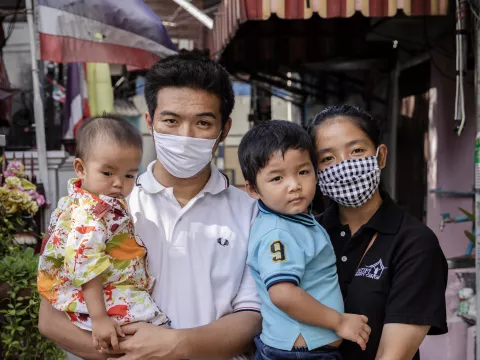
Vaccine supplies save lives in Nonthaburi
Supported by USAID and UNICEF, hospitals and health centres overcame a shortage of COVID-19 vaccine supplies

- English
- ไทย
Walking into the Nonthaburi Medical Center Hospital at the beginning of this year, the number of patients using its services may have seemed quite sparse. But in fact, the hospital served as the main distribution centre in Nonthaburi Province for every hospital and health centre that needs COVID-19 vaccines.
In the third year of the pandemic, vaccine management has become straightforward in many areas. People can easily access vaccines through COVID-19 vaccination centres or hospitals. But a shortage in syringes and sodium chloride at the beginning of 2022 slowed down the countrywide vaccination plan.
Responding to a request from Thailand’s Ministry of Public Health, UNICEF Thailand and the United States Agency for International Development (USAID), stepped in to deliver nearly three million syringes and sodium chloride to hospitals and vaccination centres in need, including the Nonthaburi Medical Service Center Hospital. These critical supplies have also been used by roving local health officers who travel to communities to vaccinate vulnerable groups, such as children, the elderly, and bedridden patients who cannot travel to vaccination centres.
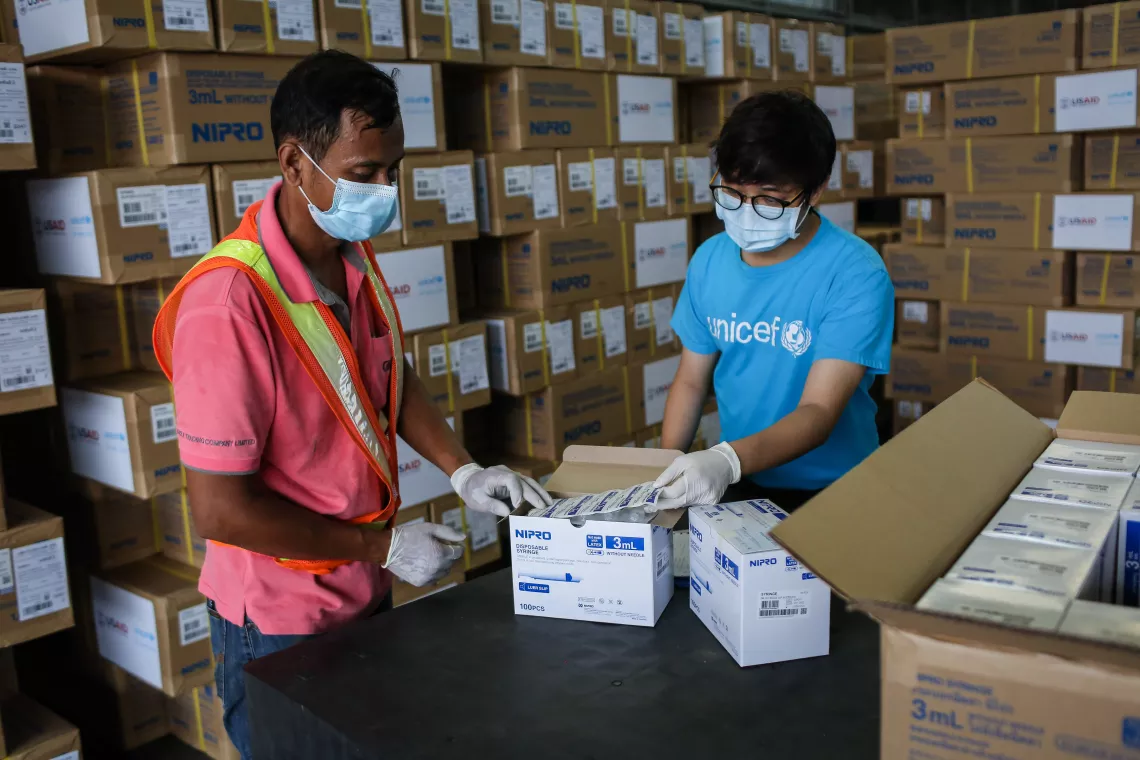
At the beginning of 2022, Nonthaburi had nearly 80,000 COVID-19 cases. But in September, the number of COVID-19 hospitalized patients has fallen to a two-digit number, thanks to improved access to vaccines. So far, Nonthaburi has administered over 3.5 million doses of COVID-19 vaccines, becoming one of the country's most accessible provinces for vaccines.
Uraiwan Boonkerd, Head of Nurses at Nonthaburi Medical Center Hospital, revealed that Nonthaburi has many vaccination centres, including in its three big department stores and other local centres. In addition, during COVID-19 surges, the hospital’s health workers would go out every day to vaccinate as many as 500-700 people a day.
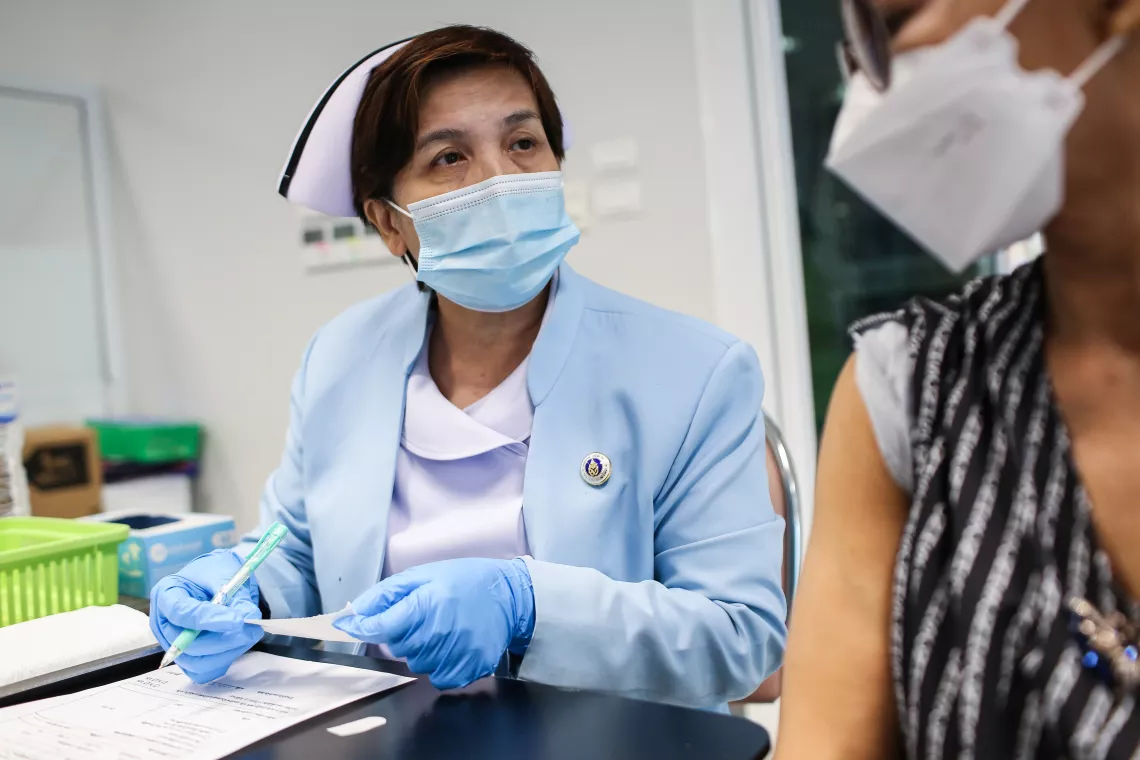
The health workers were supported by a team of pharmacists led by Pitiporn Chevintulak, who would prepare the doses ahead of time. But the shortage of vaccine supplies such as syringes, needles, and sodium chloride made Pitiporn’s work very challenging.

“The vaccine must usually be supplied along with the equipment for administering the vaccine, especially the Pfizer vaccine which requires a specific size of syringe and needle, as well as sodium chloride for each dose,” explained Pitiporn. “But a supply shortage from February to April became a challenge. We managed by carefully calculating the numbers and using them sparingly. Some places had to use their own sodium chloride instead. Thankfully, the donation of the supplies did not delay”, she said.
The donations allowed the health workers to move faster and more confidently. “Before getting this donation, we didn't have enough supplies to meet the needs. We had to borrow supplies from somewhere else. Vaccination already requires a lot of coordination, whether it's the location, equipment, alcohol, cotton wool, medicated plaster, or cold chain treatment in controlling the vaccine temperature. Without these supplies, it’s impossible to continue providing vaccine services to people”, she said. “But now, with the new vaccine equipment, the staff can work faster.”

Dr. Jintana Trongdee, specializing in vaccinating children at the hospital, added that fighting COVID-19 in the longer term requires educating all people about prevention and protection.
"Managing COVID-19 means not just fighting against the disease; it’s also developing knowledge and adjusting to the disease and the situation,” said Dr. Jintana. “For example, we need to look at supporting patients with mild symptoms to stay at home, and if the symptoms are severe, there’s a system to deliver their treatment. If there is a new outbreak, we will have enough vaccines and supplies to help everyone.”