How a country rose to the challenge of vaccinating every child against polio
An inspiring photo record showcases the efforts to reach millions of Guinean children to protect them from an incurable disease.
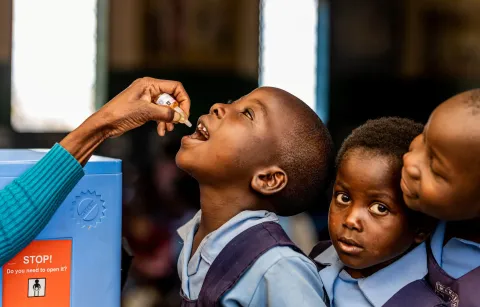
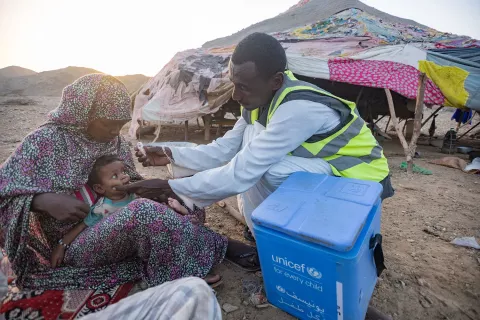
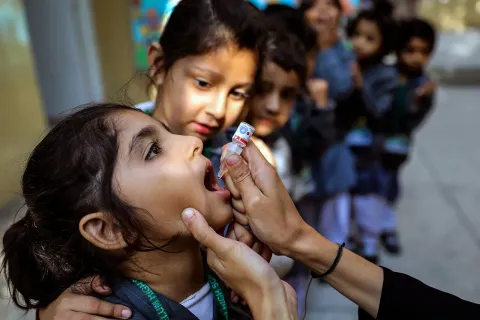
In Guinea, health workers, communities, governments, UNICEF and partners came together in a vaccination campaign to reach every child in the country with the oral polio vaccine in 2024. Over the two rounds of the campaign, each lasting four days, 3,2 million children were vaccinated twice against the disease. The campaign, meticulously planned and prepared, showed that protecting children from polio is possible.
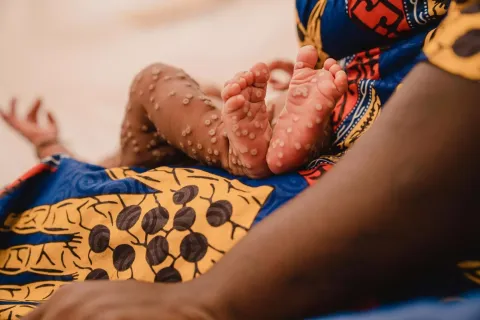
Polio (poliomyelitis) is a serious and disabling disease, and only prevention can shield children from its effects. This prevention is achieved through a simple measure: administering the oral polio vaccine, especially to children under 5. To eradicate polio once and for all, every child must be vaccinated.
Each year, UNICEF procures and delivers over 1 billion doses of polio vaccines. These vaccines play an integral role in protecting over 400 million children against polio in over 80 countries.
Engaging communities

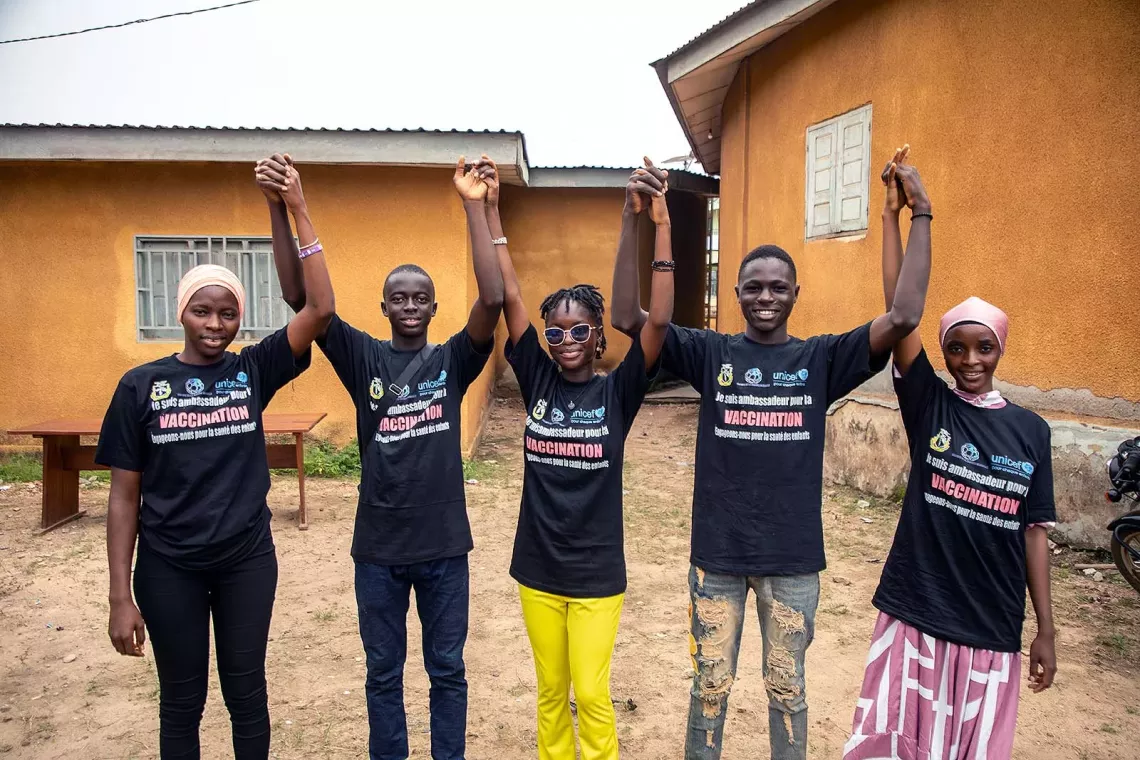

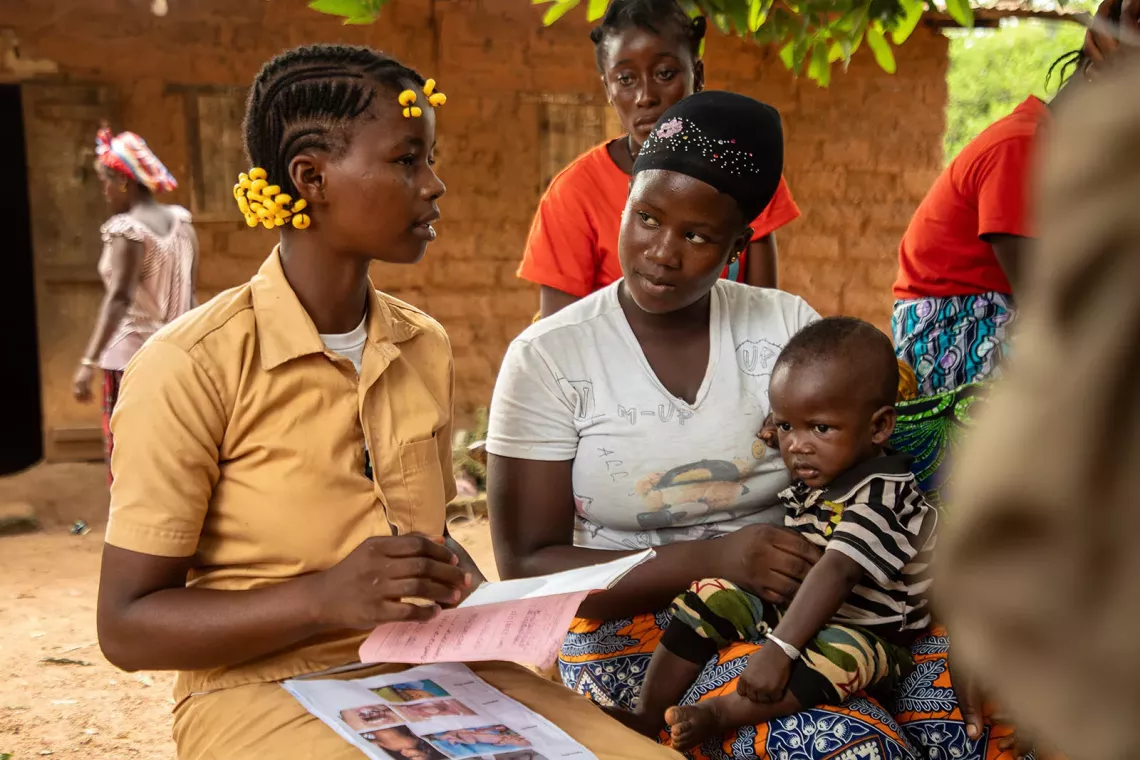

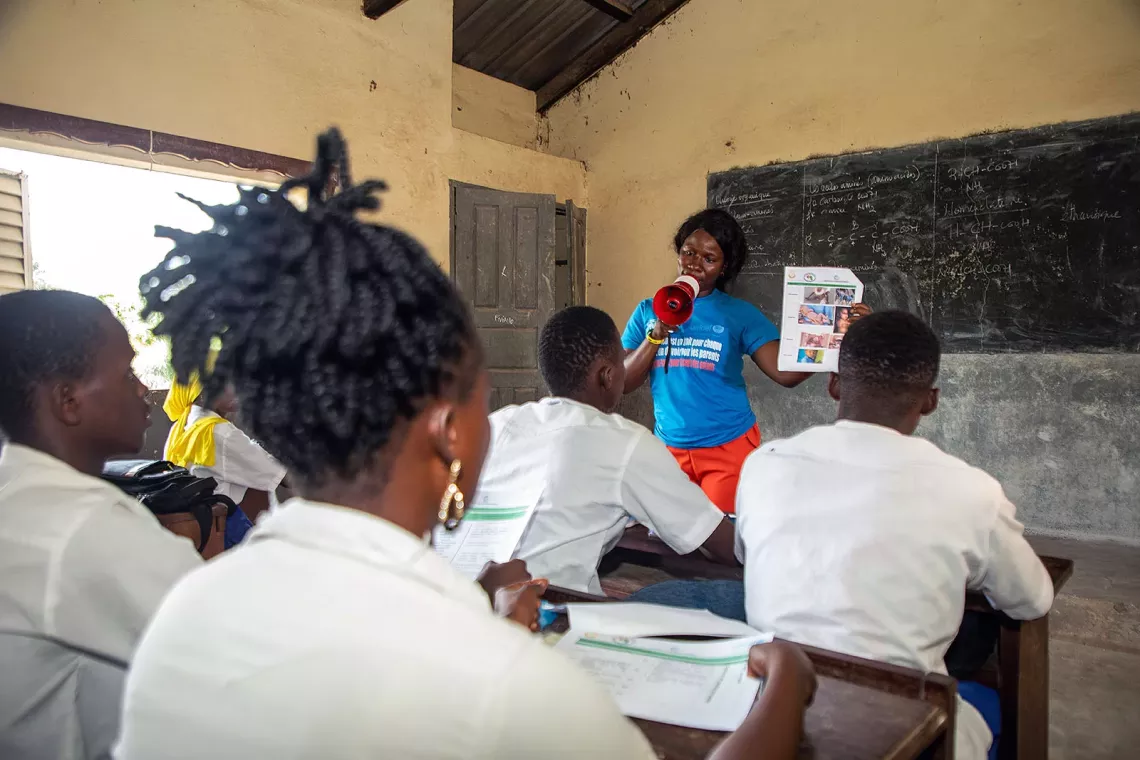
Children of all ages play an important role in raising awareness about vaccination. Parents often tell me that their children have already informed them about the campaign.
Winning the support of local communities and governments is essential for a successful immunization campaign. Young vaccination advocates and students were actively engaged in the campaign, discussing the benefits of vaccination and addressing any concerns with their own families and communities.
Spreading the word
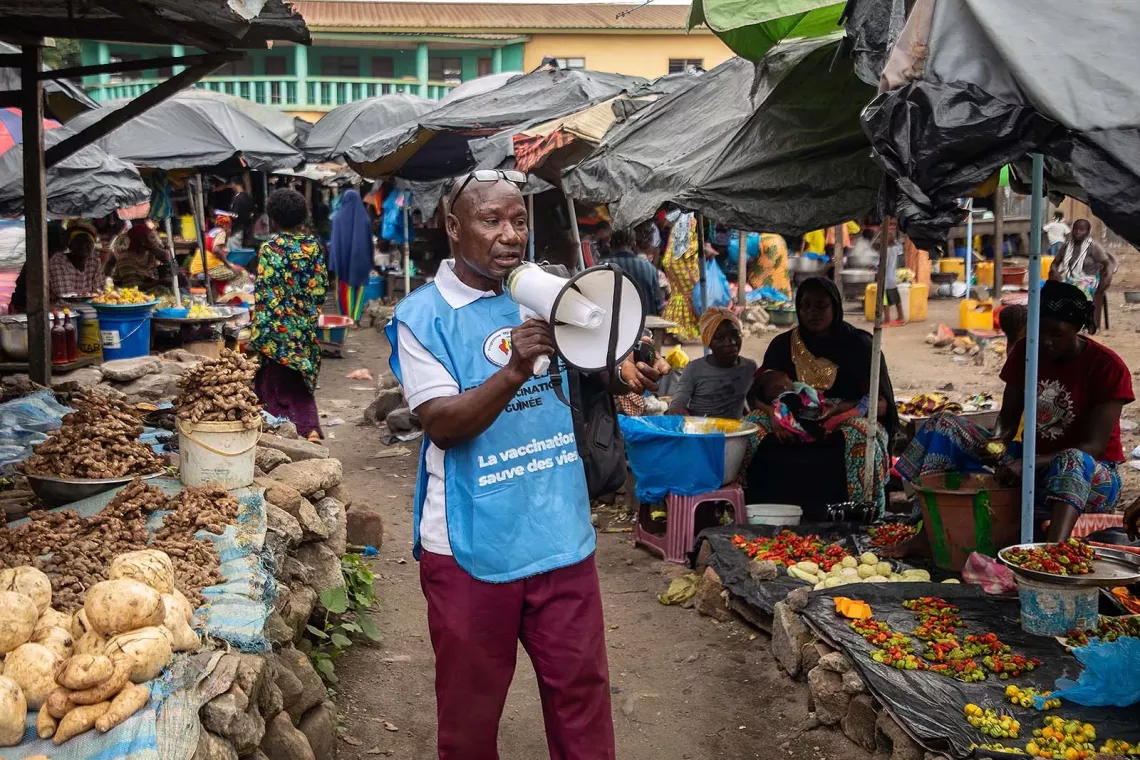
UNICEF and its partners use all possible media to dispel myths and misinformation, announce the campaign, and convince people of the importance of polio vaccination. This includes distributing fliers and posters, holding public meetings, and visiting places where people gather.
Before and during the deployment of the health workers in the field, social mobilizers also carry out awareness-raising activities with families to help parents understand the need to vaccinate their children.
Getting vaccines to children, wherever they are

UNICEF/Guinea/RLosseni
"Every child in Guinea is entitled to the same protection, regardless of where they live, so it is our duty to reach and vaccinate all them. We are determined to continue with these efforts until all children in the rural community of Koulé are fully vaccinated," says André Koulamou, community health worker and head of immunization at the Koulé Health Centre in the N'Zérékoré prefecture, Guinea.
Polio vaccines must be kept and transported at controlled temperatures to remain effective until they are administered.
Vaccinators use all means necessary to safely distribute vaccines in the areas covered by the campaign, including crossing rivers in dugout canoes, walking on liana bridges, and driving motorcycles.
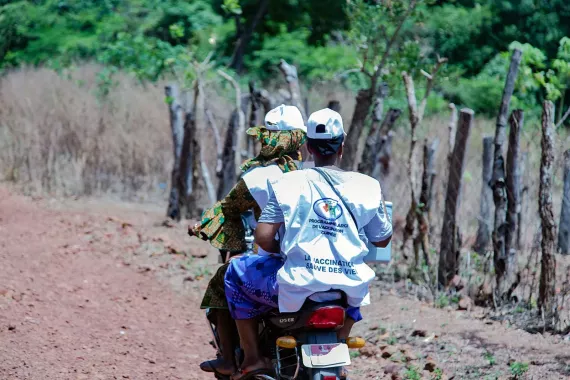
Community health workers in Lougoudhé, on the way to vaccinate children in Labé, Guinea.
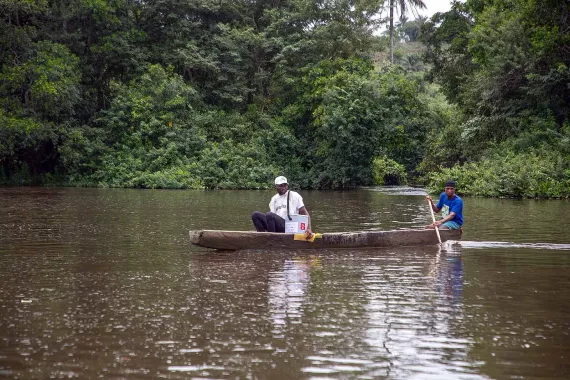
André Kolamou on his journey to vaccinate children who live in remote areas of N'Zérékoré, Guinea.
Knocking on every door

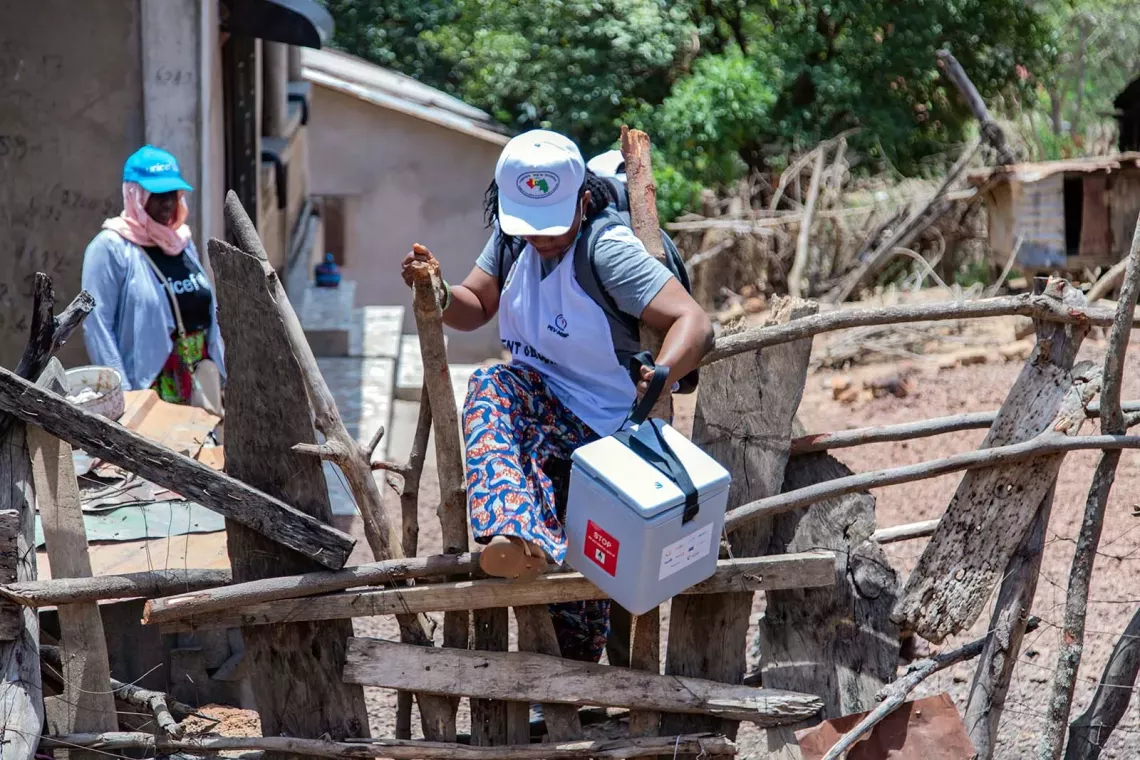

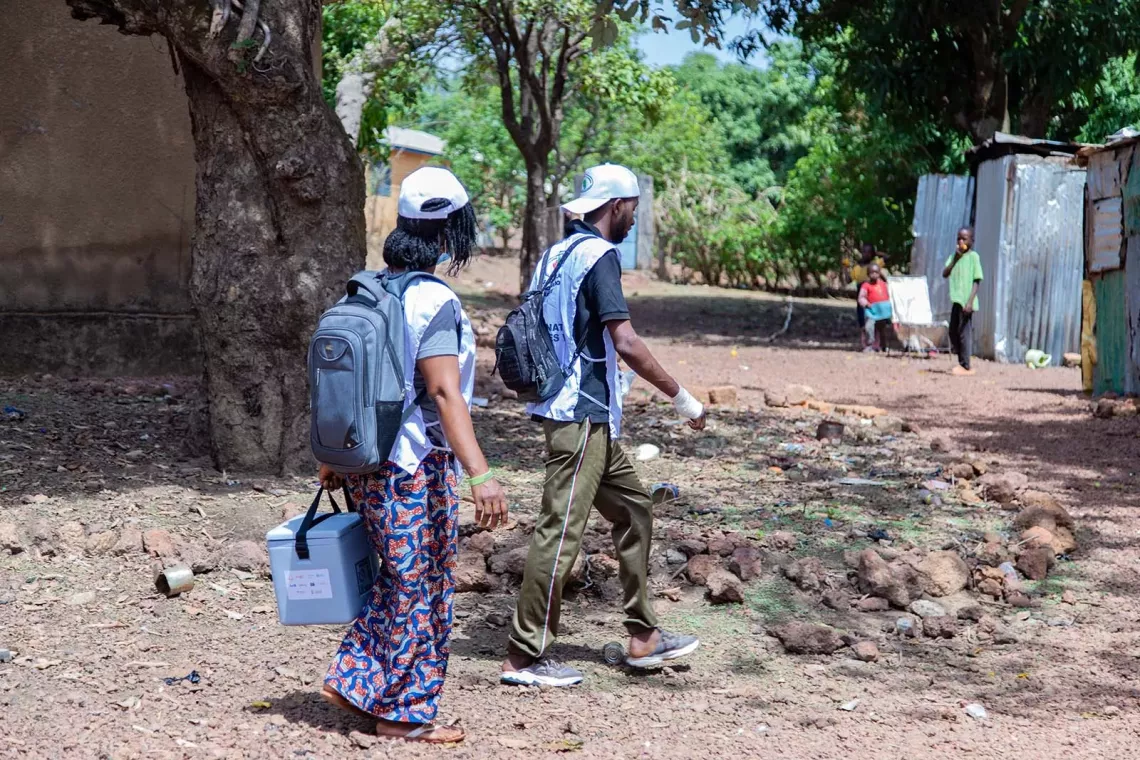
Health workers walk through a neighbourhood in the community of Ley-Gnembé in Labé, Guinea, knocking of door after door to ensure that every child under 5 receives a dose of the polio vaccine.

UNICEF Guinea/RLosseni

UNICEF Guinea/RLosseni
Antoinette Guilavogui is part of the vaccination team in N’Zérékoré, Guinea. Despite the hot weather, she carries her two-month-old daughter Doussou Haba during the campaign and hopes that her child’s presence will encourage reluctant families to accept vaccination.
"I chose to vaccinate my baby against polio to protect him from this disease. But I can't stand by and watch while other children in my neighbourhood are not protected. My goal is for all children to be vaccinated," she says.
When every drop counts
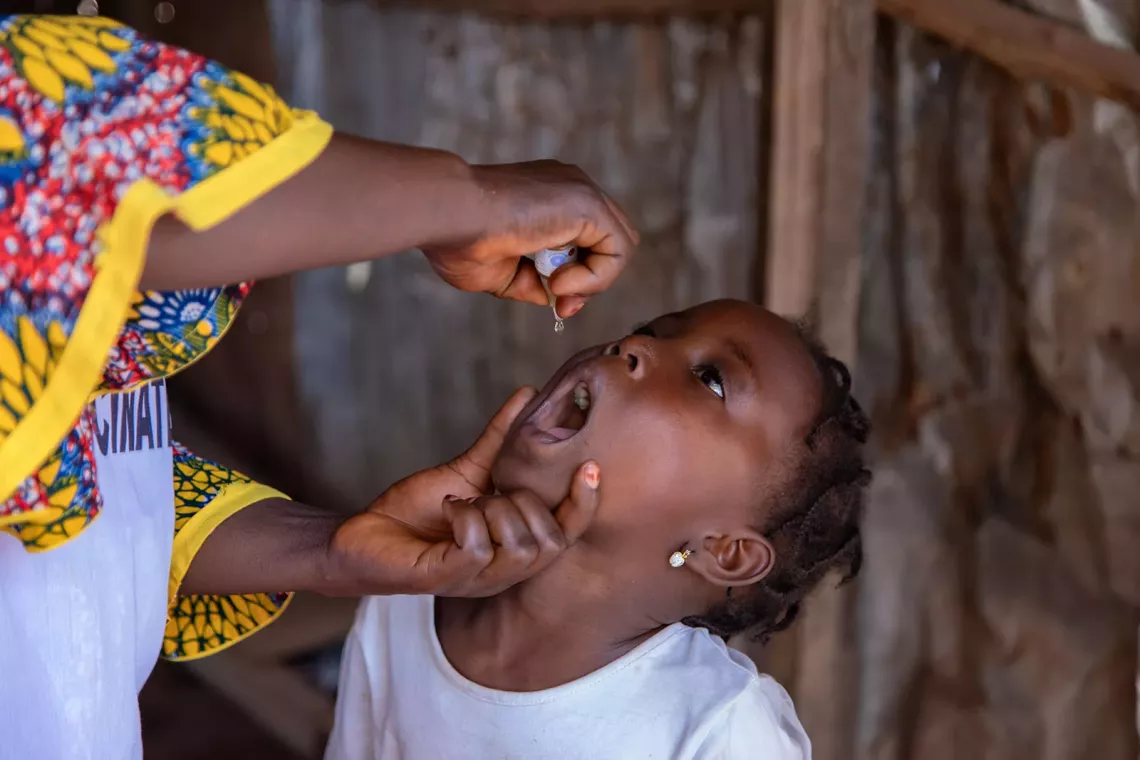
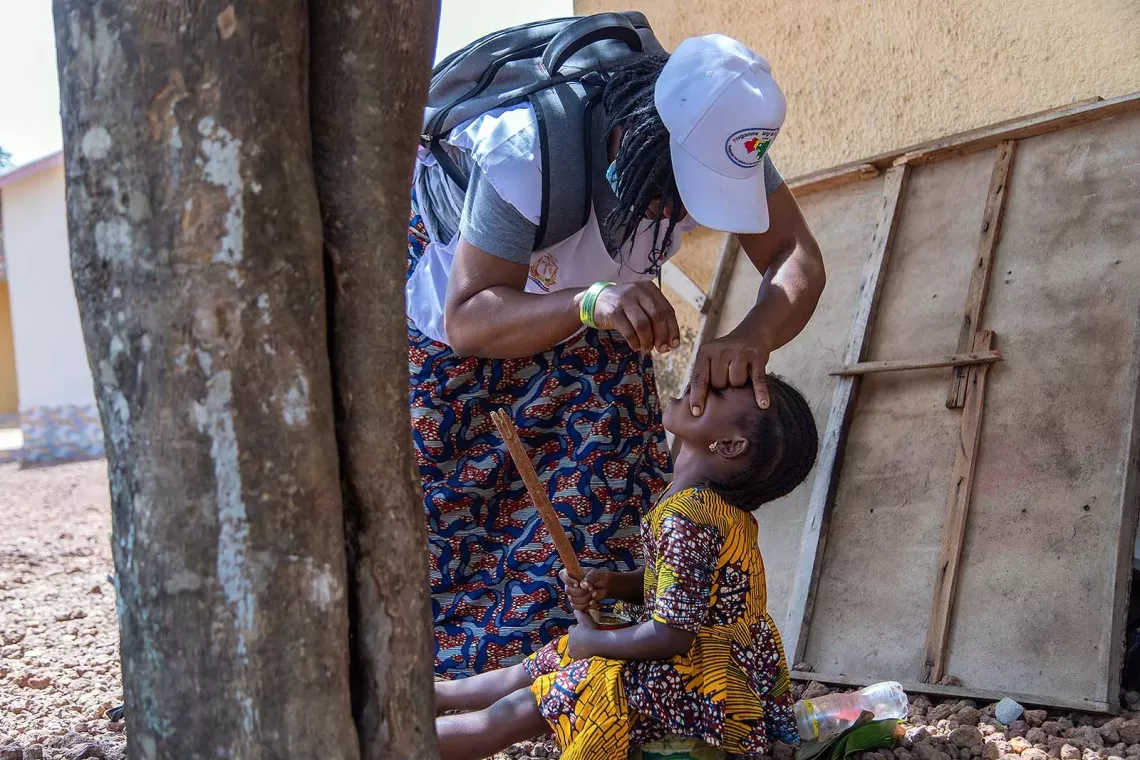
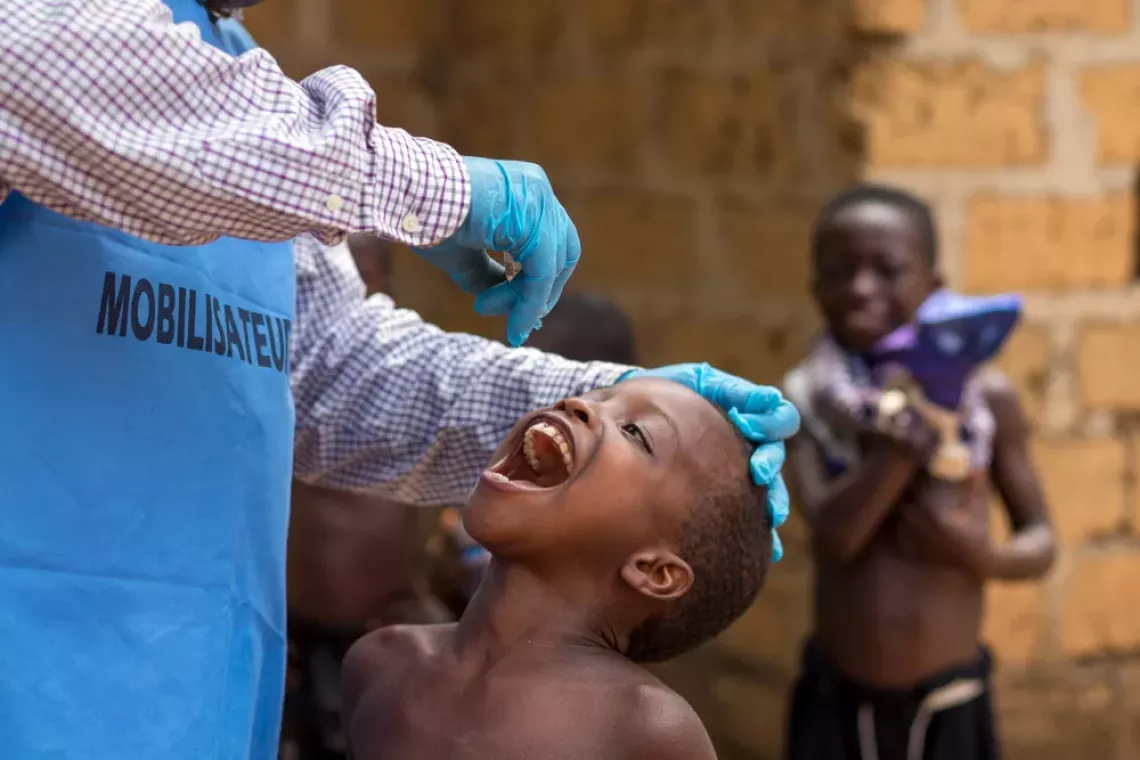
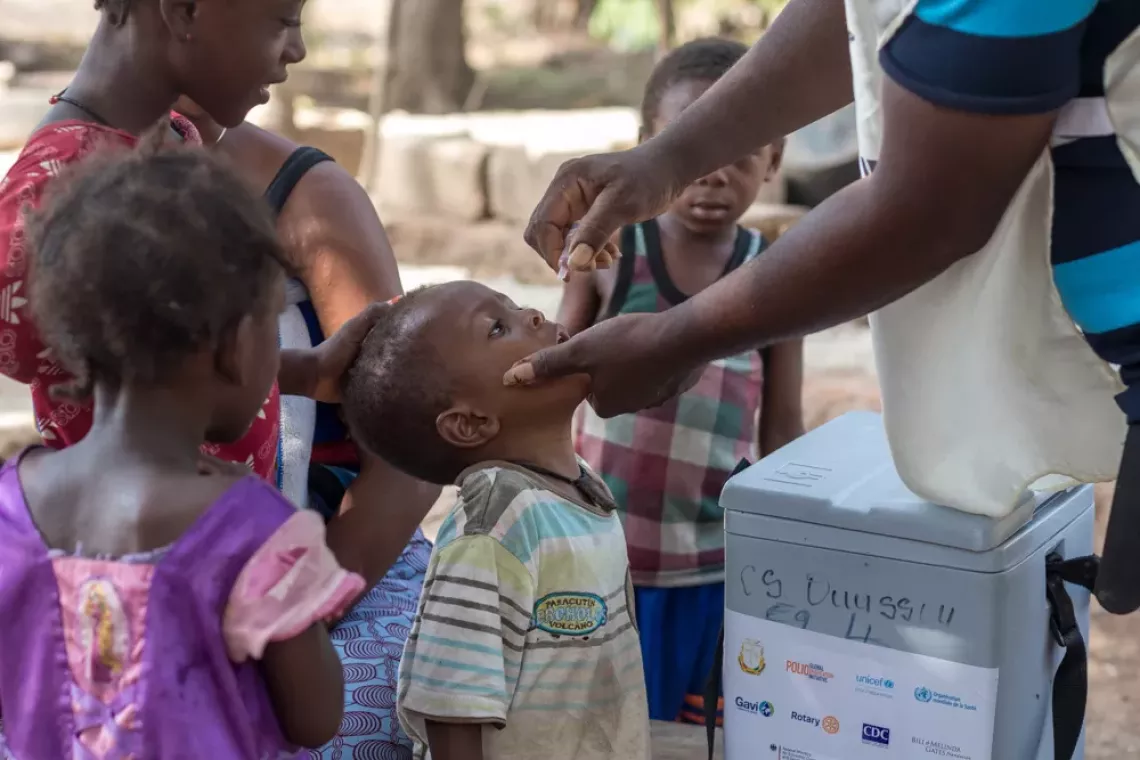
The culmination of hard work and long journeys: millions of children receive the vaccine drops that will protect them from a deadly viral disease.




House marking
Marking the doorway or wall of a place where children live is a simple but important step in vaccination campaigns. The marking provides information on when and how many children were vaccinated and if any child was not at home during the campaign. This helps keep track of the houses visited and informs social mobilizers whether they need to return to vaccinate any missed children or to try to convince caregivers who refused vaccination.

Little fingers marked
Immediately after children receive the polio vaccine, their little fingers are marked to indicate that they have been vaccinated. During a campaign, neighbourhoods may be chaotic, and the finger marking makes it easier for community health workers to confirm that a child has been vaccinated.

UNICEF/Guinée/ABah
In Labé, Guinea, a health worker marks the finger of a girl.

UNICEF/Guinea/RLosseni
In N'zérékoré, Guinea, four-year-old Amadou Oury Barry receives his finger marking with a smile.

UNICEF/Guinea/RLosseni
Fingers up: in N'Zérékoré, Guinea, Elisabette Sakovogui, 3 years old, and Angelline Sakovogui, 4 years old, proudly show that they have been vaccinated.
Based on a story originally published on UNICEF Guinea.