Oral rehydration salts (ORS) and zinc market note
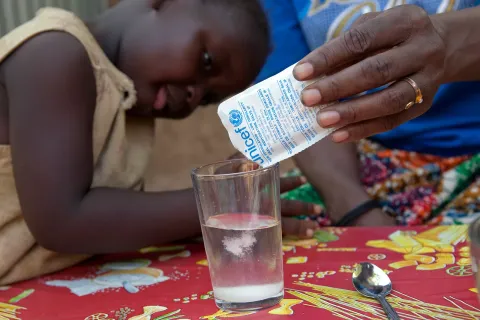
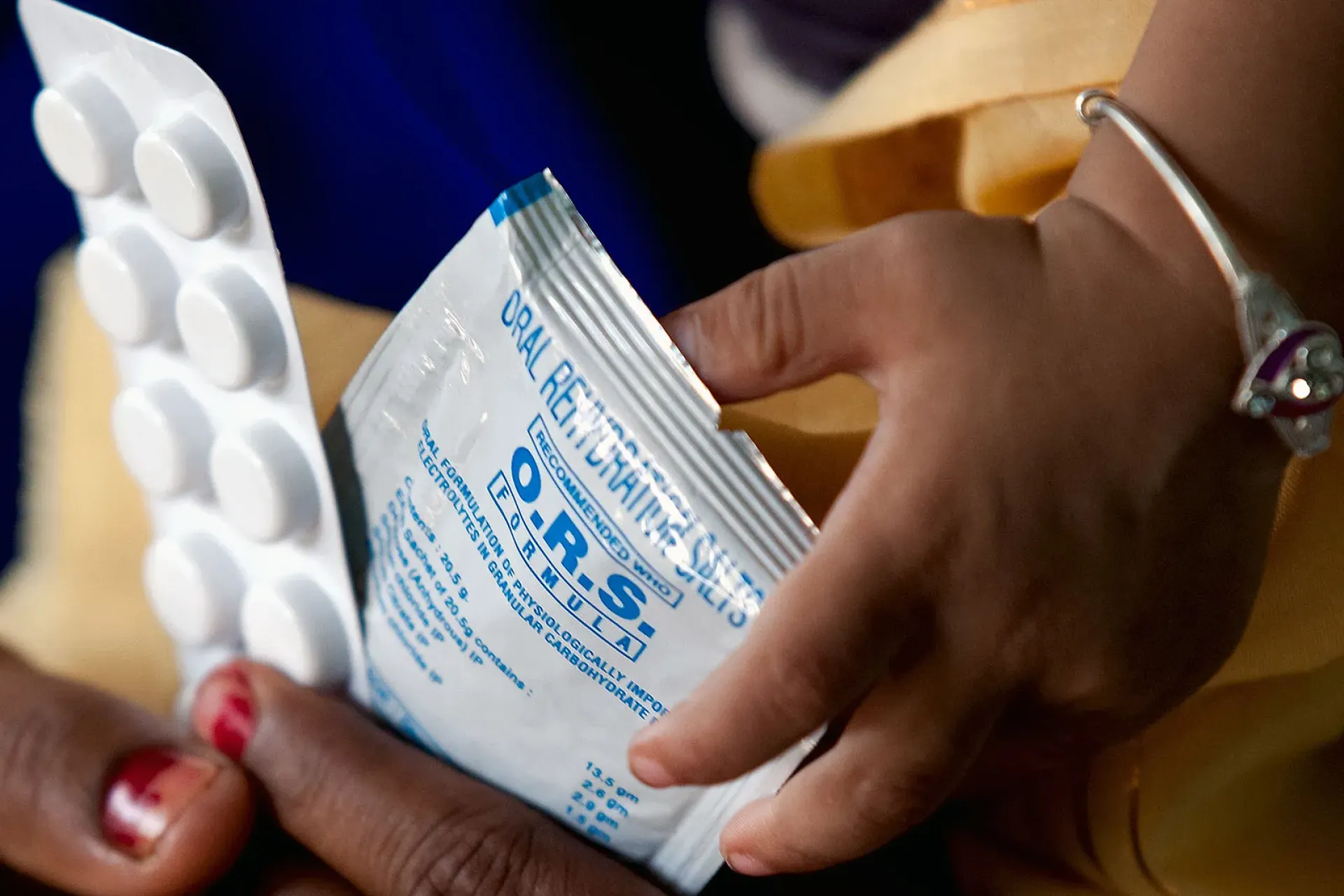
Co-packaged oral rehydration salts (ORS) and zinc is an affordable, highly effective treatment for childhood diarrhoea.
Last updated 6 July 2026.
Background
Diarrhoea is a leading infectious cause of child mortality, responsible for around 374,000 deaths in children under five and 40,000 deaths in children aged five to nine in 2024 alone.1 Globally, almost 1.7 billion children fall ill with diarrhoea every year, with 93 per cent of deaths concentrated in low- and middle-income countries. 2, 3
Oral rehydration salts (ORS) combined with zinc is a highly effective and affordable treatment for childhood diarrhoea: ORS restores essential fluids and salts lost during illness, while zinc reduces the duration and severity of episodes. With full access and coverage, the combined treatment could prevent up to 93 per cent of deaths caused by diarrhoea.
Currently, only 22 per cent of children with diarrhoea receive ORS and zinc treatment – well below the Integrated Global Action Plan for Prevention and Control of Pneumonia and Diarrhoea (GAPPD) 2025 targets.4 ORS and zinc are also among the most cost-effective interventions for childhood diarrhoea, with the potential to significantly reduce preventable child deaths if scaled.
Highlights
Highlights
The global burden of childhood diarrhoea creates a demand for billions of ORS sachets and zinc tablets annually. Addressing this need requires scaling up zinc manufacturing in the right formulations, strengthening country-level forecasting and supply chains, and equipping health workers to correctly diagnose and treat diarrhoea.
Despite proven effectiveness, large gaps persist in treatment coverage with many children still lacking access to combined ORS and zinc therapy, particularly in high disease and mortality burden regions, countries and parts of countries.
Limited commercial incentives, quality assurance issues and unpredictable financing pose challenges, making long-term planning and scale-up difficult.
Treatment recommendations
The World Health Organization recommends low-osmolarity ORS for children up to ten years with acute watery diarrhoea and dehydration, and adjunctive oral zinc for acute watery or persistent diarrhoea.5 Updated WHO guidance suggests a reduced dose of 5 mg zinc daily for up to 14 days, primarily to reduce side effects such as vomiting. As 5 mg zinc tablets are not yet commercially available, WHO and UNICEF advise continued use of established 20 mg per day for a period of 14 days. The revised guidance also recommends zinc gluconate salt, which is better tolerated by children due to improved taste compared to the currently prevalent zinc sulphate formulations.
Delivery at scale depends on strong primary health care systems. Integrated Management of Childhood Illness (IMCI) and Integrated Community Case Management (ICCM) are key programmatic strategies for reaching children through primary health care facilities and trained community healthcare workers.
Demand and forecasting
The global need for ORS and zinc is very high: roughly 1.7 billion episodes of diarrhoea per year among children creates a need for approximately four billion ORS sachets and 20 billion zinc tablets annually if all cases are optimally treated.2 Despite ORS and zinc being affordable and effective treatments for childhood diarrhoea, treatment coverage remains far below global targets. While the ultimate goal is universal access, reaching the 2030 global Child Survival Action target of 70 per cent coverage will require significant scale-up: currently only around 22 per cent of children with diarrhoea receive combined ORS and zinc treatment.
It is important to note that UNICEF’s procurement represents only a small proportion of the global need, as there is considerable local and regional manufacturing of ORS. UNICEF plays a particular role in bridging acute supply gaps and providing emergency supplies in outbreak contexts. This is reflected in UNICEF’s procurement of roughly 50 million ORS sachets per year and much smaller volumes of co-packaged formulations.
Demand through UNICEF is mainly driven by country programme funding and emergencies, making forecasting difficult and resulting in fluctuating annual volumes and limited uptake of co-packaged formulations. UNICEF continues to advocate for increased use and inclusion in national essential medicine lists, as well as access to this treatment through the public sector with domestic resources covering these essential medicines.
Supply
UNICEF has established long-term arrangements (LTAs) with certified manufacturers in high-burden countries to ensure a stable and timely supply of ORS and zinc. Despite efforts to diversify suppliers and improve co-packaging, challenges remain due to limited commercial incentives, quality assurance issues and fluctuating donor funding. UNICEF continues to advocate for broader access and sustainable procurement strategies to meet global needs.
Products available through UNICEF
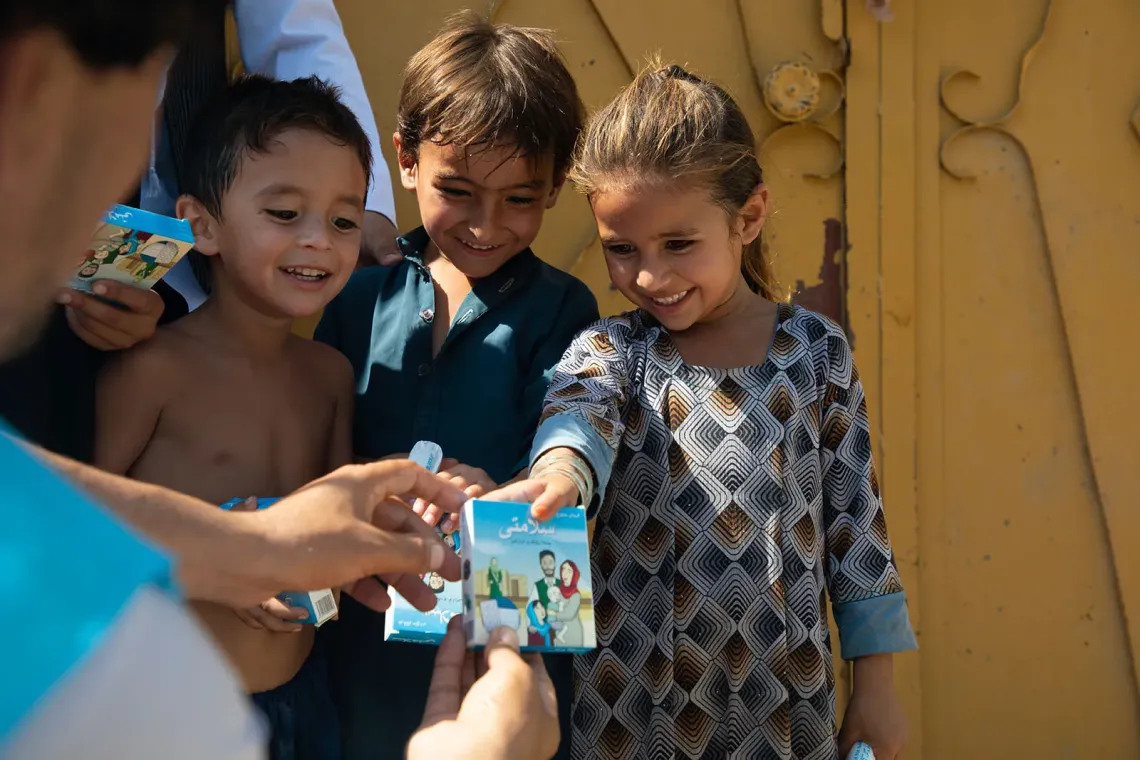
ORS and zinc co-package for the treatment of childhood diarrhoea was first included in WHO’s Essential Medicines List in 2019 to address the high mortality and morbidity associated with diarrhoea in children under five. ORS and zinc co-packaging can increase the persistently low uptake of the recommended combined ORS and zinc therapy, as well as improve dispensing practices – including by community health workers. It is critical that co-packaged ORS and zinc is a key component of national treatment guidelines, regulatory frameworks and procurement policies.
UNICEF has included co-packaged ORS and zinc in its supply catalogue since its introduction in 2014. UNICEF selects Good Manufacturing Practices (GMP) approved manufacturers competitively through its tenders, usually over a two or three-year period. Table one below lists UNICEF’s most recent ORS, zinc and ORS and zinc co-packaged tender awards.
The product range now includes flavoured and unflavoured ORS in different sachet sizes (1 litre, 0.75 litre, 0.5 litre, 0.2 litre) plus several co-pack configurations that align with WHO dosing recommendations and aim to improve acceptability and reduce wastage. ORS is technically simple to produce and often undertaken by non-pharmaceutical manufacturers, which, combined with the absence of WHO prequalification for ORS, contributes to quality concerns and a relatively small pool of suppliers meeting international standards.
Price overview
Co-packaged ORS and zinc is a low-priced, low-margin product, with a treatment course available for well under one US dollar. This supports affordability but can reduce commercial incentives for investment and quality improvements. UNICEF’s competitive tenders and multiple LTAs are designed to keep prices affordable while preserving competition between suppliers, including for new presentations and pack sizes. External market research points to steady growth in the global ORS market by value. Estimates vary widely, reflecting the structural data gaps that make investment planning for both manufacturers and procurers challenging.
Sustainability
UNICEF's sustainable procurement approach integrates social, economic and environmental criteria into product sourcing, with active efforts to diversify the ORS and zinc supplier base and build manufacturing capacity in high burden countries. A revised organization-wide Procedure on Sustainable Procurement now makes sustainability mandatory in tenders, and work is underway to establish systematic monitoring of suppliers' performance against environmental and social criteria. Locating production in high-burden countries supports the economic dimension of sustainability, strengthening local industry while improving supply chain resilience and responsiveness in emergencies.
UNICEF and partners
Since the early 2000s, UNICEF has worked with manufacturers and UN partners to develop and secure international recognition of co-packaged ORS and zinc as an accessible, guideline-aligned treatment for childhood diarrhoea, as well as supporting interventions to improve care seeking.
These combined interventions have enabled some countries and subnational areas to reach substantially higher combined ORS and zinc coverage than regional averages, demonstrating the impact of coordinated policy, supply and community-level action. However, more work and interventions are needed to increase the coverage of this life-saving treatment.
Issues and challenges
Quality of care
- Zinc availability continues to be a significant constraint.
- Adherence to diarrhoea treatment guidelines remains inconsistent.
- Prescribing practices do not always align with recommended standards.
- Treatment adherence among caregivers is often inconsistent.
Supply chain and access
- Stock-outs at facility and community levels remain a persistent concern.
- Last-mile distribution presents ongoing logistical challenges.
- Replenishment lead times are long.
Quality assurance
- WHO-prequalified ORS products are not yet widely available.
- Non-pharmaceutical ORS manufacturers may introduce quality risks.
- The pool of quality-assured suppliers remains relatively small.
Manufacturing capacity
- Only a limited number of manufacturers currently produce ORS and zinc co-packs.
- The supplier base remains fragmented.
- Local production capacity has yet to reach adequate levels.
Raw material dependency
- Access to pharmaceutical-grade APIs can be difficult to secure.
- Reliance on imported APIs and packaging materials introduces vulnerability.
- Exposure to global supply disruptions poses challenges.
Financing and market sustainability
- National funding for ORS and zinc remains insufficient.
- No dedicated global financing mechanism is currently in place.
- Donor funding is volatile and demand forecasts remain uncertain.
- Low product margins continue to weaken commercial incentives.
Strategic market-shaping challenge
- Supplier investment remains limited and driven by uncertain demand, weak profitability and fragmented procurement.
Steps forward
UNICEF will continue to:
- Actively seek and establish more LTAs with GMP compliant manufacturers of ORS and zinc co-packaged products, especially in high burden countries.
- Advocate for the use of ORS and zinc as a cost-effective treatment for childhood diarrhoea in the integrated management of newborn and childhood illness (IMNCI) and its community equivalent the integrated community case management (iCCM), especially in UNICEF high burden countries.
- Monitor emerging product innovations, including dispersible or effervescent ORS tablets and ready-to-drink ORS formulations as well as emerging evidence on adjunct therapies and probiotics for diarrhoea management.
- Advocate and strengthen national supply chain systems including last mile deliveries.
For further questions or additional information, please contact:
Caroline Kiyiika
Contracts Manager
UNICEF Supply Division
Email: [email protected]
References
1. United Nations Inter-Agency Group for Child Mortality Estimation (UN IGME). Child Mortality Estimates: Causes of Death – Diarrhoeal Diseases. CME Info; 2024. Available at: https://childmortality.org/causes-of-death/data?type=DEATHS&causes=DIARRHOEAL&d_refArea=WORLD
2. World Health Organization. Diarrhoeal Disease. Geneva: WHO; 2024. Available at: https://www.who.int/news-room/fact-sheets/detail/diarrhoeal-disease
3. GBD 2023 Diarrhoeal Disease and Enteric Infectious Diseases Collaborators. Global burden of enteric infectious diseases, diarrhoeal diseases, and corresponding aetiologies, 1990–2023: a systematic analysis for the Global Burden of Disease Study 2023. The Lancet Infectious Diseases. 2026; published online 2 June. doi:10.1016/S1473-3099(26)00194-5. Available at: https://www.thelancet.com/journals/laninf/article/PIIS1473-3099(26)00194-5/
4. World Health Organization and United Nations Children's Fund (UNICEF). The Integrated Global Action Plan for the Prevention and Control of Pneumonia and Diarrhoea (GAPPD). Geneva: WHO; 2013. Available at: https://www.who.int/publications/i/item/the-integrated-global-action-plan-for-prevention-and-control-of-pneumonia-and-diarrhoea-(gappd)
5. World Health Organization. Guideline on Management of Pneumonia and Diarrhoea in Children up to 10 Years of Age. Geneva: WHO; 2024. Available at: https://www.who.int/publications/i/item/9789240103412