A future on her own terms
Thanks to support from her family and confidence gained from the Rupantaran life skills programme, Babita from western Nepal is clear about the future she wants
Surkhet, Nepal: At 17, Babita Budha has watched many girls her age leave school, marry early and take on responsibilities before they were ready. In her home in Surkhet District in western Nepal, she says only a few girls her age remain unmarried.
“As far as I’ve seen, in our village, It’s just me and a few others left,” Babita says. “The rest have all gone and married.”
Babita speaks about them with care, not judgement. When friends share that married life has brought arguments, responsibilities and regret, she listens — and tries, in her own way, to encourage others to think differently.
“When you hear that, of course you feel bad,” she says. “They’re your friends. I try my best to advise them.”
Her belief in delaying marriage is also rooted much closer to home. Babita has grown up hearing and seeing how early marriage shaped her mother’s life.
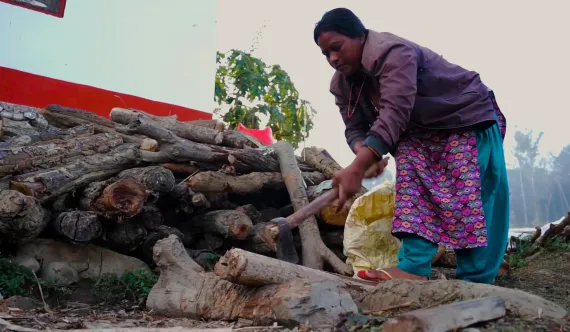
Her mother, Bhabika, grew up in a poor farming family in a rural area. As a girl, she was not sent to school.
“That was how it was back then, only the boys went to school,” she says. “As a girl, they said you were destined to go to someone else’s home in the future.”
Bhabika married at 18 and became a mother at 19. She remembers those early years as difficult and uncertain. “It was a struggle to raise her, care for her,” she says. “I was clueless.”
Looking back, Bhabika wonders how different life might have been if she had been older and more prepared.
“If I’d waited until I were a bit more mature, smarter, before getting married, maybe I wouldn’t have had to suffer so much,” she says.
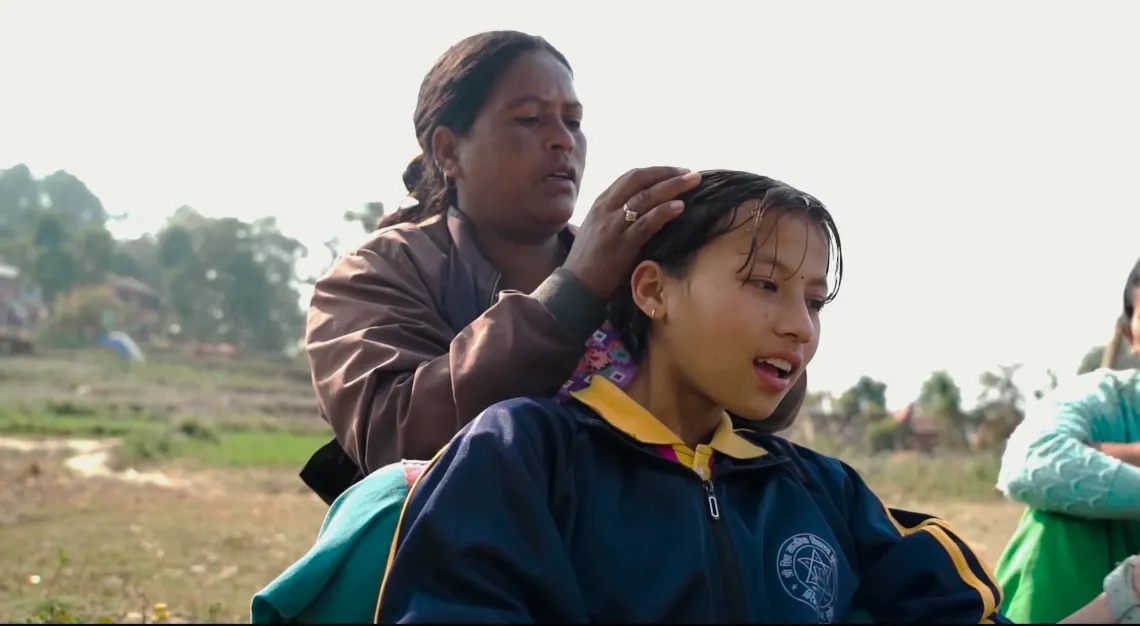
That experience has shaped what Bhabika wants for her daughters. She tells them to study, to learn, to find good work and to never tolerate violence or mistreatment.
“Even if I have to do manual labour for other people, wash their dishes, clean up their trash, even their toilets, I wouldn’t hesitate to do any of it if it means enabling my children to study,” she says. For Bhabika, every hardship is worth it if her daughters can have the choices she did not.
In Babita, Bhabika is already seeing what those choices can look like. She links much of the change to the Rupantaran life skills sessions, supported through the Empowered Women, Prosperous Nepal programme, a collaboration of the Government of Nepal, the European Union and the United Nations.
Her daughter is still her little girl, but she is also becoming more confident, more active and more willing to speak up.
“Ever since she started the Rupantaran class, she’s become very active,” Bhabika says. “In my opinion, these sessions have helped both me and my daughter.”
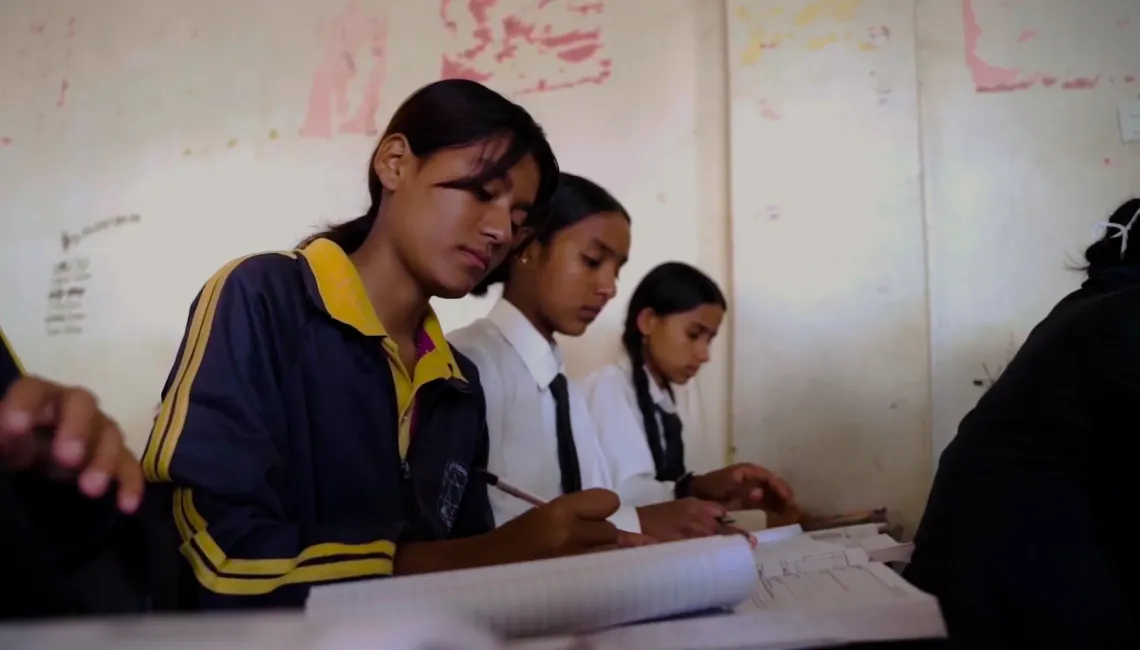
Through the sessions, Babita says she has had space to reflect on herself and the world around her, learning about issues such as gender, gender-based violence, saving and self-confidence.
The lessons have stayed with her beyond the classroom. Babita shares what she learns at home, talks to her sister and brings new confidence into conversations that once may have felt difficult.
“Through Rupantaran, I feel that my self-motivation has become stronger,” Babita says. “I used to be an overthinker, worrying about everything. I was always wondering whether or not I’d be able to do a given thing.”
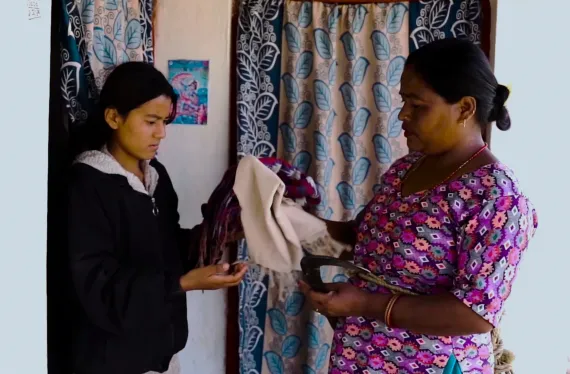
“But after attending the sessions, I realized that if you believe in yourself, you can do a lot.”
The Empowered Women, Prosperous Nepal programme is a four-year joint initiative of the Government of Nepal, the European Union and the United Nations, implemented by ILO, UNFPA, UNICEF and UN Women in collaboration with federal, provincial and local governments. Through initiatives like Rupantaran, the programme supports girls, families and communities to challenge harmful social norms, prevent gender-based violence and expand opportunities for women and girls.
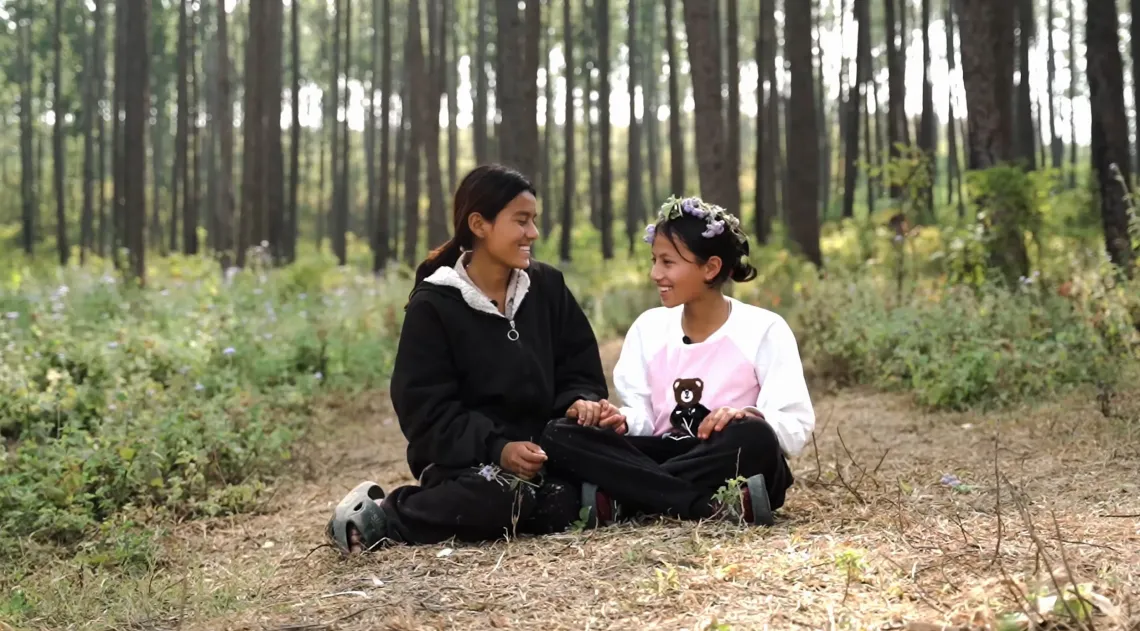
For Babita, these changes are visible in everyday moments, including the conversations she has with her younger sister, Gunjan.
“Haven’t you heard of ‘Bihebari 20 Barsa Paari’?” Babita asks Gunjan, referring to the campaign that encourages marriage only after the age of 20.
She reminds 12-year-old Gunjan that their mother was married at 18. “Think of all the struggles she went through because of that,” Babita says gently.
When Babita asks whether Gunjan thinks she will marry young, the younger girl responds quickly: “Nooo! I won’t.”
It is a small exchange between sisters, but it carries the weight of something larger: a family choosing education over early marriage, and a future in which girls like Babita and Gunjan can make decisions on their own terms.