Finding joy again
In flood-hit Kavrepalanchowk District, child-friendly spaces supported by UNICEF and the Republic of Korea are helping traumatized children find solace and rebuild confidence

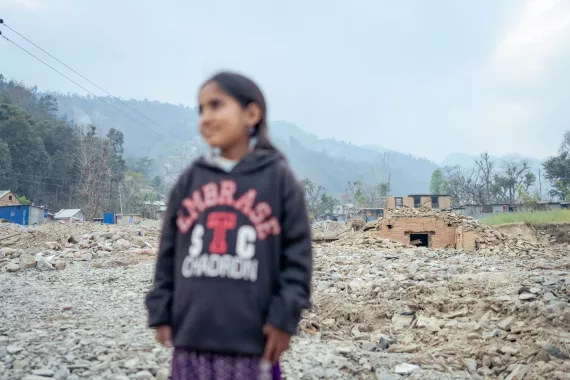
Kavrepalanchowk, Nepal: When the floods came, they took away nearly everything Radhika Bohora knew—her home, her books, her clothes. At just ten years old, the little girl from Kavrepalanchowk District in central Nepal found herself in an unfamiliar reality, one where loss loomed over everyday life. But amidst this uncertainty, she discovered a place where she could still be a child.
“I go to school, and then to the child-friendly space after that,” Radhika says. “I really like it there.”
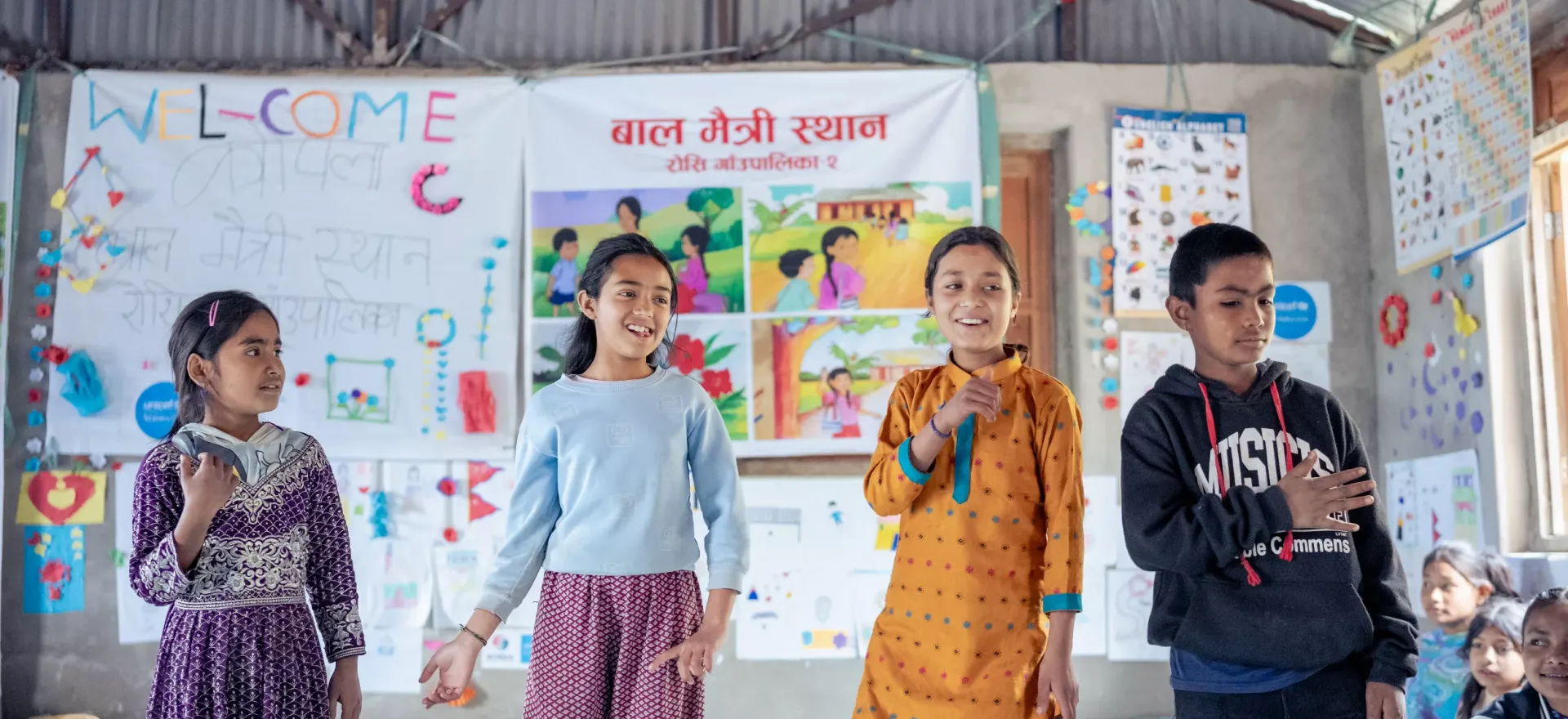
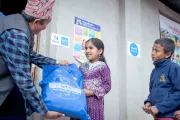
In the aftermath of the devastating floods and landslides that hit Nepal in September 2024, UNICEF, with support from the Republic of Korea, has set up eight child-friendly spaces in Kavrepalanchowk District – one of the most affected areas. These spaces are providing psychosocial support, recreational activities and learning materials for a total of 361 children, ensuring that even in crisis, they have a place to heal.
For Radhika, this space is more than just a room filled with books and toys—it is a refuge.
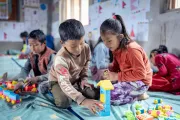
Here, she learns about what it means to be a child, about child marriage, and how to recognize good and bad touch, among other things. She reads, writes, draws, plays ball, skips rope, and laughs with new friends.
UNICEF Nepal/2025/RUpadhayay
“I have a lot of fun."
- Radhika
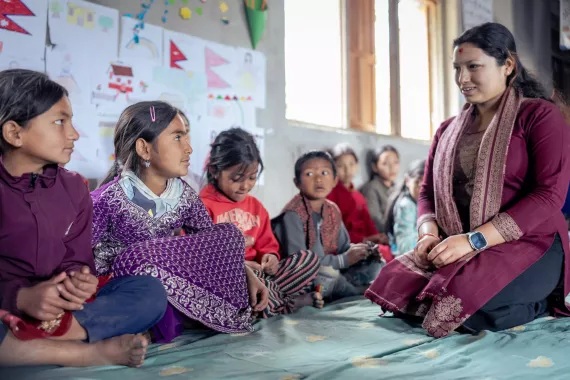
Sushmita Luitel, a facilitator at the child-friendly space Radhika attends, has witnessed firsthand the impact of these havens.
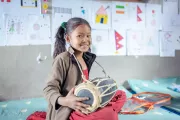
“We have 86 children who come here, some from quite a distance,” she explains. “Whatever they need—drawing, singing, dancing—we create activities accordingly.”
According to Sushmita, when the space first opened, many children were shy and hesitant, struggling to process the trauma they had endured. But over time, their confidence has grown. They speak more freely, express their emotions, and engage actively in learning sessions.



“They’re able to express their feelings well,” Sushmita says. “I think this will help them in the future.”
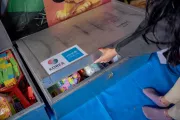
To further encourage expression, facilitators have placed a box where children can drop notes about their thoughts and feelings, as well as any suggestions for the space. These small notes serve as windows into the children’s hearts, helping the facilitators adapt activities to better support their needs.
As families continue to recover and rebuild from the disaster, for Radhika and many other children, the CFS offers a place to rediscover joy—one skipped rope, one drawing, one story at a time.