When she spoke up
In western Nepal, an 18-year-old student finds the courage to report online sexual abuse — and reclaim her sense of safety

Surkhet, Nepal: At first, no one knew why Rita Nepali* had started withdrawing from her friends.
A bright and hardworking 12th grader in Surkhet District in western Nepal, Rita had always been focused on her studies. But soon after she returned from participating in a sports competition held in February this year, something changed.
She became unusually quiet, avoiding conversations and staying indoors. “She didn’t want to talk to anyone or even come to school regularly,” recalls one of her friends.
Behind her silence was something she hadn’t dared to share with anyone — not her friends, not even her family. Rita had started receiving disturbing messages from a fake social media account that used her own photo. The messages included abusive language, the threat of sending inappropriate sexual videos and sexual images through her fake ID, and repeated threats to harm her at home.
“I was scared people would blame me because of the kind of content I was being sent,” she later said. “So, I didn’t tell anyone — I kept it all to myself.”
As the messages continued and the threats became more aggressive, Rita’s mental health began to suffer. Isolated and anxious, she struggled to focus on school or feel safe in her own home.
It was during a school-based sensitization session on violence against children – including online sexual abuse – provided through a case manager that Rita first realized she had options. The session was part of the Safe to Learn (STL) initiative supported by UNICEF and the Global Partnership for Education (GPE), which aims to ensure that children can learn in safe, inclusive and gender-responsive environments. The programme also strengthens coordination between education and child protection systems to address violence in and around schools.
The session gave Rita the courage to speak up.
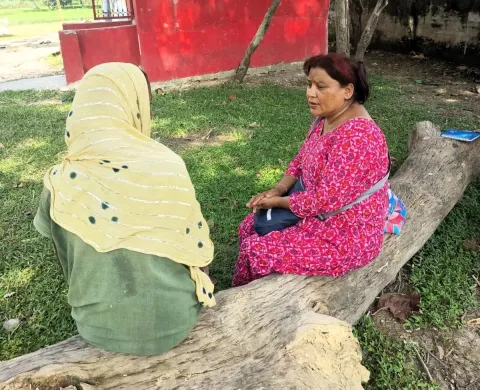
She confided in the grievance focal teacher at her school, who immediately brought the case to the school’s Complaint Response Mechanism (CRM) committee. It was then referred to the case manager, who provided counselling, conducted home visits and sensitized her parents. They were helped to understand their role in supporting their daughter and the importance of reporting the incident through formal channels. The case was then referred to the local police for further action.
The police took the complaint seriously. Following an investigation, they were able to identify the person behind the fake account and took the necessary legal steps. Since then, Rita has not received any more threats or harmful messages.
To support her recovery, Rita continues to receive regular counselling support from the STL case manager, who is also a trained psychosocial counsellor. Her anxiety has eased, and she has returned to school feeling much safer and more confident.
“Keeping problems to oneself doesn’t solve anything,” she says. “But when we open up and seek help, the fear goes away, and the problem gets resolved.”
*Name changed to protect identity.