Dry days
How delayed rains during the monsoon left children and families in Nepal’s southern plains facing severe water shortages and health risks

Madhesh Province, Nepal: On 29 July 2025, cracked fields stretched across parts of Madhesh Province, the soil split from weeks without rain.
Despite July being peak monsoon season, the skies stayed dry, and communities faced severe water shortages.

“Last year there was plenty of rainfall. Now, there’s only heat. The fields are full of dead crops—there’s been no rain,” says Neetu, 11, from Parsa.
For many families, the daily search for water means hours under the harsh sun, often at the expense of school and rest.


UNICEF Nepal/2025/RMaharjan
“Since the water pipe dried up, we have to walk long distances to fetch water. My hands and legs ache, and the harsh sun makes me not want to go outside,” - Rita, 14, from Parsa.
In some villages, the only available water is contaminated, leaving children and families vulnerable to disease.


“The water pipes are connected to dirty drains. Drinking from there has caused illness. My friend suffered from high fever and is admitted to hospital,” says Neetu.
In response, the Government of Nepal and UNICEF have provided 10 water tanks and WASH supplies to 600 households in Birgunj, along with water quality tests to ensure safety.


This drought is one of many visible impacts of climate change — disrupting seasonal patterns and bringing floods, heat waves, and, in this case, prolonged dry spells.
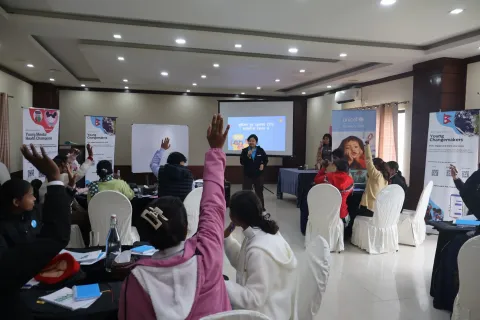
Youth advocates like Pinki are speaking out.


UNICEF Nepal/2025/RMaharjan
“Nutritious meals are essential for children, but due to the drought, this need is not being met. This heat also keeps children from going to school,” - Pinki, 21, from Sarlahi