

Child Protection
We work to protect children from violence, exploitation, abuse and neglect
- English
- नेपाली
The Challenge
All children have the right to be protected from violence, exploitation, abuse and neglect. Yet, millions of children worldwide, including in Nepal, from all socio-economic backgrounds, across all ages, religions and cultures suffer violence, exploitation and abuse every day. Millions more are at risk. UNICEF works to improve the policies and services that protect all children. We aim to make the world a safe place for children to thrive.
Child protection concerns manifest themselves in many forms in Nepal: violent discipline, child marriage, child labour, trafficking, violence against women and girls, unnecessary placement of children in orphanages/residential care homes and correction homes, and insufficient access to child-friendly and gender sensitive-justice.
Nepal’s progress in terms of child protection is mixed. On a positive note, there are less child brides, reporting to police on cases of violence against women and girls increased substantially, cases of trafficking are increasingly being intercepted, laws and policies are more protective of children, specialized units in the justice sector are in place and data on children is increasingly available. Unfortunately, challenges persist. Children in Nepal still face many child protection challenges:
- The pace of decline in child marriage is slowing down. Two in every five girls are getting married before the age of 18 years. Sustaining and accelerating the reduction of child marriage remains a challenge due to community acceptance, deeply entrenched social norms undervaluing girls, and a strong patriarchal society. Child brides are more likely to drop out of school, get pregnant early, and suffer domestic violence including dowry-related abuses and violence.
- Almost every child between 1 and 14 years suffers violence in their own home. Violent discipline affects 82 per cent of children. Parents have insufficient skills positive disciplining techniques, there is societal acceptance of violence, and general lack of understanding of its negative consequences.
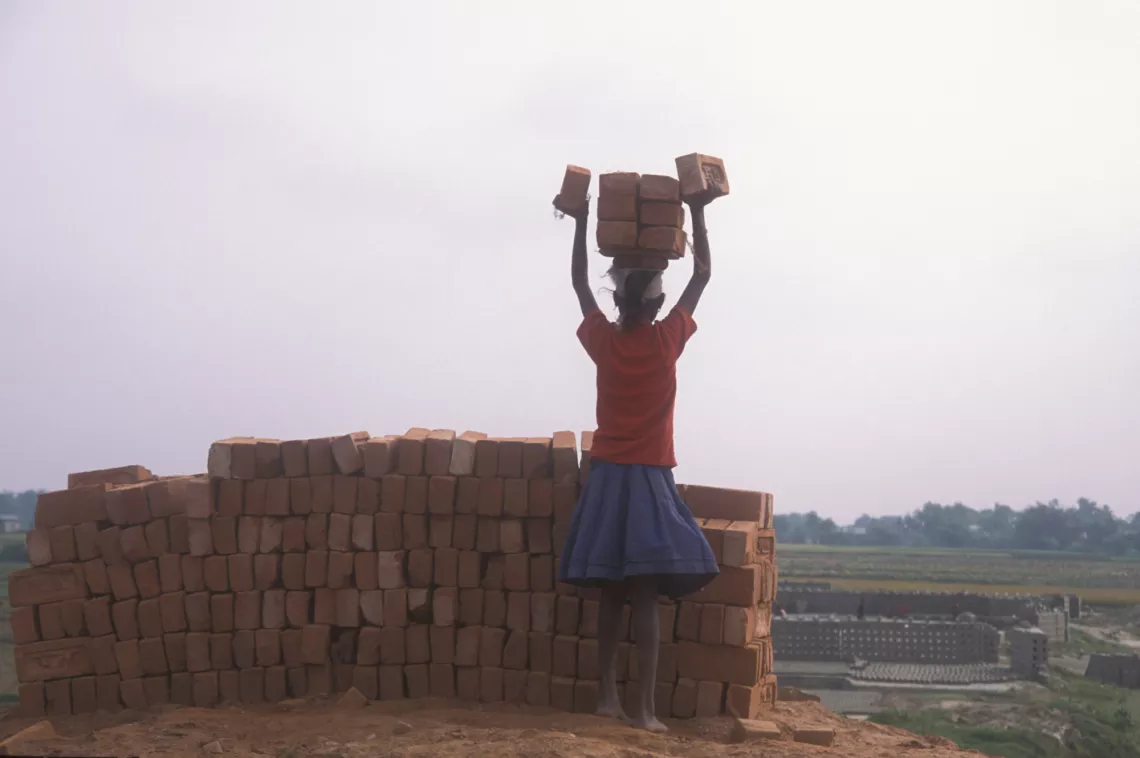
- Child labour has not abated. One in every three children aged 5-17 years in Nepal are engaged in labour, and almost all of them are working under hazardous conditions.
- More than 25,000 children are living in residential care institutions . Parents abandon, voluntarily relinquish or place their children in institutional care because of their inability to look after them, because of misconceptions that institutional care will provide better education opportunities or due to their lack of awareness on the importance of children growing up in family setting.
- Whilst on a positive note, violence against women is increasingly being reported to the police, the number of cases of violence against children remains largely unreported;
- Nepal continues to be a major source, transit hub and destination country for trafficking in persons.
- Professional government-funded case management, which is one of the most critical service elements of a child protection system, has yet to be scaled up.
- Social welfare workforce - be it government of non-government paid - in Nepal is under-resourced. This workforce is the backbone of a functional national child protection system in prevention, early intervention, response services & case management for any child facing child protection concerns, be it unaccompanied and separated children, children requiring foster care placements, or requiring support when suffering violence. As a result, detection, reporting and referral mechanisms are inadequate as are documentation and information management systems. Given these limitations, whilst some cases do receive some form of response, it is often ad-hoc, short-term, limited in coverage and often does not adequately assessment the child’s situation.
- Children’s access to justice is limited. Children in conflict with law, child victims and witnesses have limited access and referral to social services. Child-sensitive procedures are not applied at every stage of the proceedings. Cases involving children including child victims and witnesses of crime are not always dealt by juvenile benches.
- For children in conflict with law, legal measures and mechanisms for diversion, restorative justice, and alternatives to custodial sentencing are yet to be finalized and reintegration services are very limited.
The Solution
The Child Protection programme aims at preventing and responding to violence, exploitation, abuse and neglect of children, including in emergency contexts. The major results of the child protection programme are outlined below:
Key result to be achieved by 2022
Child protection system strengthening
State institutions and other partners have increased capacity to legislate, plan and budget to prevent and respond to child protection concerns including during humanitarian situations
Prevention of violence and exploitation
Children, families/caregivers, teachers, communities and state institutions have improved knowledge, skills and capacity to prevent and respond to violence (violent discipline, gender-based violence and child marriage) and exploitation (child labour and trafficking) of children
Justice for children
Justice/security professionals and social workers have improved knowledge and capacity to provide child friendly and gender-sensitive services to protect children in contact with the justice system.
Indicators of success
Achievement of these results will be measured, through:
↓less use of violent discipline (physical and/or psychological)
↓ less child brides
↓ Less children engaged in child labour
↓ less children living in residential care institutions
↑more cases of violence against children and women (rape, attempted rape, trafficking, child marriage, domestic violence) reported to the police
↑ more justice and security personnel capacitated on child friendly and gender-sensitive justice for children including diversion and restorative justice.
↑more community groups members trained on measures to prevent and respond to violence and exploitation (violent discipline, child labour, child trafficking and child marriage)
The main strategies to achieve the above-mentioned results include:
- Policy dialogue and advocacy on government budget allocation to child protection services, including but not limited to social welfare workforce, justice, policing, social work, case management, education staff, health workers, legal aid, psycho-social support and rescue. This comprises upstream work with attention to policy reform, institutional capacity development, planning, budgeting, and monitoring and information systems. A system-approach to child protection provides a more cohesive, sustainable, and cost-effective way to address child protection concerns and will more likely result in longer-term impacts. This approach addresses the complex and inter-related and multiple causes rather than the symptoms.
- Strengthen provincial and palika-level capacity to lead on prevention and reduction of child labour, child marriage, violence against children, trafficking and children living in residential care institutions
- Support to integration and cross-sectoral linkages for effective referrals (e.g. health, education, social policy) including case management procedures
- Prevention efforts & social change to reduce child marriage, child labour, and violent discipline. Unless deep-rooted, harmful social norms are addressed, children will not be free from violence, abuse, and exploitation. To this end, UNICEF will focus on changing existing social norms to bring about collective changes through communication for development strategies and interventions, in partnership with health and education sectors, bringing in men and boys, religious and community leaders (by identifying positive role models)
- Strengthen Government of Nepal’s capacity to engage in cross border collaboration with neighbouring countries as well as countries of destination to curb trafficking in persons
- Evidence generation to ensure that interventions are based on sound knowledge of what interventions will work or yield most impact, and testing of innovative approaches.
- Partnership with private sectors and civil society organizations.
Resources
