Dear Matrika,
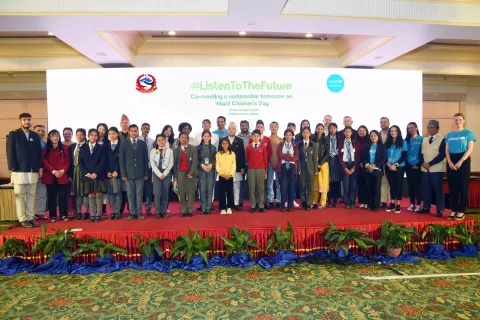
Thank you for your thoughtful letter and for raising critical concerns shared by many children and young people across Nepal. We deeply value your insights on how climate change is affecting children’s lives, including their education and health, especially as we mark World Children’s Day today. On this special day dedicated to amplifying the voices and rights of children everywhere, your letter reminds us why it is so important to listen to young people and take action to protect their futures. Both the Government of Nepal and UNICEF, as well as our many partners, are committed to addressing these pressing challenges to ensure Nepal’s children are healthy, safe and resilient.
Children and young people in Nepal, like you, are at the center of the climate crisis. Nepal ranks 51st out of 163 countries on UNICEF’s Children’s Climate Risk Index, highlighting children’s high exposure to climate-related hazards. This exposure disrupts their education, undermines their health and nutrition, and compromises safe environments required for their growth and development. The cumulative effects of these climate disruptions, beginning from early childhood and continuing through adolescence and beyond, can lead to lifelong setbacks and put an entire generation’s future at risk.
The effects of climate change are deeply interconnected, with each impact intensifying others, creating complex challenges for children.
Climate pressures, for example displacement due to floods or financial strain due to failing harvests, do not just disrupt school and healthcare—they also put girls and boys at risk of exploitation and abuse, for example by pushing families toward heartbreaking choices, like child labor or early marriage. Therefore, the climate crisis, at its core, is a child rights crisis.
That’s why in the past few months, we have been consulting with children and young people like you, as they seek to contribute to climate action and policies, including the third generation of Nationally Determined Contributions (NDCs 3.0). Their voice is loud and clear. We must work with them now to secure a sustainable future. Children and young people have also demonstrated that they have the power to advocate for effective solutions and promote environmentally sustainable lifestyles – setting an example for their communities, country and the world.
The climate crisis will continue to have serious economic impacts, especially if we fail to invest in children and social sectors. Without adequate mitigation measures today, Nepal faces the likelihood of an annual loss of 2.2 per cent of GDP and an adaptation bill in the millions of US dollars. Investments in climate actions will pay off. According to UNICEF estimates, every US$1 invested in climate-related adaptation today may yield up to $10 in economic gains.
That is why we need to urgently invest in resilient social services. Prioritizing these services that children and young people rely on – such as health and nutrition, water and sanitation, and education, and protection - is one of the best investments we can make.
At the same time, we need to equip children and young people with climate education and green skills, and engage them as climate champions.
On this World Children’s Day, we are grateful for your thoughts, and we invite you and your peers to keep sharing your experiences and ideas. Together, with your insights and energy, we can build a resilient future where Nepalese children can learn, grow and succeed despite the challenges posed by climate change. We would also like to wish you and all children in Nepal a Happy World Children’s Day.
This letter was originally published in Kantipur Daily on 20 November 2024.