
Education for adolescents
Promoting learning that builds life skills among adolescents

Challenges
There are multifaceted challenges facing adolescents in Namibia. Despite secondary education being free, dropout and repetition rates remain prevalent. Children from poor households and rural areas are more likely to miss school and drop out.
School going children and adolescents in Namibia are unable to reach minimum proficiency levels in language and Science, Technology, Engineering and Mathematics (STEM) subjects compared to their peers in the Southern African region. Limited human resources is one of the factors that continue to negatively impact on the overall learning outcomes.
This is exacerbated by the poor infrastructure, and limited teaching and appropriate learning materials - hampering the delivery of quality education at regional and school level.
Furthermore, foundational and twenty-first-century skills which are not adequately addressed in the current curriculum, are barriers to young peoples' progress to becoming agile learners and citizens equipped to navigate personal, social, academic and economic challenges.
What's more, although the country allocates almost 20 percent of its national budget to education, this high level of spending does not translate to quality education outcomes.
Solutions
Concerted investment and coordination to strengthen education systems is needed so that all adolescents, especially the most marginalized, can acquire skills that help them fulfil their potential.
To address some of these challenges, UNICEF Namibia's programming promotes learning that builds life skills among adolescents in areas of creativity, critical thinking, communication and problem solving. This is done through innovative solutions to promote and facilitate learning, employability and empowerment.
Through the National Education Framework, UNICEF works with the government of Namibia, advocating for evidence based planning and budgeting through ‘Data Must Speak’ at all levels.
Our focus is to ensure that adolescents with disabilities are provided with equal opportunities to learn. Educators are also supported to enhance their skills in addressing the individual needs of learners with disabilities and other special needs in education.
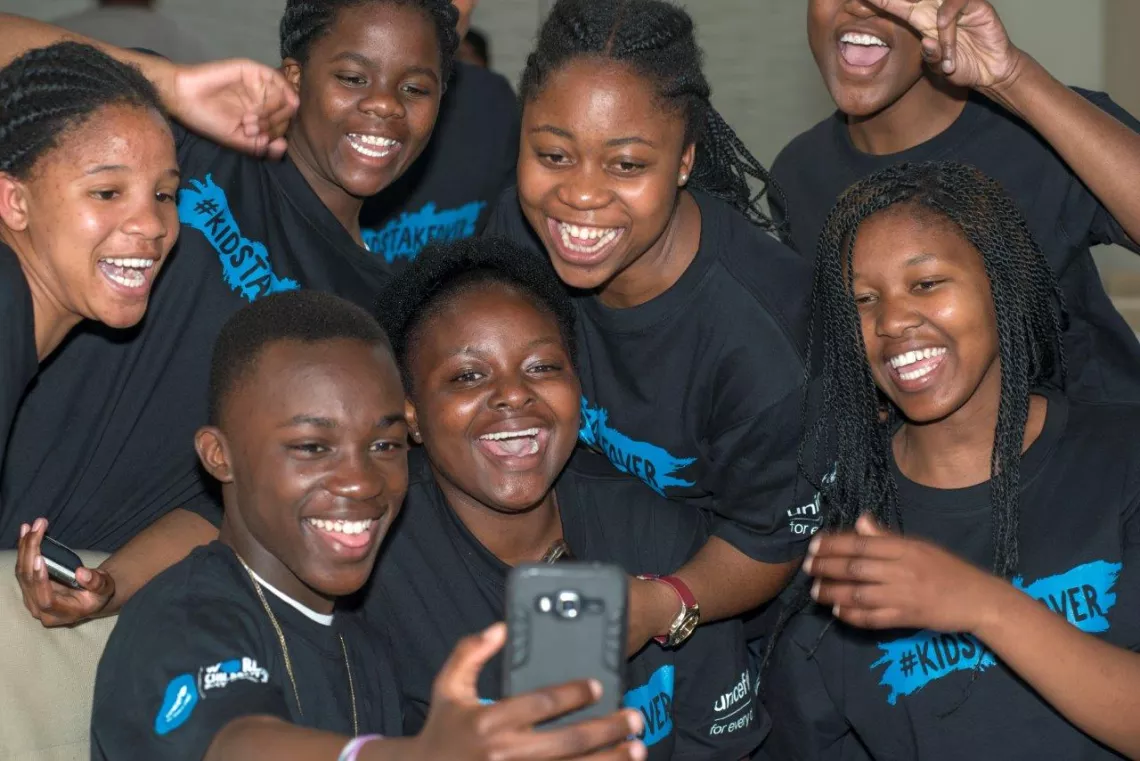
About 22% of the Namibian population is made up of young people 15 – 24 years.
Focus on adolescent empowerment will promote smooth transition of adolescents into adulthood by promoting self reliance and entrepreneurship.