When Communities Learn Together, Children Thrive
How a partnership with the Conrad N. Hilton Foundation is changing the earliest years of life in Mozambique.

- Português
- English
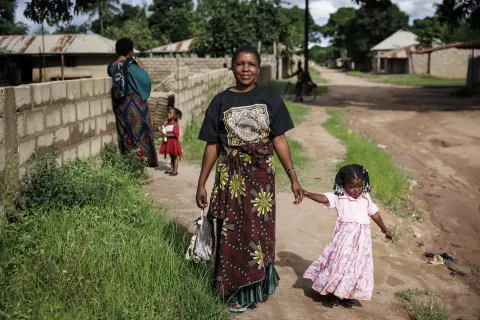
Nampula, Mozambique - In the districts of Nacala Velha and Monapo in northern Mozambique, the crackle of a community radio signal carries something powerful: the knowledge that the first 1,000 days of a child's life can shape everything that follows.
For four years, UNICEF and the Conrad N. Hilton Foundation have worked together to give Mozambique's youngest children a stronger start – not through a single programme, but through a quiet transformation of the systems, people, and communities that surround them.
Community health workers learned not just to monitor a child's weight, but to sit with a mother and show her how play and touch can build a growing brain. In health facilities, nurses were equipped with tools to detect early developmental delays – often the first professional to spot that a child may need extra support. At the national level, ministers and civil society representatives gathered around shared evidence and made a historic commitment: early childhood development would be written into Mozambique's National Development Strategy for the first time.
The numbers tell part of the story. Over 479 health workers trained. More than 187,000 people reached with messages about nurturing care. Sixty-seven health facilities are now able to screen children for developmental delays. A national ECD framework – the foundation of a future policy – was drafted and validated.
But behind the numbers are the children. Only 39% of Mozambican children aged two to five are fully on track in their health, learning, and wellbeing – a figure that is galvanising policymakers. That data is now driving budgets, plans, and a new multisectoral coordination mechanism to make sure no child slips through the gaps between ministries.
The partnership with the Hilton Foundation helped make this possible – not just by funding activities, but by creating the space and the time to do things properly: to train, to advocate, to coordinate, and to learn. In a country navigating elections, cyclones, and cholera outbreaks in the same breath, that sustained commitment mattered.
"The goal was never just to reach more children," reflected Fanceni Balde, UNICEF Nutrition Manager. "It was to change what communities and governments believe is possible for their youngest children."
In Mozambique, that belief is growing.