UNICEF Mozambique: Humanitarian Year in Review 2025
In 2025, Mozambique faced a severe and compounding humanitarian crisis driven by protracted conflict, repeated climate shocks and multiple public health emergencies.

In 2025, Mozambique faced a severe and compounding humanitarian crisis driven by protracted conflict, repeated climate shocks and multiple public health emergencies. An estimated 3.4 million children required humanitarian assistance nationwide, including 744,000 children in conflict-affected areas, primarily in Cabo Delgado and increasingly in Nampula Province. Armed violence by non-state armed groups continued throughout the year, triggering recurrent displacement waves, with major spikes recorded in February, April, July, and September-November. By the end of October alone, nearly 74,000 people—58 per cent children—were newly displaced, reflecting a sharp deterioration in security conditions and an expanding geographic reach of the conflict. The situation escalated further in November, when attacks in Memba District, Nampula Province, triggered the largest displacement in Nampula since the start of the conflict in 2017. More than 107,700 people were displaced, an estimated 65 per cent of them children, with families fleeing largely on foot to neighbouring Erati District and other locations with minimal possessions.

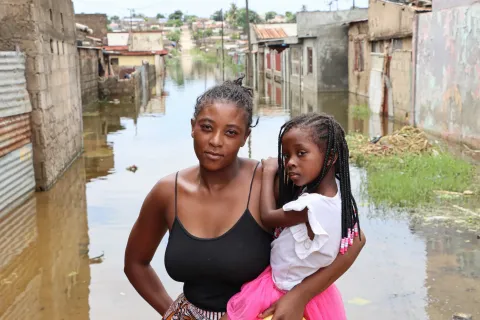
Climate shocks compounded these protection risks. Cyclones Dikeledi (January) and Jude (March) affected more than 1.3 million people, damaging health facilities, schools, water systems, and road networks, and severely disrupting access to essential services. Concurrently, El Niño–related drought deepened food insecurity in central and southern provinces, contributing to rising malnutrition among children under five.

Public health emergencies unfolded in parallel. A cholera outbreak, ongoing since late 2024, spread across multiple provinces with recurring surges throughout the year. Measles outbreaks expanded geographically from mid-2025, while mpox emerged as a new threat in Niassa and border areas, requiring rapid preparedness and response in remote and hard-to-reach settings.

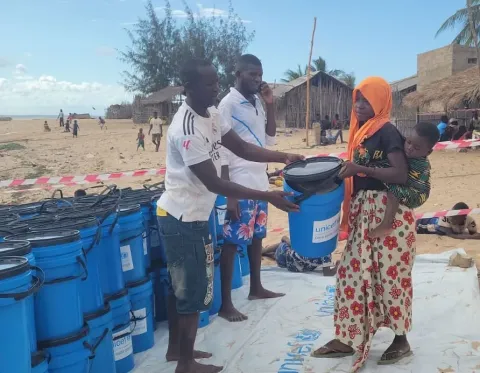
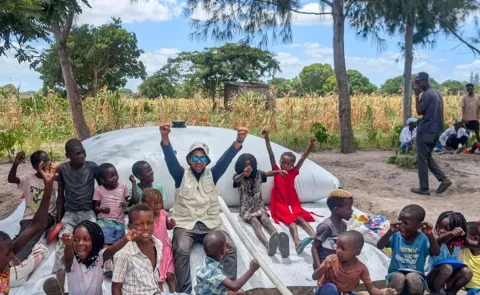
Despite these challenges, UNICEF sustained a flexible, multi-sectoral response, prioritising life-saving assistance and continuity of essential services. Integrated Mobile Brigades remained central to the response, delivering health and nutrition services in conflict-, cyclone- and drought-affected areas. Over the year, UNICEF supported the vaccination of more than 1 million children against measles, over 2.3 million people against cholera, and nearly 19.4 million children against polio, significantly reducing outbreak risks. Nutrition interventions reached hundreds of thousands of children, with nearly 15,000 children receiving life-saving treatment for severe acute malnutrition, even amid insecurity and access constraints. UNICEF also expanded safe water access through water trucking, chlorination and rehabilitation of water systems, reaching over 150,000 people during the year, while mental health and psychosocial support and child protection services supported survivors of violence, unaccompanied and separated children, and families affected by displacement.

In response to the November Nampula displacement, UNICEF rapidly scaled up health, nutrition, WASH, child protection, education, PSEA and social behaviour change interventions, deploying additional staff, rerouting pre-positioned supplies, and supporting integrated mobile brigades in Memba and Erati. Emergency health kits, cholera supplies, hygiene kits, temporary sanitation facilities, child-friendly spaces, learning materials and mass nutrition screening were mobilised to address urgent needs in overcrowded transit centres and host communities.

UNICEF’s US$64 million Humanitarian Action for Children (HAC) appeal remained critically underfunded throughout 2025. To date, UNICEF has a funding gap of over US$34 million (54 per cent), severely constraining response scale-up at a time of escalating needs. The HAC 2026 was launched earlier this month, appealing for $58.8 million to provide life-saving assistance to 1.2 million people, including 866,000 children. As Mozambique enters 2026, continued conflict expansion into new areas, climate volatility, and public health risks underscore the urgent need for predictable, flexible humanitarian financing to sustain life-saving services and protect the most vulnerable children.