A safer and brighter future for Dorlesa
With this support, I can feed my grandchildren better and plant something that will last, even with the drought. I want to see Dorlesa and the other grandchildren grow, study and live a different life than mine.”

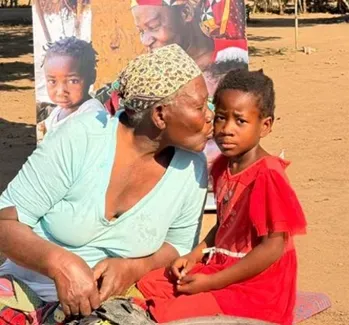
MAGUDE, Mozambique - Under the shade of a large wild tree in Magude District, 78-year-old Matilde Mujovo sits with her 3-year-old granddaughter, Dorlesa, waiting for her turn to receive a cash transfer that she hopes will help her family through a difficult drought.
Magude is among the districts affected by moderate drought, identified through the Standard Precipitation Index. For families like Matilde’s, the lack of rain has made it even harder to grow food, earn an income and meet children’s basic needs.
Widowed many years ago, Matilde raised her three children almost single-handedly. Today, she is once again the backbone of her family, caring for seven grandchildren, including Dorlesa.
Dorlesa’s father works in South Africa but does not provide support for the three children he left in Matilde’s care. Matilde’s daughters, who became mothers at a young age, each have two children and struggle to find work. With love and resilience, Matilde does what she can to keep her grandchildren fed and in school, while giving Dorlesa the chance to grow up with hope for a brighter future.
Through the anticipatory cash transfer programme, Matilde received 7,500 meticais, equivalent to about US$120. The amount represents a one-time disbursement of three instalments of 2,500 meticais, equivalent to about US$40 per month for three months, designed to help vulnerable families cope during the drought period.
For Matilde, the support brings both relief and renewed hope. She plans to use the money to buy essential food for her grandchildren and invest in small drought-resistant crops to help secure food for the coming months.
“This support came at the right time,” says Matilde. “With it, I can feed my grandchildren better and plant something that will last, even with the drought. I want to see Dorlesa and the other grandchildren grow, study and live a different life than mine.”
Despite her strength, Matilde knows that age is catching up with her. Working the land is becoming harder, and the government elderly subsidy she relies on has not been paid for the last two years, leaving the family even more vulnerable.
“I am getting older, and I know I won’t be able to work the land much longer,” she says. “I hope that tomorrow my granddaughter and her siblings will be the ones to support me. I want to see them grow, flourish and overcome the difficult life we have endured.”
In Magude, stories like Matilde and Dorlesa’s show how shock-responsive social protection and anticipatory action can bring practical support and renewed hope to families facing drought. For Matilde, the cash transfer is more than financial assistance. It is a chance to protect her grandchildren today and invest in a safer future for Dorlesa.
UNICEF supports the anticipatory cash transfer programme in collaboration with the Government of Mozambique, through the generous support of Germany (BMZ) and the UN Joint Programme on Social Protection, funded by the Governments of the United Kingdom, Sweden, Canada, Ireland and Finland.