From Child Marriage to a New Beginning: Fatima’s Journey Back to School
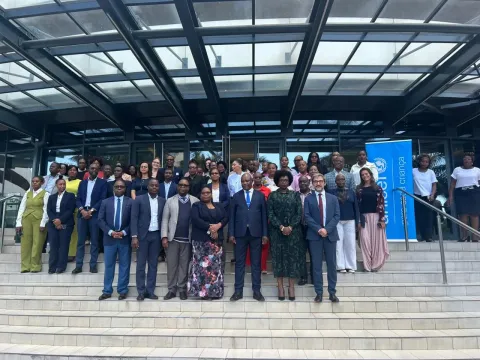
UNICEF, with support from Plan International and generous funding from the Government of Norway, is working to ensure that girls across Mozambique do not enter into child marriages and have access to education.

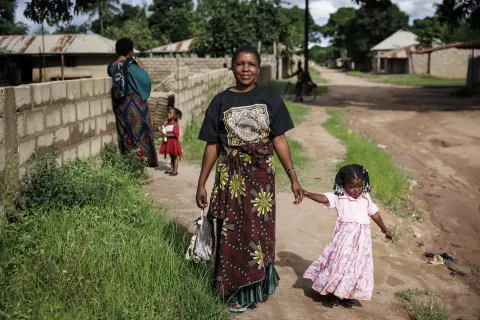
Cabo Delgado, Mozambique - Rows of maize and cassava grow between the tightly packed homes of a resettlement camp in the centre of Cabo Delgado province. Here, families displaced by conflict are working to build new lives. Among them is 14-year-old Fatima, who shares a small house with her mother and grandmother.
Fatima fled her home in Macomia four years ago to escape the conflict that had engulfed their village. But even in safety, new challenges emerged.
At just 12, Fatima was married to a man 40 years her senior. The man took advantage of her family’s vulnerability and offered marriage with deceptive promises of security and prosperity.
“The man promised me money and a good life, so I dropped out of school,” Fatima says.
The reality was very different. Isolated and mistreated, Fatima was trapped in a marriage she had not chosen.
In Mozambique, around one in eight girls are married before they turn 15. In Cabo Delgado province, that figure rises to one in five. (DHS 2022/23)
Her story might have ended there. But it didn’t.
Like many girls forced into child marriage, Fatima had left school and lost confidence in herself. For months, she stayed at home, quiet and withdrawn.
The first step in Fatima’s long journey of recovery came when case workers from Plan International, supported by UNICEF, learned of her situation. In discussion with Fatima, and with her family’s consent, it was agreed that the best course of action was to end the marriage.
With the help of a case worker, Fatima was supported to access health services and was provided with psychosocial support, while her husband and family participated in awareness sessions facilitated by the Police Office for the Care of Women and Children Victims of Violence, and district social workers. These efforts aimed to prevent her return to child marriage.
“I thought I was too old to go back to school,” she recalls, “but Plan told me it was possible to return, and they helped me.”
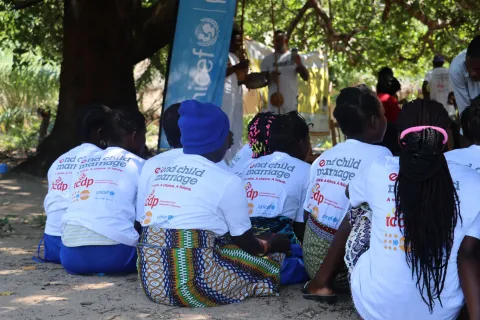
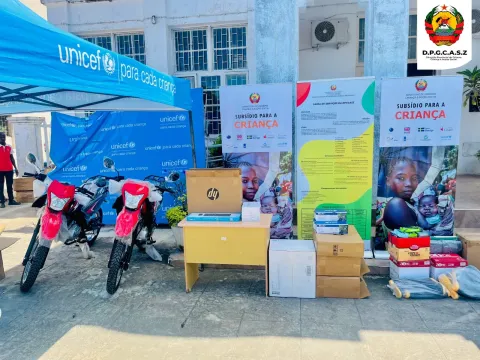
With support from UNICEF and Plan International, Fatima was re-enrolled in school and received essential supplies including books, food, a dignity kit and ongoing counselling. She also joined a children’s club in the camp, a safe space where she could connect with others and begin to rebuild her sense of self.
“I like going to the club because I have two friends there and we do drawing and play games,” Fatima says.
Now in Grade 6 at the local primary school, Fatima is gradually readjusting to her studies and daily routine.
“I really like being back in school. With my friends I like to study and read.”
She also has a message for other girls who may face similar situations. “You should not get married early. You should stay in school and study”.
Fatima has a clear vision for the future. “When I grow up, I would like to help other girls who are in child marriages,” she says with determination.
With the help of dedicated case workers, Fatima has reclaimed her childhood and taken the first steps towards a brighter future.
UNICEF, with support from Plan International and generous funding from the Government of Norway, is working to ensure that girls across Mozambique do not enter into child marriages and have access to education.
Note: Names have been changed to protect the identities of the people in this story.