UNICEF calls for urgent investment in life-saving services for children as global humanitarian needs reach new extremes

- Português
- English
NEW YORK/MAPUTO - Surging conflicts, rising hunger, global funding cuts, and collapsing basic services are driving humanitarian needs for children to extreme levels worldwide. As UNICEF’s Humanitarian Action for Children 2026 (HAC) appeal is launched today, US$7.66 billion is urgently required to provide life-saving assistance to 73 million children - including 37 million girls and over 9 million children with disabilities – across 133 countries and territories next year.
Across every region, children caught in emergencies are facing overlapping crises that are growing in scale and complexity.
Escalating conflicts are driving mass displacement and exposing children to grave violations at the highest levels ever recorded. Attacks on schools and hospitals continue unabated, while verified cases of rape and other forms of sexual violence against children are rising sharply. In many crises, children and the aid workers attempting to reach them are being deliberately targeted.
“Around the world, children caught in conflict, disaster, displacement and economic turmoil continue to face extraordinary challenges,” said UNICEF Executive Director Catherine Russell. “Their lives are being shaped by forces far beyond their control: violence, the threat of famine, intensifying climate shocks, and the widespread collapse of essential services.”
The global humanitarian funding environment has deteriorated dramatically in 2025. Announced and anticipated funding cuts by donor governments are already limiting UNICEF’s ability to reach millions of children in dire need. Severe shortfalls in 2024 and 2025 are forcing UNICEF to make impossible choices. Across UNICEF’s nutrition programming alone, a 72 per cent funding gap in 2025 forced cuts in 20 priority countries – reducing planned targets from more than 42 million to over 27 million women and children. In education, a shortfall of US$745 million has left millions more children at risk of losing access to learning, protection and stability. For child protection, rising violations coincide with shrinking resources, threatening programmes for survivors of sexual violence, children recruited or used by armed groups, and those requiring urgent mental health and psychosocial support.
“Severe funding shortfalls are placing UNICEF’s life-saving programs under immense strain,” said Russell. “Across our operations, frontline teams are being forced into impossible decisions: focusing limited supplies and services on children in some places
over others, decreasing the frequency of services children receive, or scaling back interventions that children depend on to survive.”
At the same time, humanitarian access is being restricted at levels unseen in recent years. In many emergencies, UNICEF and partners cannot reach children trapped behind shifting frontlines, making sustained humanitarian diplomacy essential to secure access and to protect children from escalating violations..
UNICEF warns that more than 200 million children will require humanitarian assistance in 2026. Many live in protracted crises, leaving entire generations at risk of under-nutrition, denied education, exposed to disease outbreaks, and deprived of safety and stability.
Despite these challenges, UNICEF is adapting its humanitarian action to operate effectively within a shifting humanitarian landscape, while remaining firmly anchored in child rights and the Core Commitments for Children in Humanitarian Action, which guide UNICEF’s response. This includes:
- prioritising life-saving interventions with the greatest impact.
- strengthening partnerships with governments and local actors.
- investing in preparedness, risk analysis and anticipatory action.
- building resilience of national systems, and strengthening humanitarian diplomacy.
“The current global funding crisis does not reflect a decline in humanitarian need, but rather a growing gap between the scale of suffering and the resources available,” said Russell. “While UNICEF is working to adapt to this new reality, children are already paying the price of shrinking humanitarian budgets.”
UNICEF is urging national governments, public sector donors and private sector partners to increase investment in children, prioritising flexible and multi-year funding; support locally led response and national systems; uphold humanitarian principles and the centrality of protection; and remove barriers that impede humanitarian access.
Mozambique
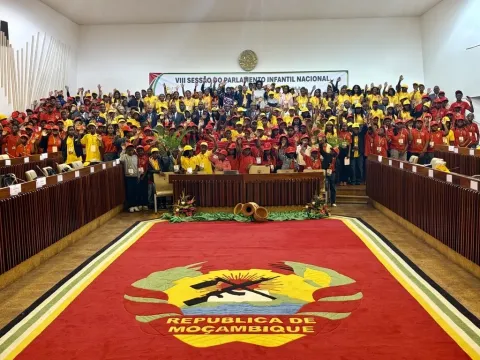
Escalating conflicts, climate shocks, and public health emergencies continue to drive urgent humanitarian needs in Mozambique. Displacement, food insecurity, disease outbreaks, and protection risks persist, disproportionately affecting children, women, and people with disabilities. In 2026, approximately 1.8 million people, including 1 million children, will need assistance to survive.
Currently, 412,000 people remain displaced in 20 districts in the north of the country, with critical needs since the beginning of the conflict (53 per cent children). In addition, 510,000 returnees (45 per cent children) continue to require urgent support in the region. Violence against children, especially in Cabo Delgado and Nampula, persists and attacks on communities are increasing, including abductions, recruitment, and use of minors, as well as sexual violence by armed groups. School closures due to attacks have prevented 50,000 children from attending classes.
Between December 2024 and March 2025, three unprecedented cyclones damaged 183 health facilities, more than 4,800 classrooms, and 36 water supply systems, exacerbating already significant infrastructure needs. Across the country, more than 167,000 children and pregnant or breastfeeding women are in need of urgent nutritional support, including more than 29,000 children under the age of 5 suffering from severe acute malnutrition as a result of growing food insecurity affecting 2.1 million people. Outbreaks of diseases such as cholera, measles, and mpox continue to affect thousands of people.
Women, girls, and adolescents continue to face restrictions in accessing gender-sensitive services. Insufficient information and income-generating opportunities increase vulnerability to gender-based violence, widening the gap between identified needs and response capacity.
UNICEF is appealing for $58.8 million in funding in 2026, with significant investments needed in water, sanitation, and hygiene, nutrition, education, and child protection to reach 1.2 million people, including 866,000 children, with life-saving support and other essential services. Without continued funding, interventions crucial to the survival and protection of thousands of children could be interrupted.
Notes for editors:
The appeal overview and details on individual appeals will be available here once the embargo lifts: https://www.unicef.org/appeals
Multimedia materials available here: https://weshare.unicef.org/Package/2AM4080FDL1J
NEW: Subscribe to UNICEF’s global media updates on WhatsApp.
Media contacts
About UNICEF
UNICEF works in some of the world’s toughest places, to reach the world’s most disadvantaged children. To save their lives. To defend their rights. To help them fulfill their potential. Across 190 countries and territories, we work for every child, everywhere, every day, to build a better world for everyone. And we never give up.
Para mais informação sobre o UNICEF e seu trabalho para cada criança, visite www.unicef.org.mz
Follow us on social media: WhatsApp | Twitter | Facebook
Please consider donating to our work in Mozambique.