Mental Health and Psychosocial Support In Brief
Children, adolescents and caregivers in Mozambique face a range of situations that put their mental health, psychosocial wellbeing and development at risk.
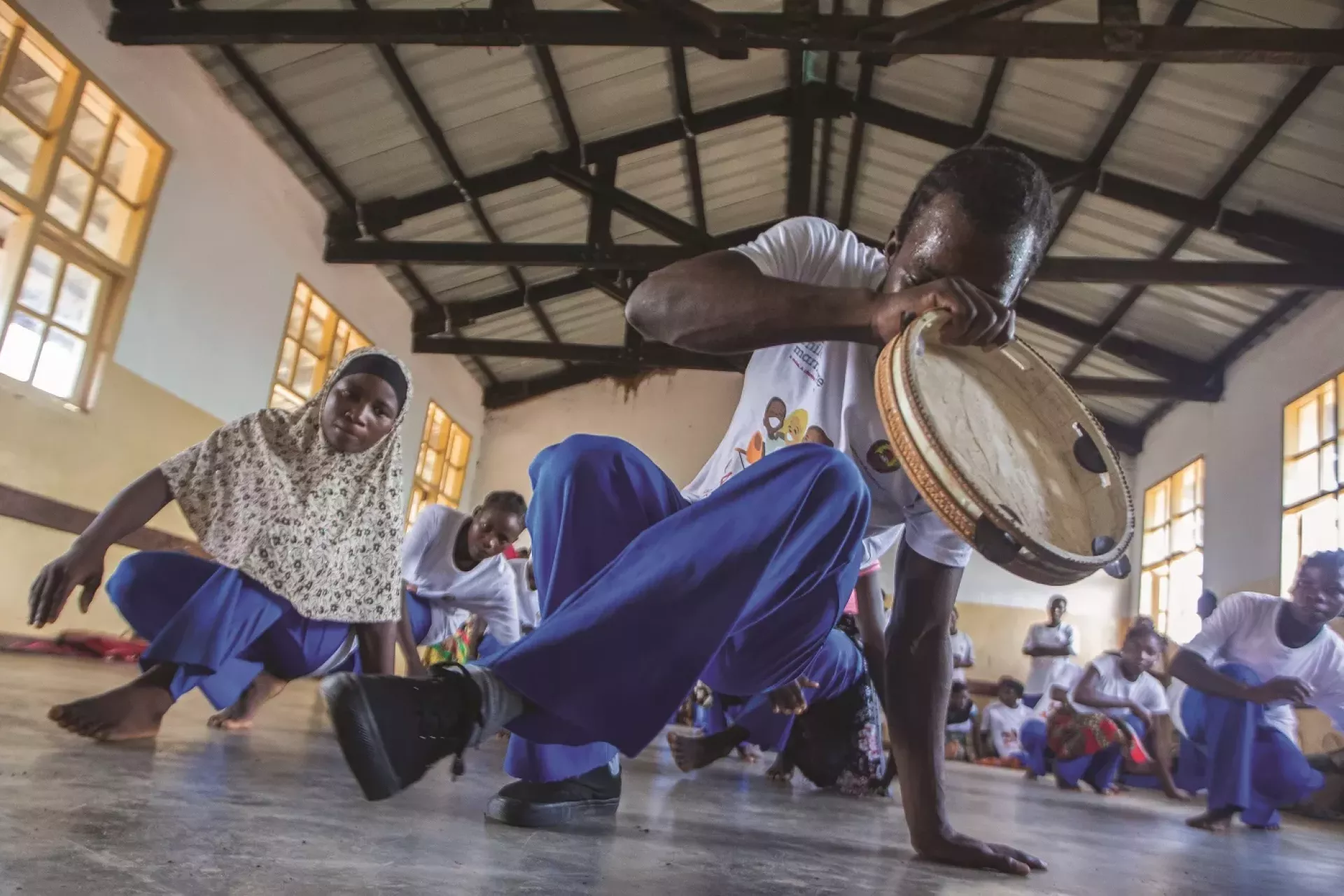
WHAT CHILDREN ARE FACING IN MOZAMBIQUE
Children, adolescents and caregivers in Mozambique face a range of situations that put their mental health, psychosocial wellbeing and development at risk. These include poverty and attempts to deal with it, separation from parents and caregivers because of displacement, exposure to armed conflict, child marriage and other harmful practices, substance abuse, existing neurological conditions and extreme weather and climate change.
Children and adolescents suffering from poor mental health often demonstrate poor academic performance, become more vulnerable to early pregnancy, suffer from social isolation, come into conflict with the law and are more likely to commit suicide. Mozambique has the highest suicide rate in southern Africa.
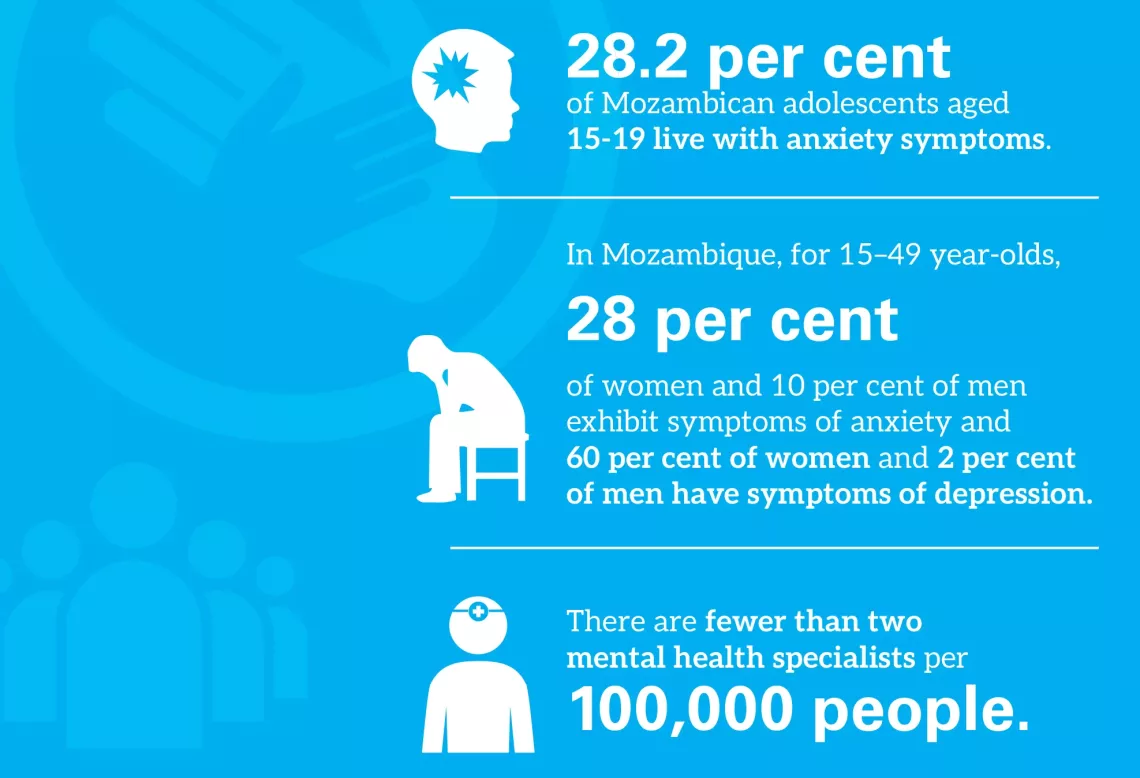
There is a considerable gender gap in experience of and knowledge about mental health conditions, with more adolescent females experiencing anxiety or depression than adolescent males, but fewer reporting having heard about mental illness and its treatment.
CHALLENGES TO REFORM
In Mozambique access to health services – including mental health services – is universal and almost free of charge under the National Health Service. The National Programme for Mental Health has led to the better integration of mental health into the primary healthcare system. Mental health services are now available in over 150 health facilities in every district of the country. A key component of this has been the training and deployment of Psychiatric Technicians who are based in primary healthcare facilities and are also trained in child and adolescent psychiatry. The Ministry of Health and the Ministry of Gender, Children and Social Action are making significant efforts to improve access to mental health services for children. However, reform continues to be challenged by some critical issues:
- Mozambique has a severe shortage of trained mental health workers, particularly mental health specialists trained to work with children at the community level.
- There is no specific sector/unit coordinating cross sectoral efforts to address the mental health and psychosocial wellbeing of children, adolescents and caregivers. As such, there are no operational cross sectoral procedures, harmonized tools or guidelines that bring the various policies and strategies together.
- At provincial and community level, there is lack of clear plans, guidance and structures to support implementation and multisectoral collaboration.
- Lack of data on mental health and behavioural disorders in children makes it difficult to develop context sensitive and evidence-based programmes.
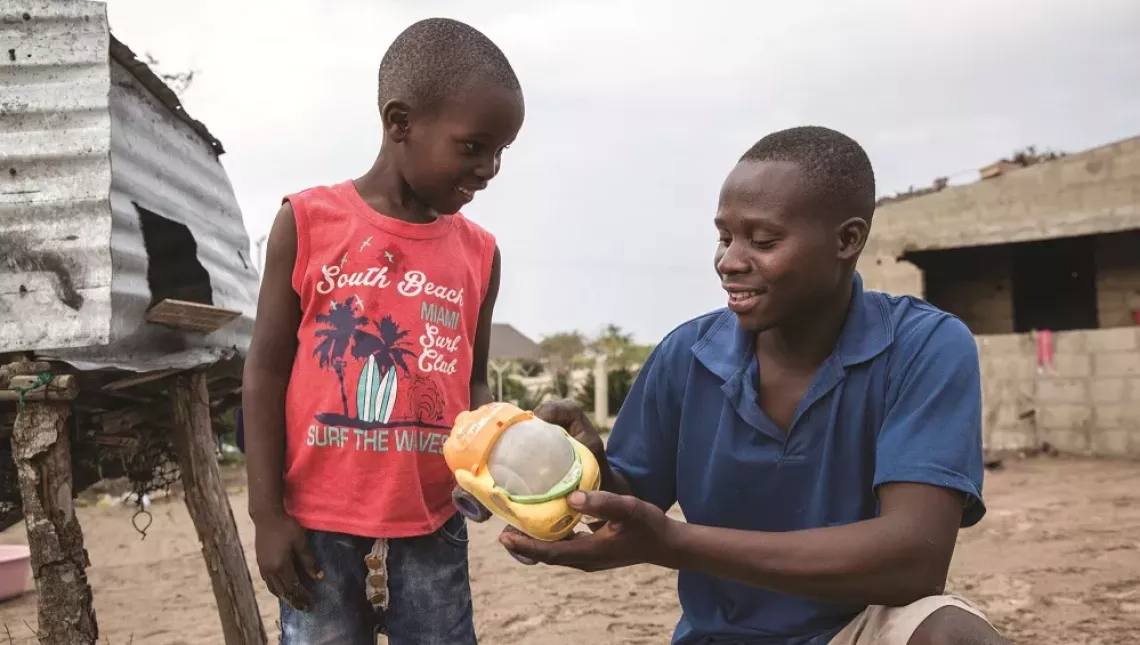
UNICEF ACTION
Achievements to date
- To support children in conflict-affected areas, UNICEF has helped to develop the Multipurpose Centre concept, which is a community-based structure that serves as an entry point to identify and provide services to children, adolescents and their caregivers. It covers parenting skills for children affected by armed conflicts, transferable skills and focused MHPSS for children. This includes children formerly associated with armed groups and women and girls with specific needs. The multipurpose centres also enable referral to appropriate services, including specialized mental health services.
- UNICEF supported the Mental Health Department to adjust intervention guidelines and protocols to include children and adolescents.
- UNICEF worked with Education Cluster partners to develop a MHPSS training manual to improve teachers’ capacity to identify children in distress during humanitarian crisis, provide them with basic psychological first aid and/or refer them to focused or specialized mental health services.
UNICEF works with the Government of Mozambique to strengthen systems for mental health and psychosocial support. The focus is on building the capacity of key stakeholders – especially at the community level – to implement complementary, tailored and evidence-based approaches that target vulnerable and at-risk children in humanitarian and development contexts.
Building an environment conducive to promotion, prevention of and response to mental health conditions includes the following actions:
- Expanding mental health and psychosocial wellbeing promotion activities in priority provinces to improve knowledge and help instigate service-seeking behaviours. This will include prevention and promotion activities in schools using art, music, theatre and poetry, mass media and social media. UNICEF wants to portray positive stories of adolescents with lived experiences.
- Improving quality and accessibility of mental health services – psychological and psychiatric interventions – including strengthening the capacity of specialists. UNICEF works to harmonize intervention practices among mental health professionals in priority provinces and enact referral pathways between mental health services and social welfare services. WHO has developed a guideline – Mental Health Gap Action Programme (mhGAP) – that enables health technicians with no specialized training to engage in the provision of mental health services for people with mild conditions. UNICEF is advocating for this to be integrated into the new mental health manual and rolling it out to community service providers. This work will help to expand the number of professionals with the technical skills and competencies to intervene across the country.
- Develop and roll out a comprehensive MHPSS intervention package, tailored to the needs of vulnerable and at-risk children and adolescents, child victims of violence, unaccompanied and separated children and children in institutions. The package comprises a training curriculum, implementation guidelines, protocols and monitoring and evaluation tools.
- Leveraging existing innovative approaches and platforms, such as the Multipurpose Centres, to offer focused MHPSS, life skills and vocational skills in conflict affected areas. This also includes providing recreational supplies, dignity kits for girls and young women and setting up Child Friendly Spaces.
- Expanding the use of the ‘Alô Mente’ app, which helps to identify and provide mental health services to children with concerning mental health conditions, including congenital or environmental risks or exposure to child protection risks – such as violence, abuse and neglect – and emergencies. By enabling identification and referral of cases, it offers an additional entry point for life-saving professional assistance to children suffering depression, anxiety and suicidal ideation, amongst other life-threatening mental health conditions. It expands screening and referral for mental health beyond the usual entry points at health facilities.