Birth registration In Brief
A birth certificate is the symbol of a child’s right to an identity – and it is also a gateway right.
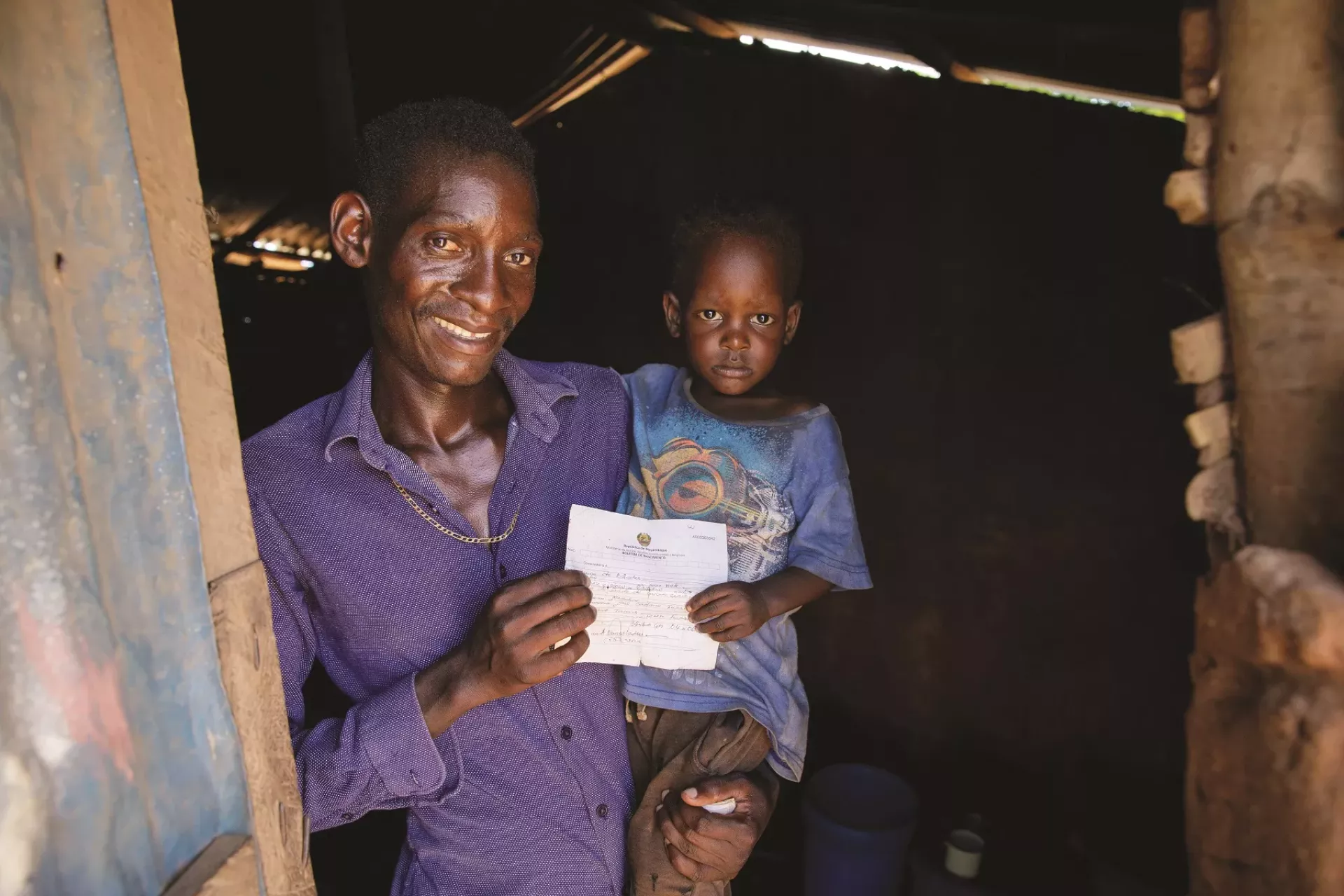
WHAT CHILDREN ARE FACING IN MOZAMBIQUE
A birth certificate is the symbol of a child’s right to an identity – and it is also a gateway right. Lack of birth registration compromises the realization of other rights. By the end of 2023, only one third of children under five in Mozambique had their birth registered.
Mozambique is still far from achieving the 2030 goal of at least 80 per cent registration of children under five years old. The country significantly increased the national birth registration rate for children under five between 2008 and 2017 – from 31 to 49 per cent. However, most of the progress for this age group has been lost. The national rate dropped to 32 per cent in 2023. Despite strengthened birth registration policies and decentralization efforts, the national registration decline is alarming, and the country needs robust multi-partner efforts to address it.
Birth registration also faces social and geographical constraints. Parents and caregivers may not understand the importance of birth registration and some cultural norms negatively affect women as they try to register in the absence of their partners. Moreover, many parents and caregivers face long distances to reach the nearest service centre where they can register their child’s birth.
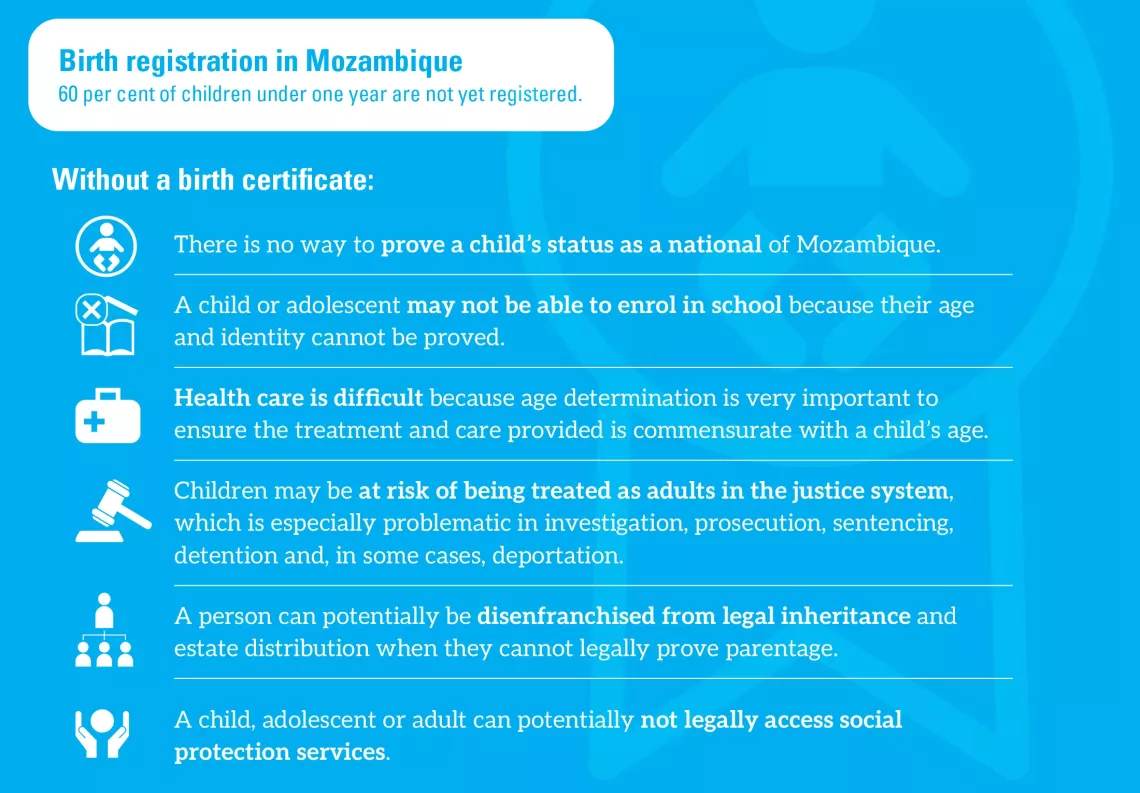
In the long-term and during adulthood, birth certification is required to apply for jobs, particularly in the formal sector, buy property, exercise the right to vote, access social protection services, and obtain a passport and other legal documents.
CHALLENGES TO REFORM

Despite the progress, challenges remain in strengthening birth registration within the civil registration and vital statistics (CRVS) system in the country.
- Ideally, systems that work with people would function together to make services easier for providers and users and to avoid gaps and inaccuracies in personal data. This is known as ‘interoperability’, the ability of different systems to work together using compatible data formats, communication protocols, system interfaces, concepts, definitions and standards. Historically, health systems and CRVS systems in Mozambique have not been interoperable. This is improving – 152 out of 300 eligible health facilities are operational – but there are over 1,600 public health facilities nationally.
- Direct and indirect costs associated with registration of children are a barrier for families and communities.
- Historical legacy of low registration, with parents who are themselves not registered and therefore unable to prove their identity.
- Limited modernisation of historical data prior to 2018 – paper-based historical data need to be migrated to electronic systems.

UNICEF ACTION
Achievements to date
- Development of the National CRVS 10-year Strategic Plan (2019-2029) and accompanying five-year Operational Plan (2022-2026).
- Roll out of a National eCRVS – development of the eCRVS system manuals, training of trainers for system installation – with all 165 Conservatories in Mozambique now digitised.
- Achieved interoperability of health and CRVS systems from zero to 152 health facilities within five years.
- Major awareness campaigns using information, education and communication (IEC) materials, radio programmes and community platforms and engagements to increase demand for birth registration services.
UNICEF’s action to enhance birth registration focuses on:
Innovation. Retroactive birth registration campaigns targeting 0- to 14-year-old children and young people, especially in disaster prone provinces, through creation and operationalisation of mobile birth registration brigades in targeted districts and provinces.
Advocacy. Addressing the cost issues for parents by advocating to the Government to consider amending the 2018 birth registration code to increase the pro bono registration period from four months to 12 months.
Infrastructure development. Addressing physical access through expansion of CRVS facilities into hospitals to reduce distances for parents, with about 200 hospital facilities currently eligible for establishment of CRVS facilities on site nationally.
Capacity building. Training new registration technicians and conservatory technicians and supervisors who authorize all registrations.
Social and behaviour change. Continuing to build awareness of the benefits of birth registration and where to register children by providing information to communities directly through demand creation campaigns, and through social services entry points, such as health centres and social protection cash grants.