


Should Mobile Phones be Banned in Classrooms?
The same question, which doesn't have an easy answer, is being asked all over the world. In homes and schools, in conversations among teachers and between parents we are asking: what should we do about mobile phones in the classroom?
- Español
- English
This article is the third installment of a guide to navigating digital life as a family. Click here to read the Guide.
👉 Follow us on our WhatsApp channel: UNICEF Parenting Portal for more tips.
To return to the Portal’s homepage, click here: Parenting |
“In my school, mobile phones are not allowed unless the school administration explicitly permits them. Despite this, students find ways to get around these rules and bring their mobile phones anyway,” explains Joel, an 18-year-old from Jamaica.
According to UNESCO data, 114 education systems already have national bans on mobile phones in schools. That's more than half the countries in the world.
Bans on mobile phone use are appearing rapidly in our region. Bolivia and Costa Rica recently implemented such bans amid growing concern over lack of attention in class, cyberbullying, bullying and other negative effects of technology on children.
“Sometimes children use mobile phones to take notes, access study materials, create memories with their friends and communicate with their parents,” says Joel, “or simply for leisure activities such as listening to music and going on social media.”
“Instead of enforcing bans,” Joel says, “schools should establish clear guidelines, supervision and restrictions that allow students to benefit from the educational advantages of mobile phones whilst reducing their potential misuse.”
Some countries such as Colombia or Peru have opted for regulations that require schools to develop policies restricting mobile phone use, without enforcing total bans in the country.
In countries where education systems are decentralized, such as Argentina, restrictions appear first at the local and provincial levels, including bans on mobile phones in primary schools in the province of Buenos Aires.
In some cases, mobile phone use is banned in the classroom but allowed during breaks. Other regulations allow the use of mobile phones in the classroom for educational purposes, in particular to facilitate learning for children with disabilities.
An Information Access Tool that Opens the Door to Other Risks
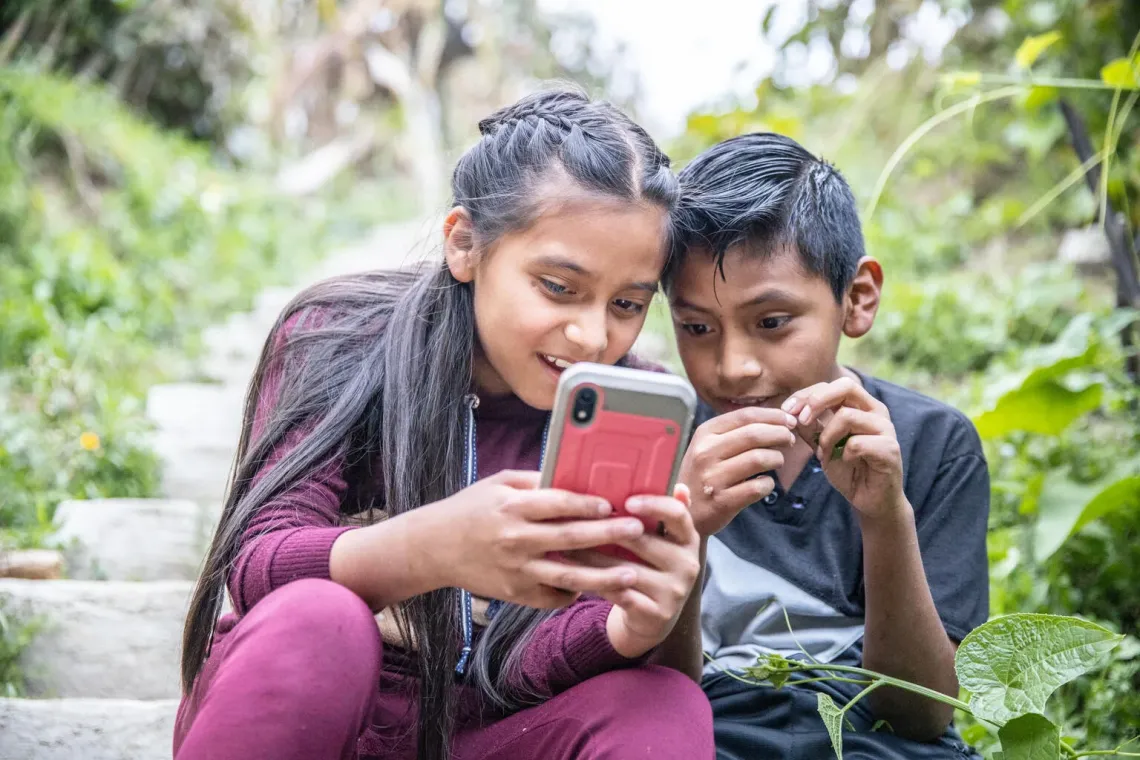
Access to digital technologies is a key component in children’s education and the reality is that for those who have access to mobile phones, doing homework or researching information on their phones is already part of their routine.
In addition, schools are often the main place where children connect.
In Argentina, 47 per cent of children take advantage of school spaces to access the internet on a daily or almost daily basis, according to the Kids Online Argentina 2025 study led by UNICEF and UNESCO, which also reports that six out of ten children use the internet daily or almost daily for research related to homework or study.
Schools are often one of the few places where children can develop digital literacy skills and critical thinking and learn how to access information.
However, as well as concern over mobile phone use, parents, educators and students also worry about the recording and sharing of content without permission, school bullying, cyberbullying and distractions. In some cases, daily, prolonged and unregulated screen use has been associated with increased levels of anxiety and other emotional problems in children.
According to the Kids Online Uruguay 2022 report, almost half of adolescents reported encountering at least one of these three situations because of the time they spend on the internet:
- Their grades dropped (29 per cent).
- They had issues with friends or family (29 per cent).
- They stopped eating or sleeping (26 per cent).
Emotional well-being is essential in childhood. Children must be able to concentrate on key school activities such as reading, studying or interacting with others.
The ability to concentrate will allow them to stay focused on prolonged tasks, which is essential to their development.
So, is it time to ban mobile phones?
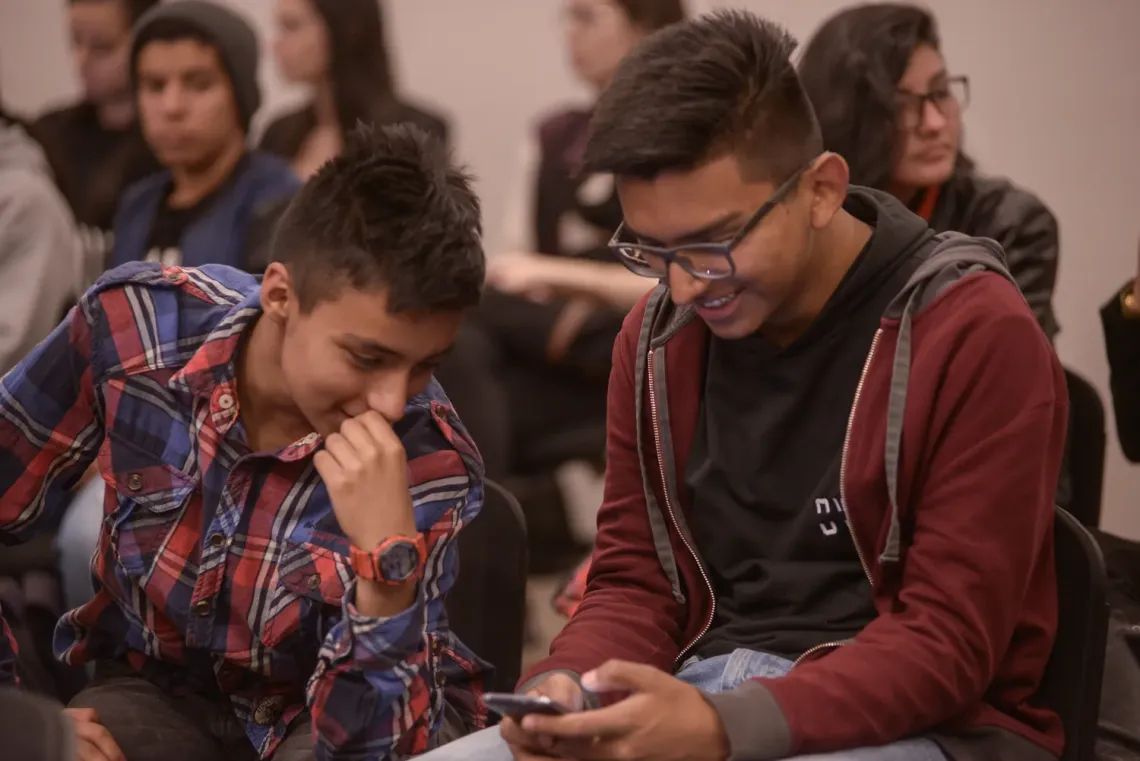
Mobile phones in schools should be limited when they distract children from their learning and when they expose them to risks or negative impacts on their well-being.
Restrictions should always be proportionate and make exceptions for children who need and rely on devices in schools for accessibility, support or assistance functions.
In low-resource contexts, mobile phones are often children’s only or primary means of access to the digital world. This is compounded by difficulties in accessing physical textbooks and other educational materials.
A blanket restriction on mobile phones in classrooms that doesn't consider these variables could increase inequalities if children are deprived of access to digital books, translation tools, accessibility features and assistive technologies for people with disabilities, such as read-aloud functions.
Limiting mobile phone use when mobile phones are only used for recreational purposes or when they may pose a risk to children can be an appropriate measure. It is important that we recognize the value of these devices when they are used as supervised educational tools to promote learning, inclusion, accessibility and student well-being.
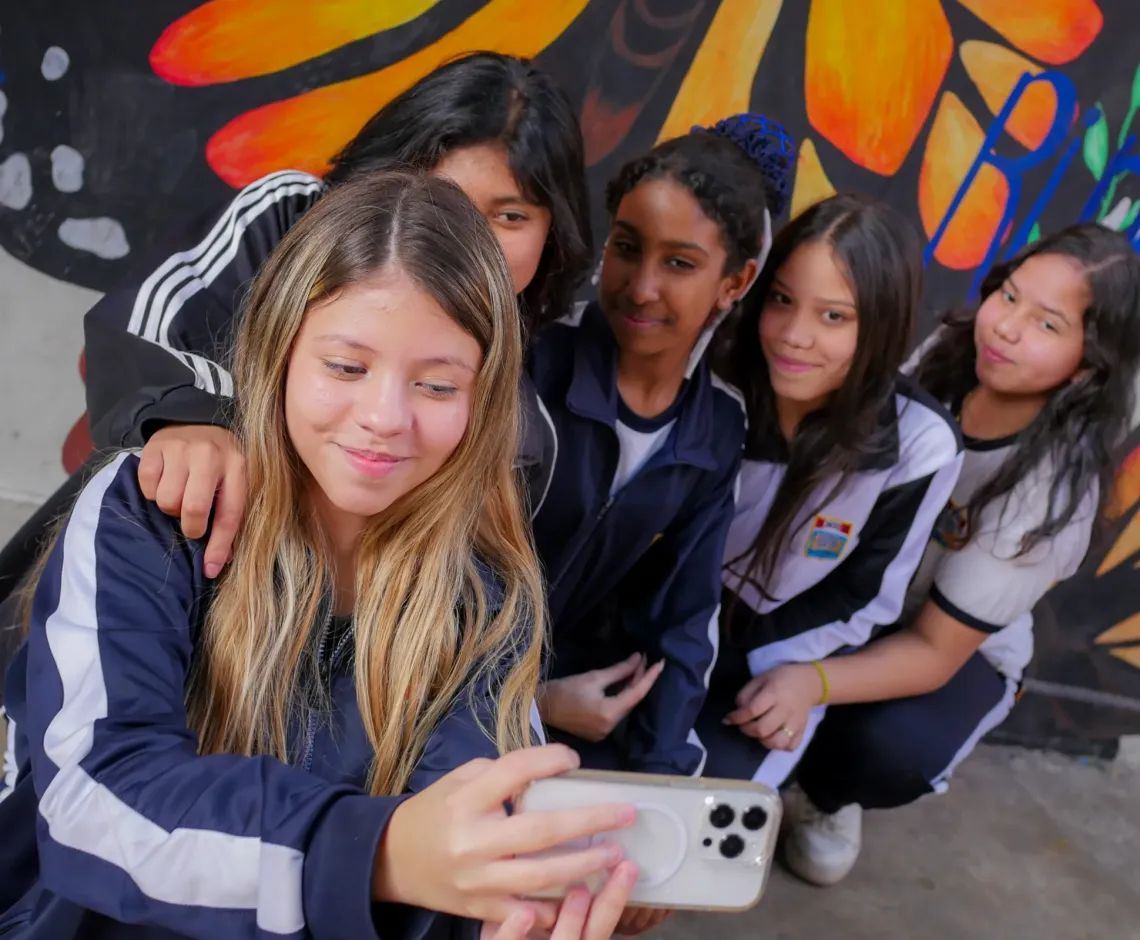
How to talk to children about mobile phone bans at school.
What can parents and educators do to support students and prevent classroom distractions caused by mobile phone use whilst still teaching them how to navigate digital environments safely and constructively?
The ways in which children access, use and interact with and through digital environments affect their quality of life. It is normal for parents to have concerns about the new regulations on mobile phone use in schools. Concerns range from their effectiveness to their consequences.
However, these debates are a great opportunity to talk to your children and better understand how they feel.
What can you do?
What can you do?
Pick a time and place where you can chat calmly, such as after a meal or during a walk. Ask them how they and their friends feel about mobile phone bans in schools.
Adults often focus only on the risks, but we must keep in mind that children use phones to stay in touch with friends, develop a sense of belonging and community and create social bonds that are very important to them.
It is normal for some children to be angry or worried about the idea of losing access to social media or their phones. Others, particularly those who have had negative online experiences, may be happy about it. Many children will experience a mix of frustration and relief. It is important to listen to them without interrupting and to try to understand their feelings. You can ask them: “What do you think would be the worst thing about losing access to your phone at school?” “And what do you think would be the best thing?”
Many young people feel ignored or excluded from the decisions adults are making about their habits and phone access, yet these decisions have a direct impact on their lives. Make sure your child feels heard and knows that their opinion matters.
Being connected with friends is not optional for adolescents, it is essential to their well-being. Remind your child that their friendships and interests still matter, even if their phone access at school has changed.
You can ask them: “If you don’t have access to your phone at school, do you feel you can still stay in touch with your friends outside of school?” You can even make a plan together with ideas for staying in touch with friends, such as in-person meetups, sports, phone calls and other ways to communicate online outside of school.
Take this opportunity to discuss ways to stay safe online and find a balance in how you use your mobile phones. Remind your child that we all have the power to choose who to follow, when to be online, when to take a break and how to respond if something happens online that is not right.
Avoid having your phone in your hand constantly. Talk about adults’ relationship to screens and explain the strategies you use to improve it.
Many children get used to seeing adults with their devices at all times. One good practice is to leave your mobile phone in a designated place and check it occasionally, rather than constantly holding it in your hand. You can discuss simple rules that the whole family can adopt together, such as leaving phones out of bedrooms at night or muting notifications while studying.
Choosing times during the day for family digital breaks, even if they are brief at first, can help create spaces where adults spend time without devices.
How are mobile phones used at school? Young people’s voices
“During my last year of school, they didn't let us use our mobile phones; it was a new measure. At first, we didn’t like it, but then we got used to it,” says 18-year-old Martina, who, along with Joel and other young people from the region, is part of UNICEF’s Adolescent and Young People Action Board
“I think mobile phone use should be allowed in schools, but for educational purposes, as they are a very good tool. However, not using phones during breaks allowed us to interact more with our classmates, and that is much more valuable,” she tells us.
Ana Luísa, from Brazil, is another young person who shared her views on mobile phone use at school and its usefulness for communicating with family, particularly in emergencies or in coordinating schedules.
“I believe certain restrictions are necessary, as excessive phone use can distract students and affect their concentration during class,” says 18-year-old Ana Luísa.
“I also believe that limiting mobile phone use encourages greater social interaction and strengthens social cohesion and interpersonal relationships. However, I think mobile phones can be useful tools for learning when used responsibly and with clear educational objectives.”
Additional Resources
This Guide is intended as a starting point for better understanding how to put technology at the service of children’s rights. Here are some additional resources developed by UNICEF that can help you navigate this topic at home or at school.
Guide to Supporting the Digital Lives of Children and Adolescents
Cyberbullying: what is it and how to stop it. A nine-step guide for parents
Artificial intelligence and children: opportunities, risks and how to support its use
Is it a good idea to ban social media for children and adolescents?
Children and the use of artificial intelligence: key insights from UNICEF Uruguay for families
Kids Online Argentina full report
If you found this information useful, share it with other parents, your family and your children. Sharing information is all part of staying safe.


