When evidence speaks
Ghana’s journey to close the research-to-practice gap in schools
Globally, there is growing interest in evidence-based programming to improve education and learning outcomes for children. Yet efforts to strengthen evidence use have traditionally focused on national-level policymakers, with notable challenges in reaching school leaders and teachers who are at the frontline actors whose practices and decisions directly influence student learning.

The “research-to-practice gap” has been documented across sectors, with 17 years being the average time for an evidence-based practice to move from identification to widespread adoption. In education, this gap can be influenced by several factors, including weak feedback loops for communicating evidence back to schools, time and resource constraints that prevent school actors from engaging with evidence, and limited engagement with school actors from the outset about how evidence could be shared in a way that best aligns to their needs and realities.
Generating new insights from the Data Must Speak research in Ghana
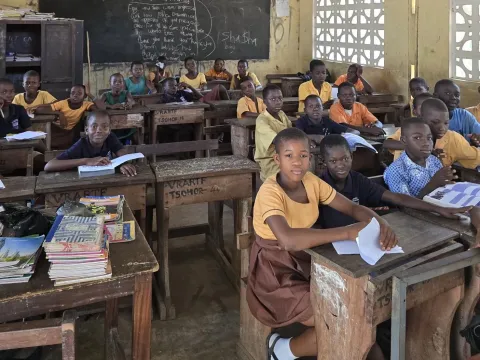
Since 2021, the Data Must Speak (DMS) positive deviance research, conducted in partnership with the Ministry of Education of Ghana, UNICEF Innocenti, and UNICEF Ghana, has identified schools that outperform others in similar contexts and examined the practices behind their success. The research identified 25 practices and behaviours used by these positive deviant schools and together with the Ministry of Education co-created a roadmap to scale selected practices to more schools across Ghana. As these insights originated in schools, ensuring they are communicated back to schools is essential.
As one way to improve feedback loops and share evidence back to schools and communities, UNICEF developed short, human-centered videos shared through various channels to engage headteachers, teachers, and communities in learning about positive deviant practices. But the next challenge is strengthening how evidence is communicated and disseminated so that it not only reaches schools but is meaningfully applied.
With support from the Jacobs Foundation under the School Action Learning Exchange (SALEX), UNICEF Innocenti, Ghana’s Ministry of Education and UNICEF Ghana are taking the DMS research a step further to explore how the evidence can be effectively disseminated and applied in schools. This phase of the partnership builds directly from earlier research and focuses on understanding what can help schools apply the evidence, not just learn about it.
This marks an important evolution in the global DMS journey: turning evidence into action. By studying how schools engage with research findings and what can support them to change behaviors, Ghana’s experience can inform efforts in other countries to bridge the research-to-practice gap.
Drawing on principles from behavioural science and implementation research, the project will pilot different approaches for translating and disseminating evidence to headteachers or teachers. This involves:
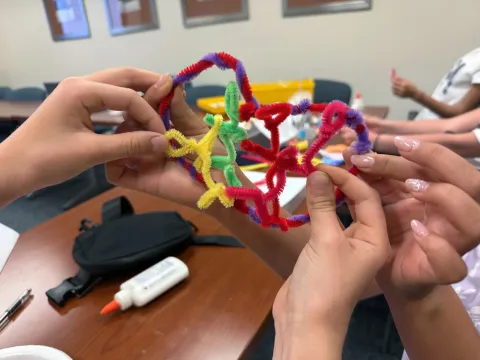
- Co-creating different evidence translation strategies with ministry officials, local education authorities, headteachers and teachers. Workshops with these actors to help shape how research findings can be turned into simple tools or messages that could align to their needs and realities and fit with their daily routines. These strategies intentionally integrate behavioural insights in their design.
- Usability testing of these strategies in schools. Selected schools test the materials and share feedback on what works and what could be improved with different evidence translation strategies before they are piloted in more schools.
- Generating evidence on how evidence translation strategies can support mindset, attitude and behaviour changes. Researchers then monitor how these new approaches influence headteachers and teachers’ knowledge, confidence, motivation, and classroom practices.
- Synthesising lessons learned to inform wider evidence translation strategies and to support schools to sustain practices over time. These insights are compiled and shared with the Ministry of Education and partners to guide how effective methods can be scaled up and sustained.
“DMS has drawn out key positive deviant factors essential for improving learning outcomes. This research is not only generating data and evidence, but aiding the Planning, Budgeting, Monitoring and Evaluation Directorate in shaping policies and developing programming in the education sector.” – Shirazu Inusah, Director Planning, Budgeting, Monitoring and Evaluation Directorate, Ghana Ministry of Education
Why evidence translation matters
Insights from this pilot in Ghana aim to contribute to the global conversation on evidence use in education. Ghana’s experience will not only shape evidence use within its own education system but can provide a model for other countries seeking to close the final gap between evidence generation and sustained change in classrooms.
Improving learning outcomes depends not just on knowing what works, but on understanding how to help schools apply and make meaning of what works in their context. This initiative provides a practical model for bridging research and classroom practice. By placing school actors — those who generate and use evidence, experiment with strategies, and adapt practices based on their classroom experiences — at the center, they can be equipped with the tools to lead change and improve teaching and learning for all children.
This research is made possible through support from the Jacobs Foundation and close collaboration with UNICEF Ghana and Ministry of Education colleagues.