Women in Learning Leadership: Guinea
Women’s Leadership for School Success

- English
- Français
Highlights
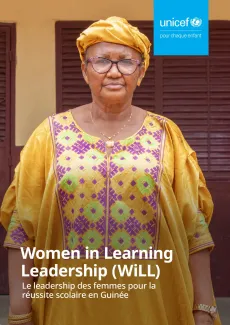
Expanding women’s leadership in schools can strengthen both gender equality and education quality. Yet in Guinea, women account for 35 per cent of primary teachers but only 7 per cent of primary school head teachers. This report explores the barriers limiting women’s progression into school leadership and identifies practical pathways for change.
The study finds that women’s underrepresentation stems from structural and institutional barriers rather than differences in performance. Challenges include unequal access to education, restrictive gender norms, limited access to formal recruitment pathways, difficult rural postings, and leadership appointments that can rely on informal networks. Importantly, schools led by women perform just as well as those led by men after accounting for differences in school context and resources.
The report recommends strengthening transparent, merit-based recruitment and leadership appointments, improving working conditions and incentives for rural schools, expanding leadership training and mentorship for women, investing in girls’ education to build a stronger pipeline of future leaders, and strengthening education data systems to better monitor progress. Together, these actions can help remove barriers to women’s leadership and contribute to stronger schools and better learning outcomes for all children.