Childhood in a Digital World
Screen time, digital skills and mental health
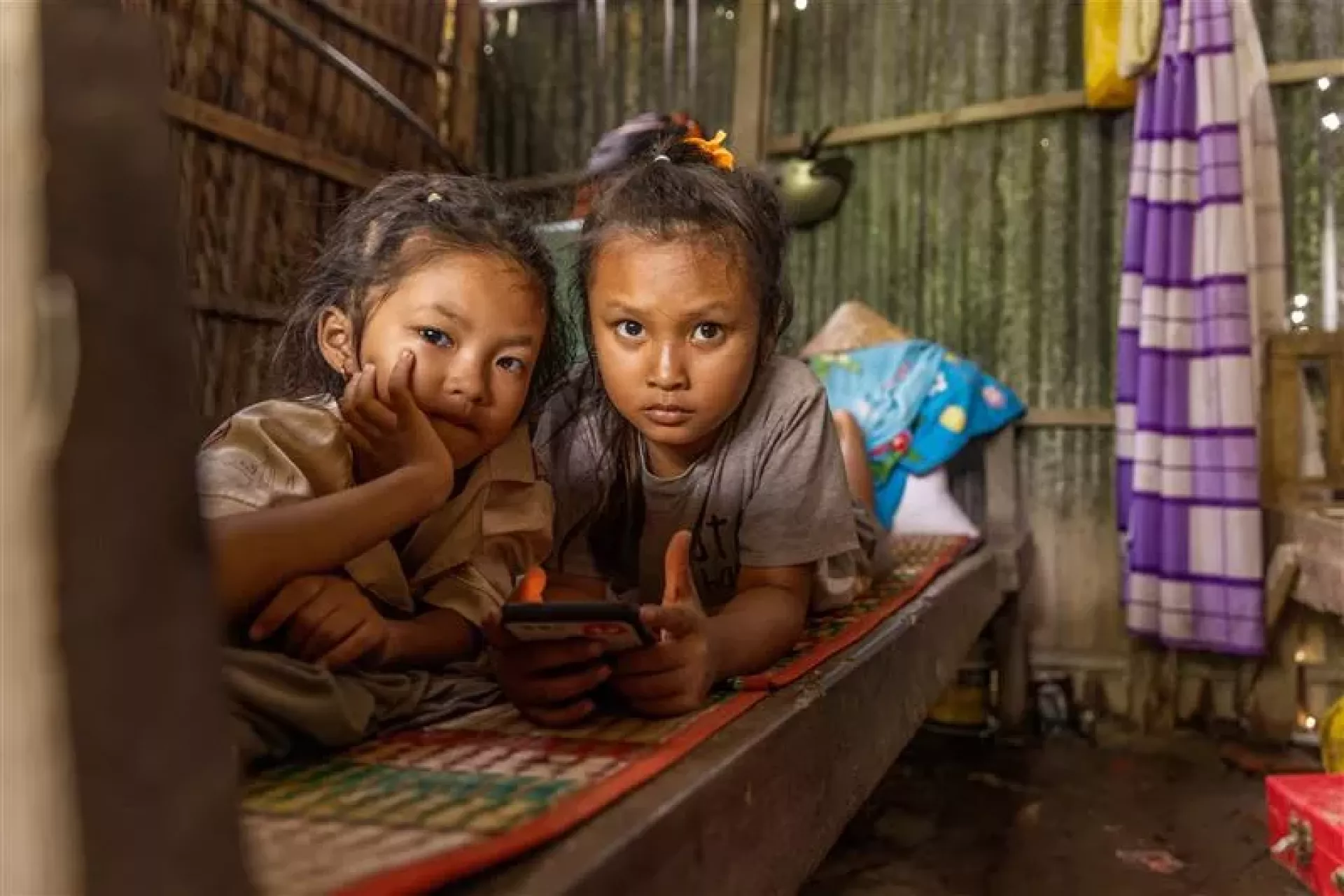
Thirty years ago, digital connectivity was limited to a few million people around the world. Since then, the digital revolution has swept the globe and today nearly five billion people are connected. In many countries, digital technologies have been rapidly adopted by children. The internet is no longer a luxury for children, but has become necessity for playing, keeping in touch with friends and family, learning and building skills for the future.
With the mainstreaming of the internet, the value of learning digital skills from an early age has become increasingly apparent. The first step to developing digital skills is to access the internet and use digital technologies. Though internet access has improved considerably around the world, enormous gaps persist. An estimated two thirds of the world’s school-aged children – or 1.3 billion children of ages 3 to 17 years – do not have internet access at home. Most of these children live in parts of Africa and Asia. Children without connectivity are at a disadvantage in the global rush to acquire digital competencies.
And yet, children not having digital access and falling behind on digital skills is only one side of the coin. In high-connectivity countries where access has become nearly universal, children face other challenges. Reports of rising mental health issues among young people have drawn scrutiny about the impacts of frequent internet use and the spread of online games, smartphones and social media.
Despite the internet’s potential to transform lives for the better, our collective understanding of how children’s digital use and experiences impact their skills and mental health remains limited. With countries in varying stages of digital development, it has been difficult to establish a global picture of who is online and who is not, why some children possess digital skills while others do not and how digital technology impact children’s mental health. Too often the voices and lived experiences of children get lost in the mix when companies and other powerful stakeholders race to build a profitable and captivating digital world.
Key facts
Key facts
- Over the past two decades, home connectivity for children has increased substantially in many regions of the world. Among wealthier countries, most 15-year-olds now have internet access at home, but as many as one in five children still do not have access to the internet at home by age 10. Data on home connectivity that are globally comparable remain scarce, making it difficult to accurately estimate children’s access.
- Socioeconomic status is a strong predictor of whether a child has internet connectivity at home in every part of the world, but more so in low- and middle-income countries. Children living in poorer households are more likely to be unconnected, irrespective of their age or the overall economic development of the country.
- Even in wealthy countries, where most schools are connected to the internet and has computers available, less than half of children report using the internet daily (48 per cent) in school, and only 30 per cent use desktops or laptops daily in school. This points to a missed opportunity to teach children how to use technology and build digital skills from an early age through formal education.
- Connectivity is a pre-requisite for digital skills development in children, but not the only driver. The time children spend online and the activities they engage in all contribute positively to a child’s digital skills development to a great extent. Conversely, children whose parents restrict their internet use tend to have lower skills.
- The most popular activities children engage in online – using social media, playing video games and watching videos – all contribute in positive and measurable ways to their digital skills development. For example, those who use social media regularly are up to twice as likely to know how to change their privacy settings, and at least 50 per cent more likely to be able to identify the best keywords to use for online searches and know how to remove someone from their contact lists.
- Children who grew up in countries that had historically higher rates of connectivity demonstrate greater digital skills today. This suggests potential benefits of growing up in a digitalized society. Countries with low connectivity risk ending up with a generation of children growing up without opportunities to develop digital skills from a young age, which could undermine their opportunities and safety in the future.
- Children who experience online sexual abuse or online bullying have significantly higher levels of anxiety, more suicidal thoughts and behaviours, and are more likely to self-harm. The strength of these associations is moderate to strong and fully consistent across 21 countries. Exposure to different forms of harmful content or hurtful experiences also affects children’s mental health negatively, but the associations are somewhat weaker.
- We find no clear evidence that screen time directly harms children’s mental health. Although increased screen time can sometimes be associated with a higher risk of exposure to harmful content and abusive experiences, the effect is weak. This suggests that the likelihood of encountering online harm is not primarily determined by the amount of time spent online.
- To protect children’s mental health in a digital age, solutions need to focus on preventing online sexual abuse and online bullying and reduce exposure to harmful content. This requires much greater investment from companies who provide digital content and services to children, and stronger legislation by governments to hold these companies accountable. In comparison, solutions that focus on restricting screen time are less likely to be effective.
Conclusions and recommendations
Conclusions and recommendations
Countries where a majority of the population is not yet connected should prioritize accelerating progress towards universal connectivity. Failing to do so risks leaving another generation of children without the opportunity to develop digital skills from a young age, which will deepen existing inequalities. Even where connectivity and devices are available, many children are not utilizing digital technologies in school as effectively as we might hope. Children could achieve real improvements in digital skills development by using digital technology in both formal education and extracurricular activities.
To address connectivity gaps for children:
- Governments should invest in electricity and digital infrastructure, ideally using sustainable energy sources, particularly in underserved urban communities and rural areas. This should include providing internet access and affordable devices to schools as well as ensuring families have access to affordable devices, for example, through connectivity subsidies for low-income households. Efforts to increase access should be implemented in tandem with those that address existing social, cultural and economic inequalities that limit the opportunities of being connected.
- Schools and teachers can serve as equalizers by ensuring that students have access to devices and connectivity. However, even well-connected schools require better support to integrate digital technologies into classrooms effectively. Governments should create policies and programmes to aid in this integration, for example, by investing in teacher professional development and providing evidence-informed guidance on the use of digital technologies for learning.
The technology industry (eg, telecom providers, mobile operators and hardware manufacturers) should explore models to provide lower-cost services and products for schools and families with children, with a focus on benefiting poorer communities. This would help address gaps in meaningful connectivity. Governments can enable this through subsidizing market creation costs and incentivize private sector investment.
Children who engage more with digital technologies and spend more time online tend to develop stronger digital skills. This highlights the importance of access and usage in fostering skill development. While restrictions on technology use are sometimes necessary to promote safe, balanced usage, it’s essential that these restrictions are carefully considered to avoid hindering children’s skills development.
To ensure all children have a chance to build digital skills:
- Parents should encourage and support children to actively use the internet and digital technologies in diverse ways to enhance their skills outside of school, potentially from a young age, but always in a balanced way that allows time for other activities. These activities should take place on safe, age-appropriate platforms. Additional guidance from governments and experts may be needed to help parents identify these.
- Governments and experts, in consultation with children, should determine what digital skills children will need to thrive in the future and identify the most effective ways to teach these skills, combining formal and informal learning methods. In the longer term, digital skills education should be revised, evaluated and, once proven effective, be included in the school curricula for all children. Too many digital skills programmes used today have not been evaluated, which impedes effective learning and scale-up through the formal education system. With a rapidly changing digital landscape and influx of tools powered by artificial intelligence, it is important to take a forward-looking approach to anticipate the digital skills needed in the future.
- Schools and teachers should integrate digital technologies into students’ learning activities, ensuring this is done without overburdening teachers. To achieve this, teacher training programmes must be updated based on research into how digital skills can be effectively taught in formal education.
- Governments, schools and parents should ensure children acquire the skills necessary to recognize and respond to online harm. While it is never children’s responsibility to protect themselves, it is important that they can recognize harm and know what to do about it or where to seek help. Better online safety education should be a priority for all states, but we do not yet have high-quality, evidence-informed and evaluated online safety education that can be scaled through the school system. This should be urgently developed and evaluated for effectiveness.
Addressing platform safety and the harmful use of digital technologies is crucial to protecting children’s mental health. Our results suggest that preventing children from going online may undermine their skills development, while doing little in the way of protecting their mental health in the areas covered by this report. Legislative and policy interventions should focus on areas with clear impacts on mental health, such as preventing online sexual abuse and online bullying. The technology sector needs to step up their efforts and must be held accountable for exposing children to harmful or illegal content and behaviours. Evidence is clear that current actions have been insufficient, as children continue to be harmed online.
However, these issues extend beyond the digital environment and require broader societal action to address the social and gender norms that enable violence against children, online and in person.
To protect children’s mental health in a digital age:
- The technology industry, and in particular online platforms, must adopt a zero-tolerance approach to online sexual abuse and online bullying, coupled with tangible actions to address it. Our research shows that online sexual abuse and online bullying have the strongest associations with risks to mental health. While the companies that manage technology platforms are not solely responsible for these issues, they can and must institute robust measures to identify, prevent and mitigate child rights violations including online sexual abuse and online bullying.
- Social media platforms must allocate sufficient resources (both financial and non-financial) to ensure these spaces are safe for all children. Since social media use contributes to digital skills development, restricting children from these spaces can undermine their learning opportunities. However, making these spaces viable for children will require significant investment in safety-by-design and content moderation across the technology industry, and continuous child rights due diligence, including impact assessments, to determine how children are affected.
- Governments and legislators should strengthen efforts to hold the technology industry accountable for exposing children to harmful content and experiences, requiring them to step up their online safety and harm prevention efforts. Special attention must be given to illegal content and conduct, such as certain forms of hate speech and sexual abuse, which come with additional legal obligations. Although legislation varies by jurisdiction, platforms must comply with national laws and be held accountable for any breaches.
- Governments and schools should provide age-appropriate sexuality education that help children recognize abusive behaviours, understand consent and boundaries, and navigate these issues both online and in person. This could be integrated into evidence-informed online safety education, which should be developed, evaluated and taught in schools.
- Governments should train professionals in education, child protection, justice, law enforcement and health sectors to better understand children’s experiences in the digital environment, improving prevention and response to online sexual abuse and online bullying.
- Parents can play a role by doing their best to ensure children do not use online services or products from companies that are not able to keep children safe on their platforms. Parents should monitor the digital use of younger children to make sure it is age appropriate. This is often more difficult with older children who want greater independence, and here other educational efforts (for example through school) need to take over. Having an open and recurring dialogue with children about online harms can make this easier in practice but requires parents to have access to reliable information.
- Government, civil society and independent experts can assist parents by providing information about different platforms and their relative risks or benefits, including identifying platforms that expose children to too much risk, and promote alternative content that is well designed, respects children’s rights and supports their well-being.
Highlights
This report describes the evolving landscape of children’s digital lives, documenting what we know about their access, digital skills and impacts on mental health. Presenting global and comparative data that have not been previously analysed together, it explores how lack of digital access can influence a child’s digital skills development and highlights the potential for digital technology to exacerbate inequalities. The report also responds to ongoing debates about screen time by providing robust evidence on when and how digital technologies can undermine children’s mental health.
We hope the report will contribute to a better balance in the current discourse on children’s use of digital technologies by demonstrating how digital technology has the potential to impact children both positively and negatively, depending on how they use it, and what kind of content and experiences they are exposed to. Finally, we suggest solutions to ensure that children in the future will be able to spend time online to play, build skills and explore the internet while staying safe.
We have a responsibility to ensure all children can benefit from the promises of digital technology while protecting them from its perils. Societies can only benefit when children have digital skills and are able to navigate online opportunities and manage the risks. This is also in the best interests of children, who have a right to play, learn and be safe in an online world.