It Takes a Village: Daus’s Journey from Severe Wasting to Recovery
How family care, frontline health workers and ready-to-use therapeutic food are supporting the recovery of children with severe wasting
- English
- Bahasa Indonesia
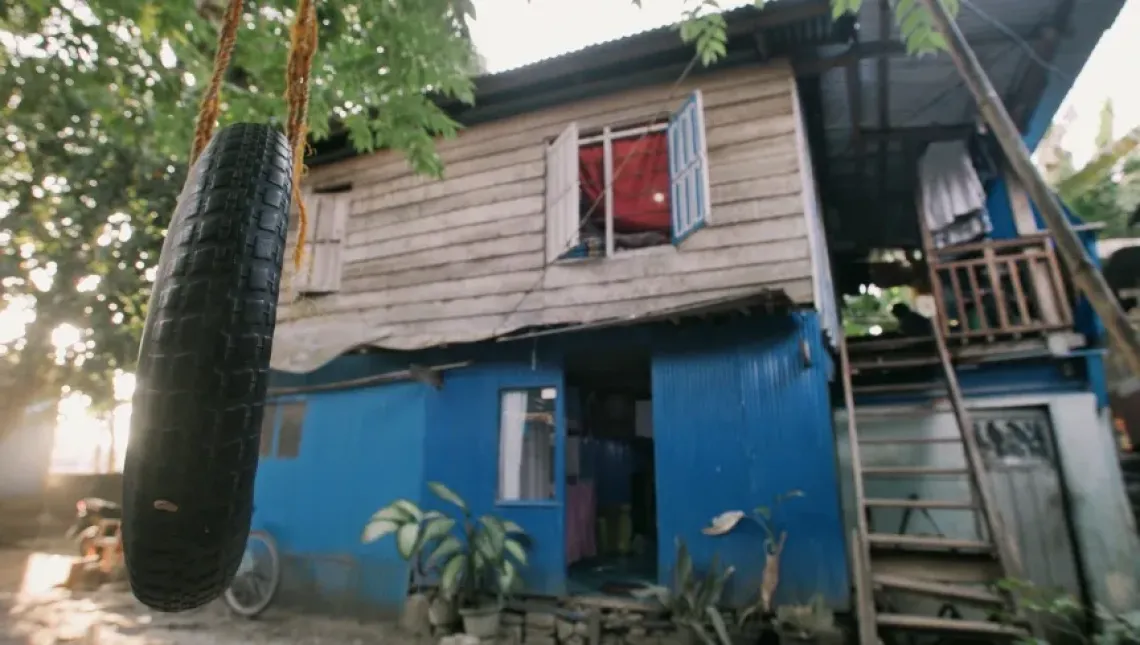
In the front yard of a bright blue house in Maros district, South Sulawesi province, children gather in the afternoon under an old tree, taking turns on a large rubber swing. This was where one-year-old Daus happily spent his days playing before he became ill. He was cheerful, active, and full of curiosity about the world around him.
Then, one day, Aisyah noticed changes in her youngest son. He seemed weak and lost interest in food. The brightness Aisyah knew so well began to dim. “Daus was cheerful and attached,” Aisyah recalls, holding him on her lap. “But that month, I saw him differently. He was no longer himself.”
Aisyah carefully observed Daus’s condition as he became easily irritated, rarely wanted to play outside and was unusually inactive.
Aisyah lives with her husband and their four children in a modest family home near one of South Sulawesi’s longest rivers. A handful of other families live nearby, who act as an essential support network. “They are always here for us, physically, emotionally and sometimes financially,” says Aisyah.
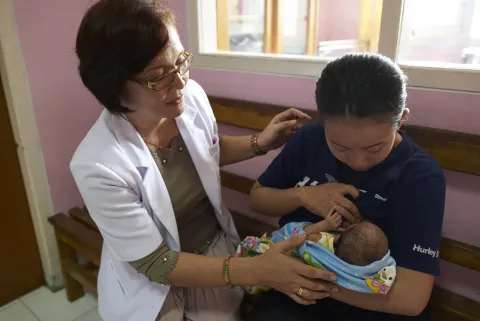
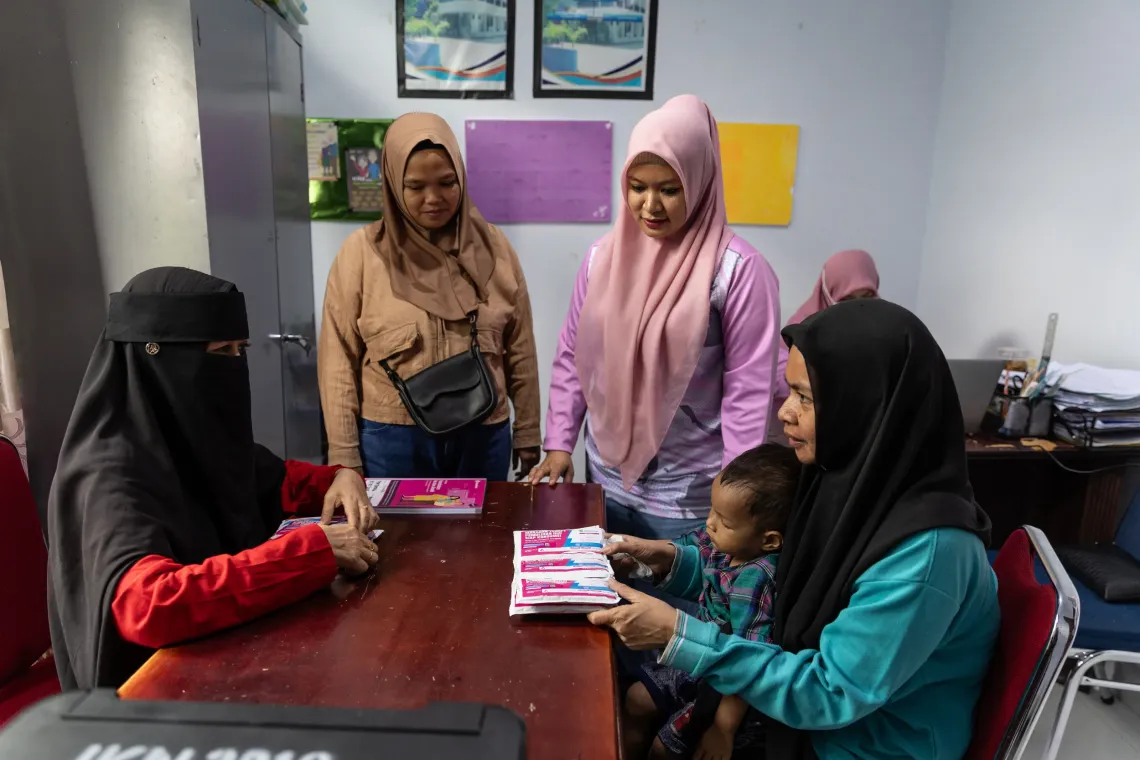
When Daus fell ill, Husni – a trusted neighbour and cadre at the local community health outpost (Posyandu) – assessed the young boy’s nutrition status using a mid-upper arm circumference (MUAC) tape, a simple color-coded tool used to identify children at risk of wasting. The screening showed that Daus might be severely malnourished, prompting Husni to immediately refer Aisyah and her son to the nearest primary health care centre (Puskesmas) for a comprehensive assessment and timely treatment.
A mother’s instinct was confirmed. , Daus was diagnosed with severe acute malnutrition, also known as severe wasting – a life-threatening form of undernutrition.
“When the health worker told me Daus had severe wasting, I was devastated,” Aisyah says. “But I knew I had to stay strong and do everything to help him recover.”
Daus’s story reflects a much wider challenge. Worldwide, an estimated 42.8 million children under five suffer from wasting in 2025. In Indonesia, about 1.6 million children are affected — roughly one in every 14, in which over 260,000 affected by severe wasting.
Indonesia has committed to reducing the national wasting prevalence to five percent by 2029 under its National Medium-Term Development Plan. There has been measurable progress: the 2024 Indonesia Nutritional Status Survey (SSGI) revealed that wasting prevalence dropped from 12.1 percent in 2013 to 7.4 percent.
Yet, progress remains uneven, with disparities across provinces and districts. SSGI notes that in Maros district, 8.3 per cent of children under five were living with wasting in 2024. Slightly higher compared to national data, and in South Sulawesi province (8 per cent).
For local authorities, these numbers are a call to action. The Maros District Government has identified the reduction of wasting and stunting as one of its programme priorities, alongside efforts to strengthen early detection, referral and follow-up through communities and Puskesmas.
“Reducing child undernutrition, including wasting, requires collaboration across sectors, strong community involvement, including Posyandu cadres and Puskesmas health workers, and evidence-informed interventions,” says Dr. H. Muhammad Yunus, S.Ked., M.Kes, Head of the Maros District Health Office.
A Chain of Care
Recovering from severe wasting takes time. Recovery depends on an unbroken chain of care – from early detection, timely referral, diagnosis to treatment, counselling and regular follow-up. For Daus, that chain began with Husni at the local Posyandu, which plays a vital role in helping him regain strength, recover, and thrive.
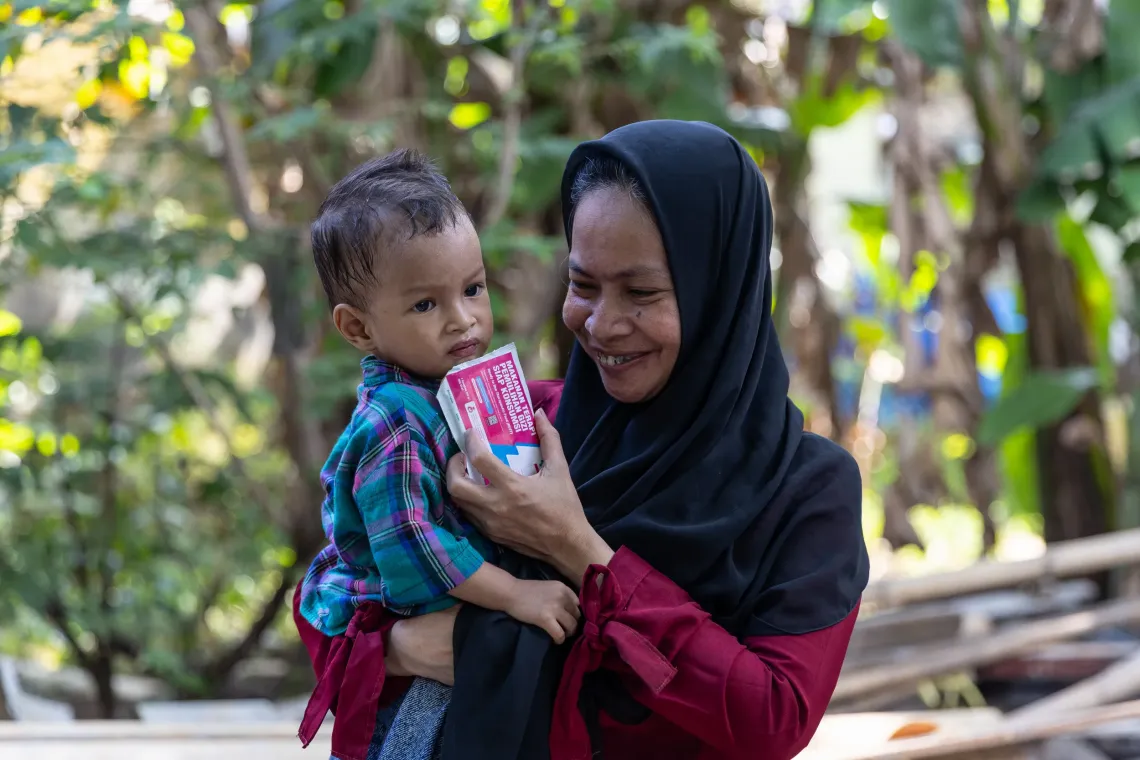
The second link was a strong network of care and support that Daus received at the Puskesmas. There, a frontline health worker introduced the family to ready-to-use therapeutic food (RUTF) — a lifesaving, nutrient-dense paste used in the treatment of children with severe wasting at community level. Under Indonesia’s Ministry of Health standards, RUTF is used for treatment of severely wasted children as part of a broader comprehensive package of care.
RUTF has removed the logistical barriers that often derailed child’s recovery. In the past, severe wasting treatment was only available at district and provincial hospitals and children had to stay for several weeks. This inpatient-only model reached very few severely wasted children. Even when severely wasted children were managed at Puskesmas, treatment relied on therapeutic milk formulas that had to be carefully prepared by health workers for every feed.
This process was time-consuming, increased the workload of already stretched health staff, and required strict preparation and hygiene standards. Any errors in preparation or handling could increase the risk of infection and compromise the child's recovery, making treatment more challenging for both health workers and families.
Until 2015, a new treatment model, known as the Integrated Management of Acute Malnutrition (IMAM) led by the Government of Indonesia with support from UNICEF, was piloted in East Nusa Tenggara (NTT) province based on global evidence of its effectiveness, which found more than 85 per cent of severely wasted children could be successfully treated at home without requiring hospitalization, if identified early.
IMAM strengthens efforts to prevent, detect and treat wasting by connecting community screening, referral, outpatient treatment, caregiver counselling, and follow-up care. It also strengthens the skills and capacity of frontline health workers to identify, assess and refer children with wasting, while improving the availability of essential nutrition supplies, including therapeutic foods like RUTF.
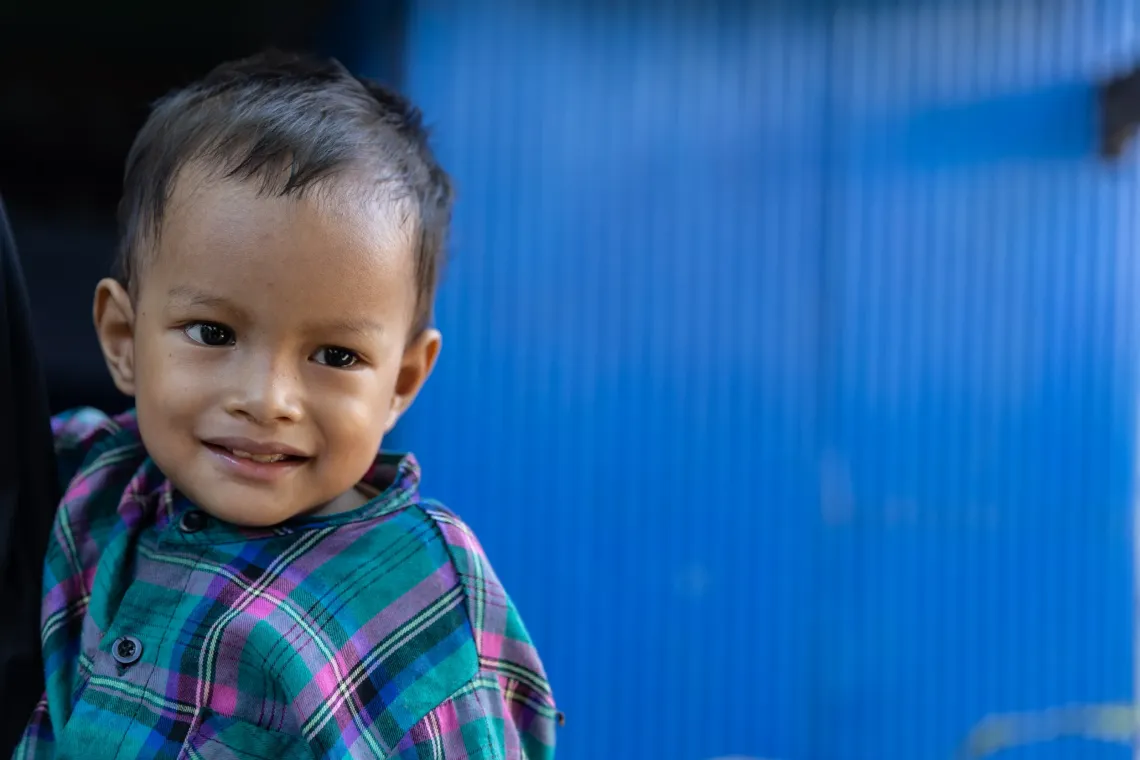
Today, Daus is no longer severely wasted. While his recovery continues to be closely monitored, the rhythm of his daily life has returned. Once again, he spends his afternoons playing with friends beneath the sprawling tree outside his home.
For Aisyah, IMAM meant she did not have to fight for her son’s life alone. Husni became almost like family, checking on Daus regularly, accompanying them to weekly appointments at the Puskesmas, and coaching Aisyah on critical home care practices like feeding RUTF according to the dosage given by health workers and handwashing practices.
Not only thousands of children across Indonesia are receiving timely care through the IMAM approach – giving more families the same chance that Daus had - the IMAM model of care is proven cost efficient, which can reduce up to 22 per cent wasting treatment cost compared to the inpatient model.
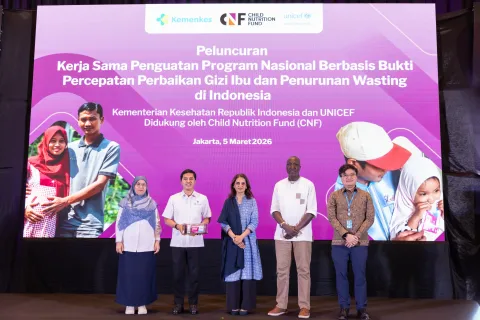
Therefore, to ensure that more children like Daus have the opportunity to survive, recover, and thrive, with support from Child Nutrition Fund (CNF), UNICEF will continue working closely with the Government of Indonesia over the next five years to strengthen the quality and coverage of early detection and treatment for child wasting.
This includes building the capacity of frontline health workers to deliver quality care, expanding community-based screening through approaches such as Family-Led MUAC to empower parents and caregivers to detect wasting early, strengthening the continuation of care from communities to health facilities, ensuring timely access to life-saving treatment, reinforcing nutrition supply chains, and supporting sustainable local production of RUTF supplies.
Daus’s life-saving journey took a mother’s determination, a vigilant Posyandu cadre, skilled health workers, lifesaving therapeutic food and a health system that connected each step of his care. Together, these efforts aim to ensure that every child with wasting is identified early, receives timely and effective treatment, and has the best possible chance to make a full recovery.