World Breastfeeding Week 2026: Strengthening Breastfeeding Support for Every Mother and Baby
UNICEF and WHO call for sustained investment to protect, promote and support breastfeeding, so that every child has the best start in life
- English
- Bahasa Indonesia
Jakarta, 3 August 2026 – As the world marks this year’s World Breastfeeding Week from 1 to 7 August under the theme "Breastfeeding for a Sustainable Start in Life – Strengthen What Works," UNICEF and WHO in Indonesia are calling for all stakeholders to build on proven interventions that protect, promote and support breastfeeding. The week serves as a reminder that sustained investment in breastfeeding is an investment in the health of children and mothers, as well as Indonesia's human capital that is the cornerstone of Indonesia Emas 2045.
Indonesia has made encouraging progress in increasing exclusive breastfeeding among children aged 0-5 months old, from 52 per cent in 2017 to 66.4 per cent in 2024, surpassing the World Health Assembly global target of at least 60 per cent by 2030. These gains have been supported by stronger policies, sustained investment in capacity building for health and community workers, and integration of breastfeeding support into routine maternal and child health and nutrition services. Continued efforts are now needed to maintain this progress, close remaining gaps and ensure every breastfeeding mother, wherever she lives, has access to quality care and support.
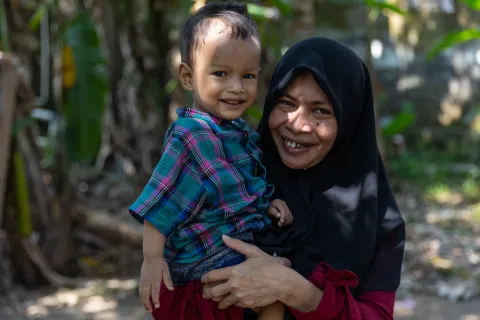
"Every child has the right to the best possible start in life, and breastfeeding is one of the most powerful ways to help realize that right. Supporting breastfeeding is also an investment in Indonesia's future, helping to build a healthier, more resilient generation that can reach its full potential,” said UNICEF Indonesia Representative, Maniza Zaman. “Breastfeeding is a shared responsibility. Families, health workers, employers, communities and governments all have a role to play in creating an environment where mothers feel informed, supported and encouraged to breastfeed. By building on approaches that have proven effective, we can help every mother and child to benefit from quality breastfeeding support, no matter where they live," added Zaman.
"Breastfeeding is one of the most powerful acts of love and protection a mother can give her child. Yet no mother should have to do it alone," said Dr N. Paranietharan, WHO Representative to Indonesia. "Every mother deserves trusted support, quality health services and protection from the inappropriate marketing of breastmilk substitutes. Together, through strong leadership and collective action, we can ensure every child gets the healthiest start and the opportunity to thrive."
Breastfeeding is one of the most effective interventions for saving children's lives. Babies who are not breastfed are up to 14 times more likely to die before their first birthday than those who are exclusively breastfed during the first six months of life. In Indonesia, inadequate breastfeeding is estimated to result in the loss of nearly 5.8 million IQ points among children every year, with lifelong consequences for educational achievement, productivity, and future earnings.
Breastfeeding also benefits mothers and the wider economy. It strengthens bonding between mother and baby, while reducing mothers' risk of breast and ovarian cancers and type II diabetes. Optimal breastfeeding practices in Indonesia could prevent more than 8,000 child deaths and 4,200 maternal deaths each year, save over US$60 million in annual health-care costs, reduce household spending on commercial milk formula by almost US$600 million annually, and generate economic gains of up to US$5 billion every year. Investing in breastfeeding is therefore not only a health priority, but also a smart investment in Indonesia's human capital and economic development.
Indonesia has strengthened its policy framework for breastfeeding in recent years through Health Law No. 17 of 2023 and its implementing regulation No. 28 of 2024, and Law No. 4 of 2024 on Maternal and Child Welfare during the First 1,000 Days of Life. Together, these measures strengthen maternity protection, breastfeeding support and restrictions on the marketing and promotion of breast-milk substitutes, in line with the International Code of Marketing of Breast-milk Substitutes and subsequent World Health Assembly resolutions.
Despite progress, challenges remain. Many children in Indonesia stop breastfeeding before the recommended age of two. Continued breastfeeding until the child reaches the age of at least two years, accompanied by appropriate complementary feeding from six months of age, remains essential for children's growth, development and immunity.
Every interaction between mothers, babies and health workers is an opportunity to support successful breastfeeding. That support should be provided consistently across the continuum of care from antenatal services, childbirth and postnatal care to immunization, growth monitoring, Posyandu and Mother Support Groups.
There is still considerable opportunity to strengthen breastfeeding support in health facilities. Data from the 2023 Indonesian Health Survey (SKI) show that although nearly 90 per cent of births in Indonesia take place in health facilities, only about one in four newborns are breastfed within the first hour after birth. Ensuring that every newborn is breastfed within the first hour and receives quality breastfeeding support before leaving the health facility will help give every child the best start in life.
Besides support from the health system, families also need access to accurate and evidence-based information on infant and young child feeding. Aggressive marketing of infant formula and other breast-milk substitutes can influence families' feeding decisions and undermine mothers' confidence in breastfeeding.
This World Breastfeeding Week, UNICEF and WHO in Indonesia are calling for continued efforts to protect and strengthen breastfeeding, including the effective implementation and enforcement of Indonesia’s already strong regulations and policies, so that mothers and families can fully benefit from these protections and support mechanisms.
Stronger health services through Posyandu and Mother Support Groups, as well as implementation of family-friendly policies such as adequate parental leave, and support for breastfeeding mothers in the workplace, are also essential to creating the support that mothers need. Every mother should also have access to quality counselling and support throughout pregnancy, childbirth and the first two years of her child's life.
Accelerating progress will require sustained commitment across all levels of society, so that every mother can breastfeed successfully in a supportive and enabling environment, and every child can grow up healthy and reach their full potential.
Media contacts
About UNICEF
UNICEF promotes the rights and wellbeing of every child, in everything we do. Together with our partners, we work in 190 countries and territories to translate that commitment into practical action, focusing special effort on reaching the most vulnerable and excluded children, to the benefit of all children, everywhere.
For more information about UNICEF and its work for children, visit www.unicef.org.