When children lead
At a primary school in Papua, young students help their peers embrace healthy nutrition habits

- English
- Bahasa Indonesia
At the start of every school week, 11-year-old Eka takes her place at the front of the line along with her friends, eagerly waiting to enter the classroom. Alongside Grace, her fellow Nutrition Captain, Eka helps demonstrate simple routines that have become part of life for the fifth-grade students at SD Negeri Inpres Sereh in Sentani District, Papua. They remind classmates to keep their uniforms neat, wash their hands properly, and pay attention to personal hygiene.
These responsibilities might seem like a lot to place on young shoulders. For Eka, they are a source of pride. “I am happy to be a Nutrition Captain, because I can play while learning about nutrition with my friends,” says Eka.
The role of Nutrition Captains is to promote healthy habits through peer-to-peer learning. After participating in interactive learning sessions about nutrition and healthy lifestyles, Nutrition Captains are invited to share what they learn with their friends.
“The task of the Nutrition Captains inside the classroom is to be role models for their respective classmates,” says Rini Setiawati, principal and teacher at SD Negeri Inpres Sereh. “They share how to wash hands with soap, eating enough protein and carb, and then learn and practice to plant cassava together.”
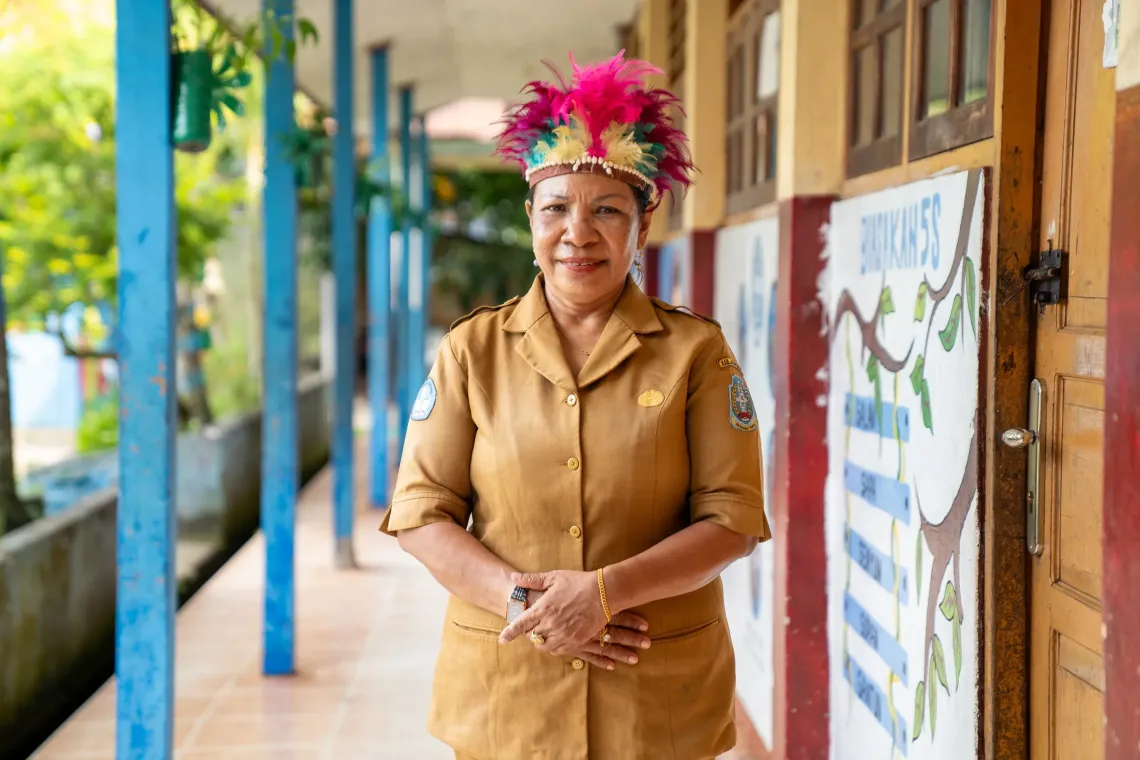
For Rini, the most rewarding part has been watching her students take ownership of activities that were previously driven almost entirely by teachers. Today, it is not unusual to see students reminding one another to wash their hands before eating or volunteering to take part in health-related activities. Many teachers are surprised at how willing other students are to listen and follow the encouragement of the Nutrition Captains.
The lessons do not stop in the classroom. Behind the school, another learning space has become part of their daily routine: the Kebun Bergizi, or Nutrition Garden.

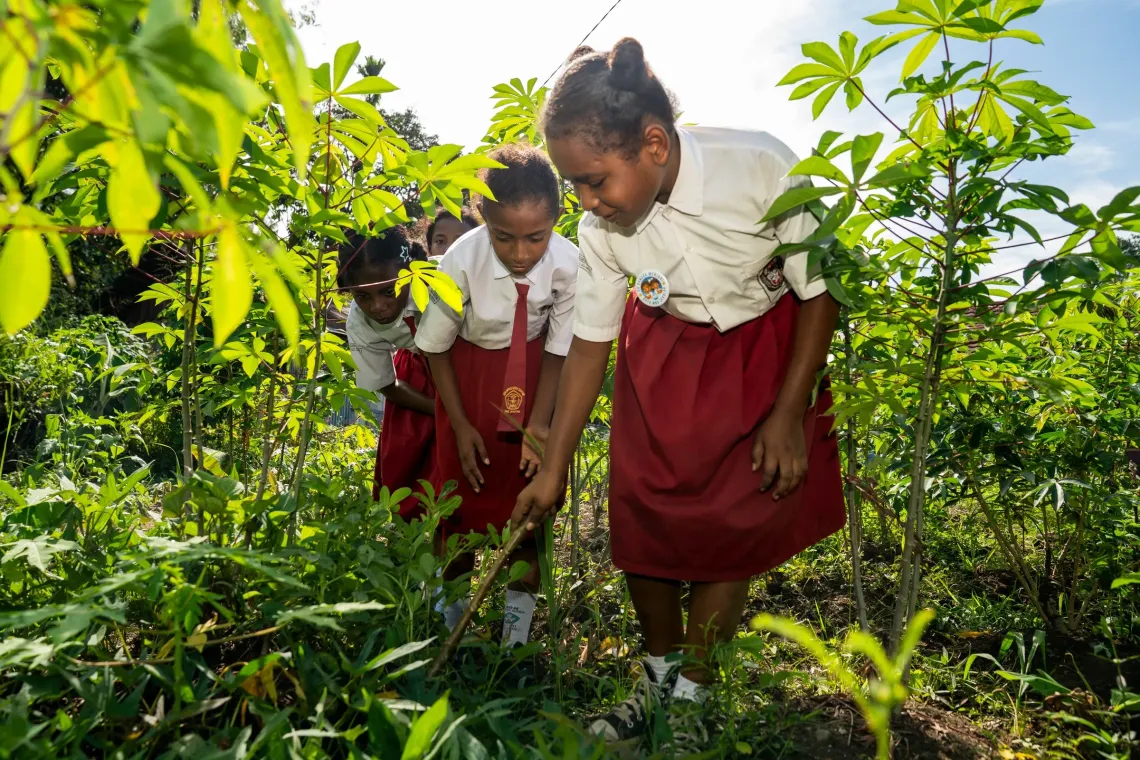

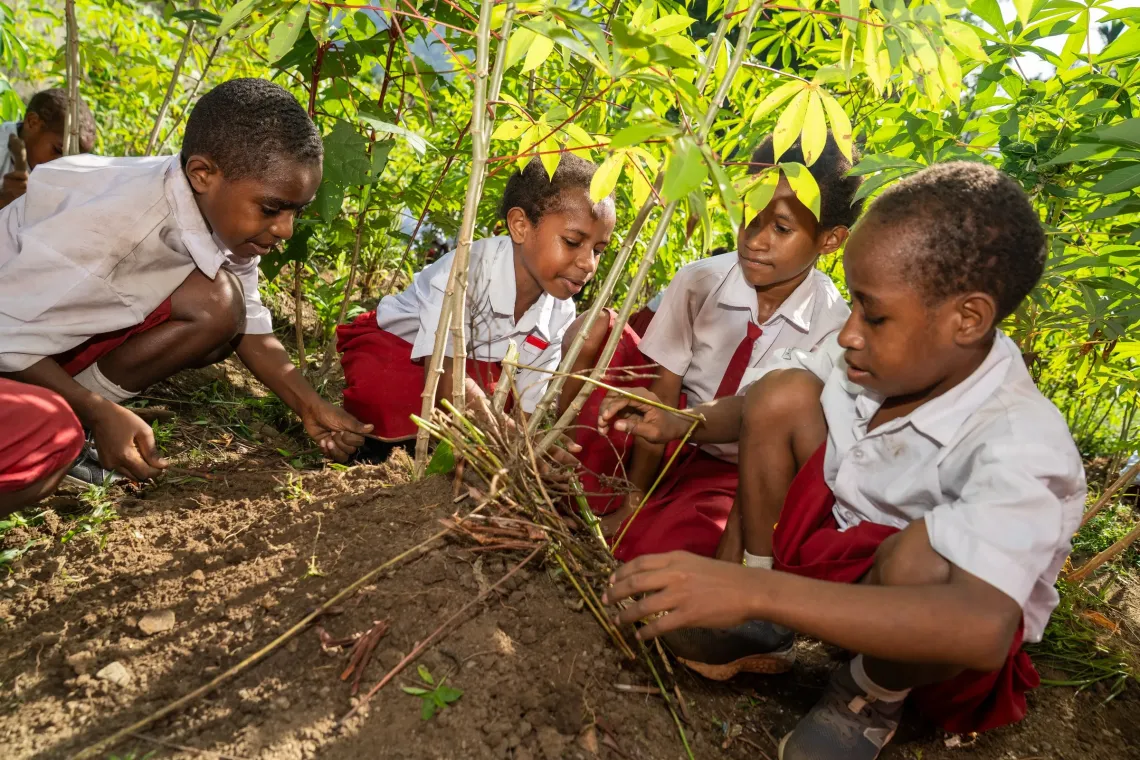

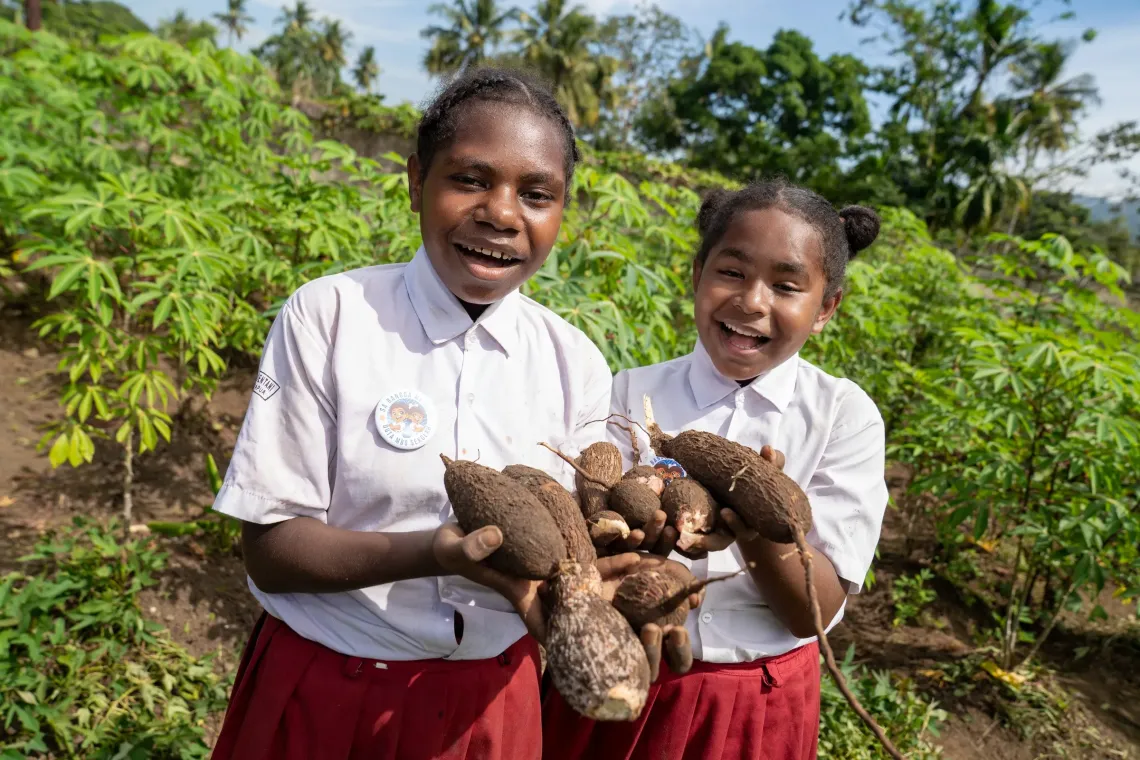
Here, students work together to plant and care for crops, while learning how nutritious foods support their health and development through conversations with the Nutrition Captains. The lessons are practical and rooted in their daily lives with their families and communities.
Most of the students come from families where farming is already part of everyday life. Long before they encountered the garden at school, they learned from parents and grandparents how to cultivate crops like cassava and sweet potatoes and process sago.
It is the students who have advised their teachers that cassava planted at an angle produces better tubers and makes harvesting easier months later. “They know exactly how to find high-quality cassava stems. In fact, they can explain to the teachers that planting cassava must not be done straight,” Rini says proudly.
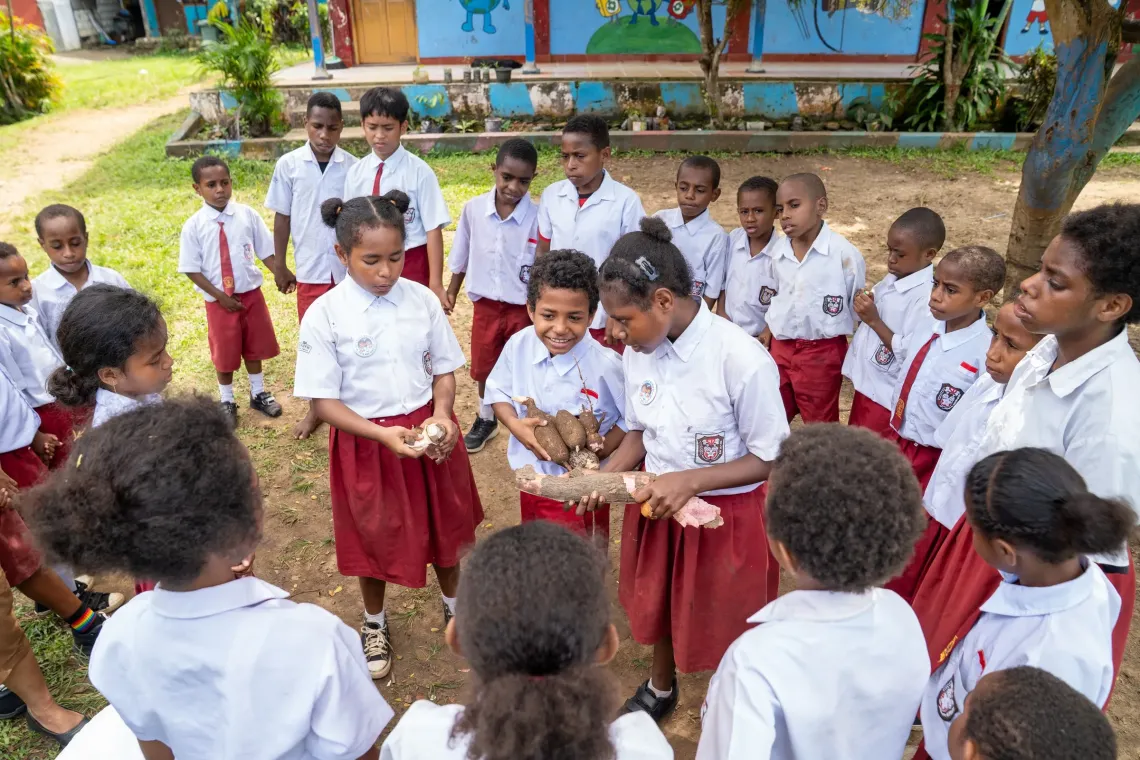
One of the biggest challenges often comes when deworming tablet are distributed from the nearest Health Facility as part of the government provision. Many children are initially reluctant or afraid.
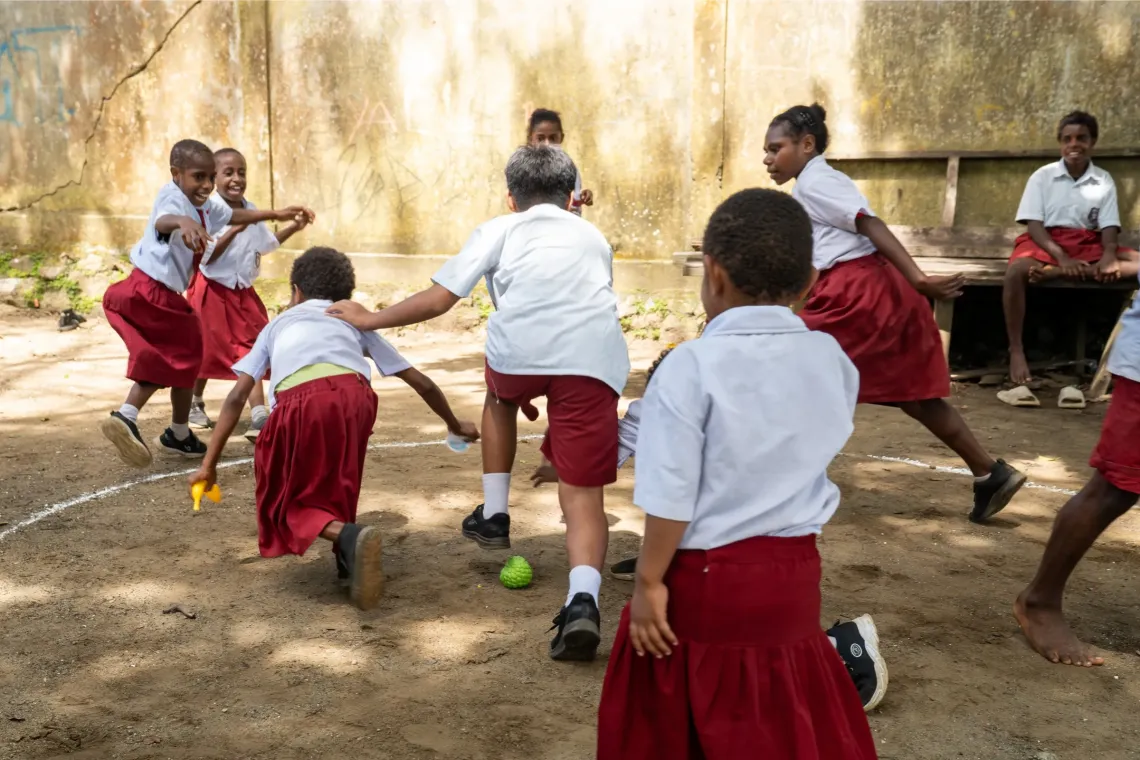
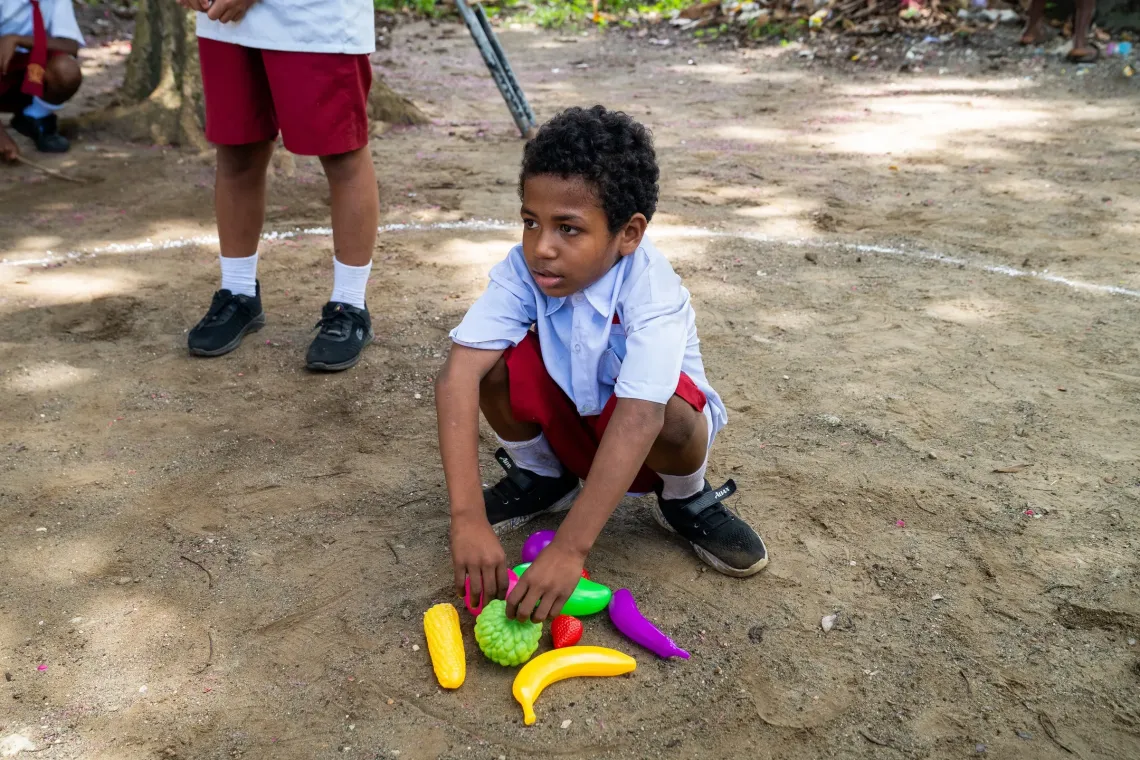
To make the experience less intimidating, Nutrition Captains use games and group activities, turning what could be a stressful moment into an opportunity for learning and fun. Through these interactions, healthy habits become something children build together.


The efforts at SD Negeri Inpres Sereh are designed to address longstanding nutrition challenges that affect children across Papua. According to the 2024 Indonesia Nutritional Status Survey (SSGI), 22.5 per cent of children under five in Jayapura Regency were stunted.
Building healthy habits and knowledge around nutrition from an early age is essentialfor preventing malnutrition. At SD Negeri Inpres Sereh, nutrition education helps make that learning practical – giving children the knowledge and confidence to make healthier choices and encourage their peers to do the same.
The support from local government, China International Development Cooperation Agency (CIDCA) and UNICEF enables a broader school-based nutrition education initiative, and at SD Negeri Inpres Sereh that support translates into practical, child-cetered learning and not just classroom instruction.
“My hope in becoming a Nutrition Captain is that my friends will enjoy eating nutritious food, wash their hands regularly and stay enthusiastic about learning,” says Eka.
What began as an effort to promote healthier habits has also become a reminder that children – when given the opportunity – can help lead the way for lasting change.