UNICEF’s Partnership in the Journey of Jal Jeevan Mission
From Infrastructure to Sustainable Services

In August 2019, India marked a significantly important milestone in rural water supply with the launch of Jal Jeevan Mission (JJM). Through JJM, the Government of India committed to provide every rural household with a Functional Household Tap Connection (FHTC), supplying 55 liters of safe water per person per day on a regular and sustainable basis.
For generations, millions of families in rural India depended on distant water sources such as handpumps, community taps and local water points. Women and girls often carried the heaviest burden, spending hours each day collecting water for household needs. With the onset of JJM, the Government of India set out to change this reality.
The mission aimed at reducing the time and effort spent collecting water and supporting better health, dignity, education, and livelihoods. It is also marking a major shift in India’s rural water sector: from building infrastructure and expanding coverage to delivering drinking water as a reliable public service. With an estimated initial investment of US$38 billion, the Mission became one of the world’s largest efforts to improve rural drinking-water services. This included about US$22 billion from the Central Government and US$16 billion from the States.
Today, that transformation is visible across rural India. For families like Shanti Bai’s, and for millions of others, the daily journey to fetch water has been replaced by a tap at home, bringing drinking water closer to where people live, learn, and work.
Building the Foundation (2019–2024)
The first phase of the Jal Jeevan Mission focused on rapidly expanding rural water systems while building the institutions needed to keep services running over time. The Mission supported retrofitting of existing schemes and development of Single Village Schemes and Multi Village Schemes, designed according to local geography and water conditions.
This changed how water reached rural households. The service point gradually moved from community sources, public standposts and handpumps to tap inside homes. At the same time, Gram Panchayats, Village Water and Sanitation Committees (VWSCs) and communities continued to play important roles in planning, operation, maintenance and oversight, combining household-level service with local ownership.
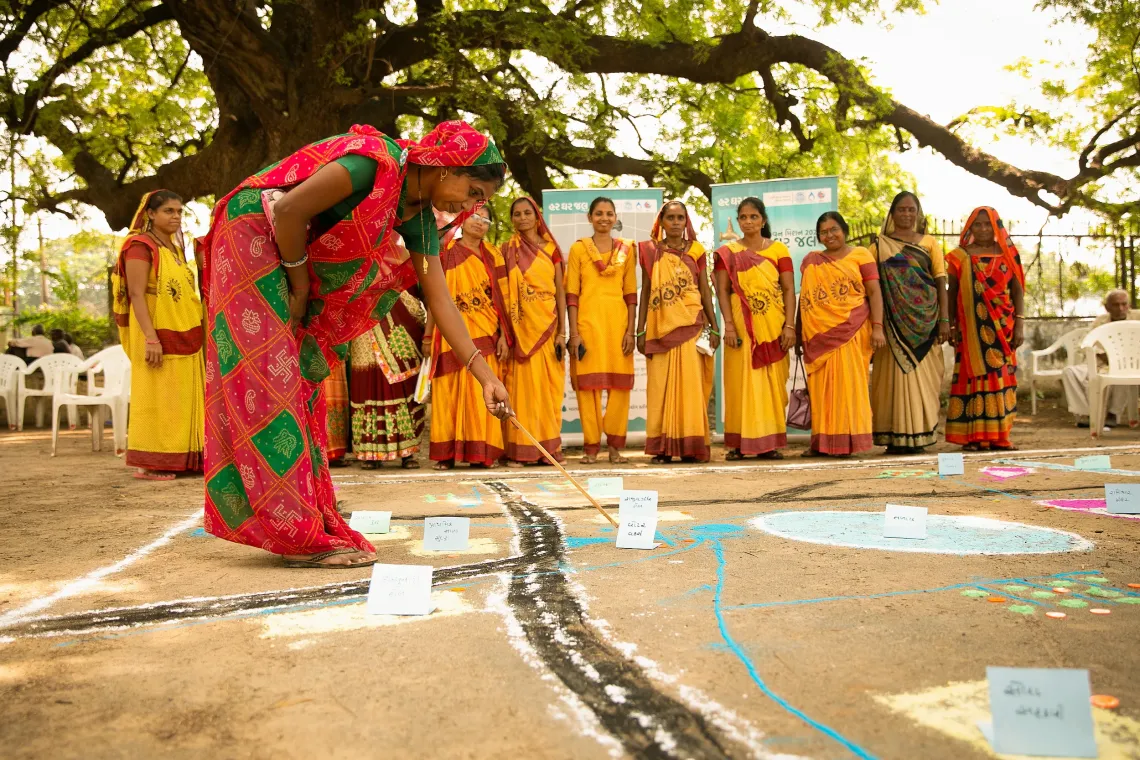
Across India, millions of households gained tap-water connections. States also strengthened the systems needed to implement the Mission, support village-level institutions, test water quality, and monitor progress. This showed what is possible when governments, communities, technical institutions, and development partners work together.
JJM coverage has grown rapidly. According to the Jal Jeevan Mission (JJM) Integrated Management Information System (IMIS), States and Union Territories reported that rural household tap-water coverage increased from 32.3 million households, or 16.7 per cent, at the Mission’s launch to 158.9 million households, or 82.1 per cent, by 31 July 2026. This represents 126.6 million additional rural households with tap-water connections since 2019, while around 34.7 million households still remain uncovered.
Throughout Phase I, UNICEF worked with the Department of Drinking Water and Sanitation (DDWS), Ministry of Jal Shakti (MoJS) and state governments to strengthen enabling systems for implementation. Drawing evidence from earlier drinking-water programmes and the work of a national task force, UNICEF supported JJM guidelines and implementation frameworks.
It also helped prepare Village Action Plans, strengthen Key Resource Centers (KRCs) and Implementation Support Agencies (ISAs), and build the capacities of state and district officials through workshops, orientations and Training of Trainers programs. UNICEF State Offices further supported the preparation and review of State Annual Action Plans and Implementation Plans, while helping institutions adapt to household-level service delivery.
Phase I transformed rural water access across India. As millions of households gained piped water connections, the next priority became clear: ensuring that these services remain functional, reliable, sustainable and climate-resilient for generations to come.
A completed scheme or household tap connection does not always mean water is safe, sufficient, regular, and reliable. The Functionality Assessment 2024 found that 84 per cent of surveyed households received water according to schedule and 80 per cent received at least 55 litres per person per day. When quantity, quality, and regularity were considered together, 76 per cent of household tap connections were assessed as functional. These findings show why stronger systems are needed to keep water flowing safely and reliably.
The WHO/UNICEF Joint Monitoring Programme (JMP) defines safely managed drinking water as an improved source that is accessible on premises, available when needed and free from contamination. According to the JMP's latest report, India's safely managed drinking-water coverage was 76.4 per cent in 2024. Closing the gap between infrastructure coverage and safely managed, reliable services therefore remains central to JJM 2.0.
Looking Ahead: JJM 2.0 and moving from access to sustainable and climate-resilient service delivery
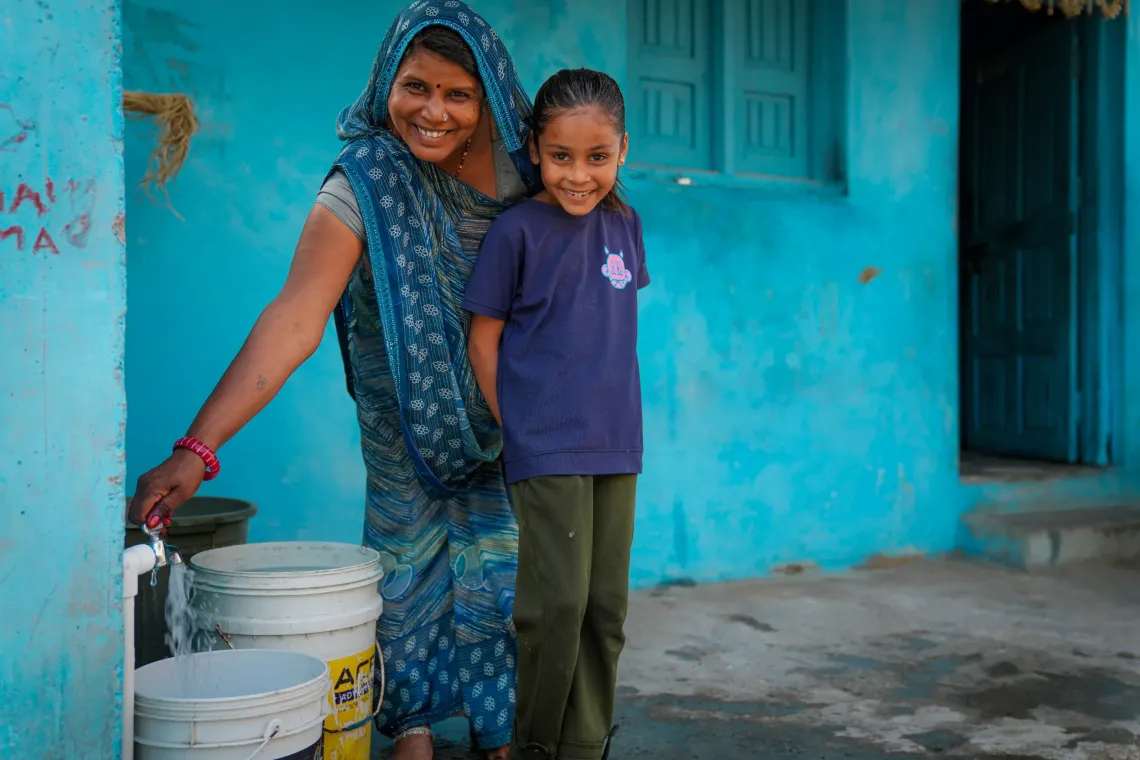
India’s investment under the Jal Jeevan Mission has created a strong foundation for universal rural tap-water services. The next challenge is to protect and sustain that investment by ensuring that systems remain functional, affordable, climate-resilient, financially viable, and accountable to the people they serve. The journey of JJM is therefore no longer only about reaching every household with a tap. It is ensuring that every tap continues to deliver safe, adequate, regular, and climate-resilient drinking water today and for generations to come.
The Union Budget 2025–26 announced the extension of the Jal Jeevan Mission until 2028. On 10 March 2026, the Union Cabinet approved JJM 2.0 and extended the Mission to December 2028. The new phase moves the program from an infrastructure-centred approach to a citizen-centred, utility-oriented model of rural water service delivery. The total Mission outlay increased from US$38 billion to US$91 billion, including US$38 billion in Central assistance. This marks a clear shift from building connections to sustaining services.
This shift also changes how progress is measured. JJM 2.0 looks beyond the number of connections and asks whether households receive enough safe water, of the required quality, when they need it and at an affordable cost. It also places greater emphasis on responsive grievance redressal, timely repairs, adequate operation and maintenance, and the ability of water systems to withstand climate and water-source risks. Measures such as the Sujalam Bharat digital framework, Jal Arpan for formal scheme handover, and Jal Utsav for community-led review and maintenance support reinforce this service-delivery approach.
UNICEF's evolving partnership across multiple components
As JJM enters its next phase, UNICEF is adapting its support to match the Mission’s evolving priorities. The emphasis is now on strengthening the systems that keep rural water services working: capable institutions, climate-resilient water sources, regular repairs and maintenance, strengthening water-quality monitoring, and better tracking of how services perform for households.
Building Climate-Resilient Water Supply Systems
A water supply scheme cannot keep working if its water source becomes unreliable. Changing rainfall, falling groundwater levels and more frequent climate shocks are putting pressure on rural water systems. JJM 2.0 therefore places strong emphasis on protecting water sources and helping systems cope with climate risks.
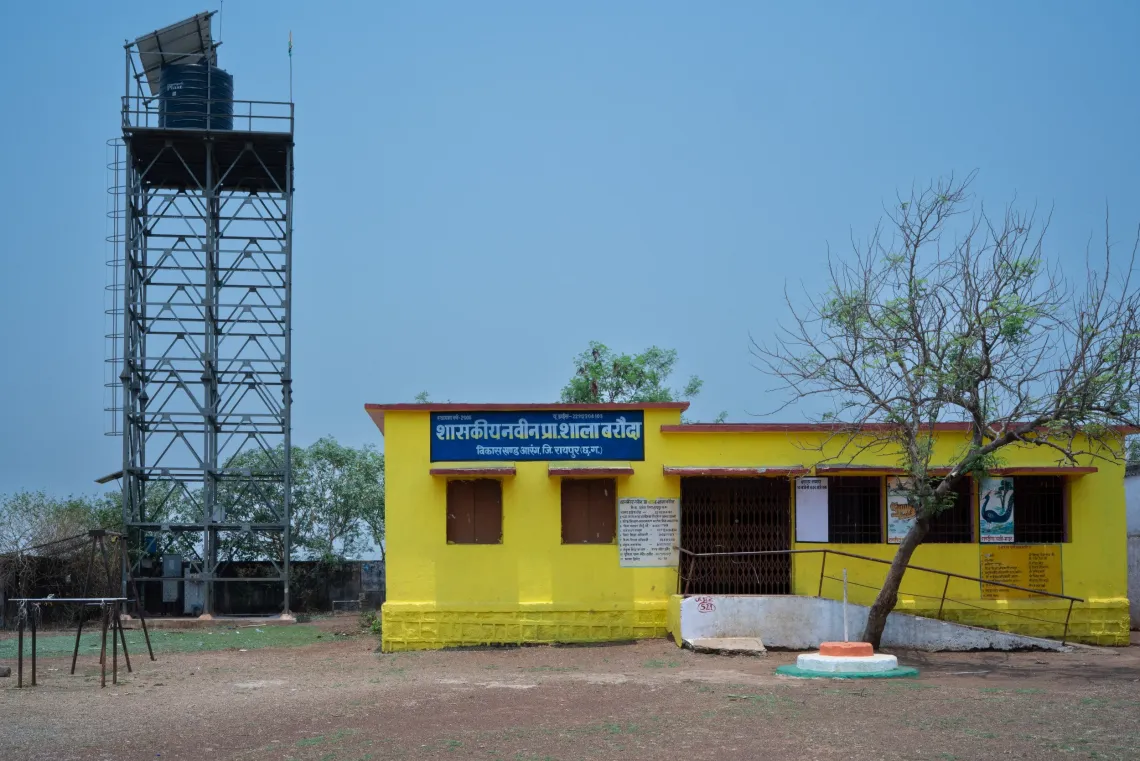
UNICEF supports governments in identifying climate-related risks, assessing vulnerabilities, protecting water sources, and integrating climate resilience into planning and implementation. In partnership with the Indian Institute of Technology Roorkee, UNICEF has supported risk and vulnerability assessments in Chhattisgarh and Madhya Pradesh. The findings are informing practical technical guidance, training, and capacity-building for stronger planning.
UNICEF also supports solar-powered rural water supply systems. This includes improving data, assessing functionality, strengthening operator skills, and promoting preventive maintenance. UNICEF is documenting energy savings and reductions in carbon emissions, generating evidence on how renewable energy can reduce operating costs and emissions while improving rural water services.
Strengthening Operation and Maintenance
Infrastructure is only one component of the system, and to keep services running, institutions need clear responsibilities, steady funding, timely repairs and good oversight throughout the life of a water scheme.
UNICEF supports states to develop community-centred operation and maintenance frameworks for rural water systems. These frameworks clarify roles and responsibilities, strengthen accountability, and improve financial sustainability. In partnership with the Indian Institute of Management Bangalore, UNICEF has helped states review O&M policies, financing arrangements and governance mechanisms. This work is helping states move from managing infrastructure to managing reliable, locally owned water services.
A service-delivery approach focuses on the experience of households, including whether water is available when needed, whether the quantity is sufficient, whether the water is safe, and whether problems are addressed promptly. Citizen feedback, transparent service information, easy-to-use complaint systems, and accessible grievance-redressal mechanisms can strengthen accountability and improve service quality.
Investing in People
Sustainable water services depend on both infrastructure and the people and institutions that keep systems working. Skilled teams are needed to plan, operate, maintain, and manage water systems. UNICEF is supporting the Government of India to develop a National Capacity Building Strategy for JJM 2.0. The strategy aims to create a harmonized, competency-based and scalable training system that can be used across the country, reflecting UNICEF’s broader role in strengthening the human and institutional foundations of sustainable service delivery.
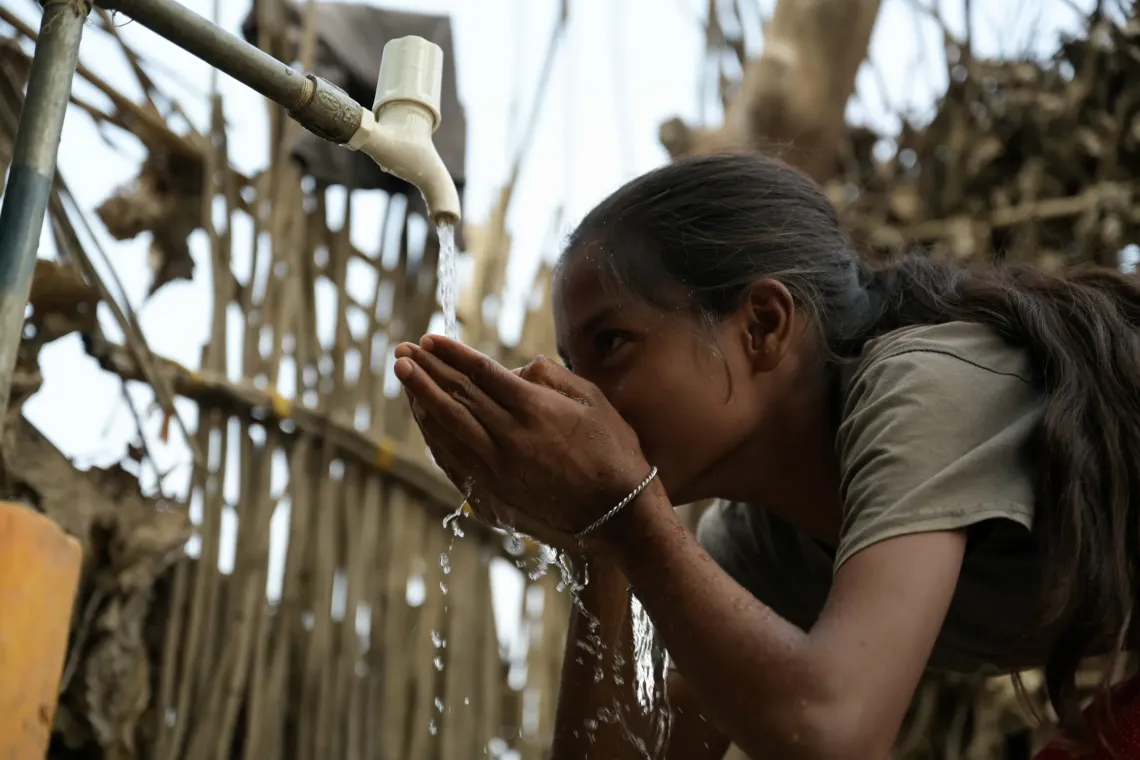
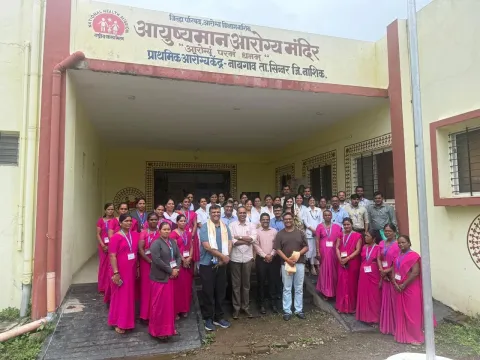
UNICEF also supports competency-based training for Panchayati Raj Institutions and village-level stakeholders. It develops training manuals and learning resources and helps strengthen the Dr Syama Prasad Mookerjee National Institute of Water and Sanitation (SPM-NIWAS) as a national resource centre. Support to 172 training institutions is helping build the skills of engineers, frontline workers, Gram Panchayats, VWSCs and local technicians across the country.
State-level initiatives are translating this investment into practice. In Uttar Pradesh, village functionaries and technicians are being equipped to support reliable service delivery. In Chhattisgarh, pump operators and village technicians are being trained in routine O&M and troubleshooting. Similar efforts in Maharashtra, Rajasthan, Jharkhand, and Assam are strengthening local institutions and technical capacity.
These efforts reinforce Jan Bhagidari: people's participation as a core principle of JJM. As responsibility for drinking-water schemes increasingly moves closer to Gram Panchayats and communities, local ownership becomes essential to sustaining the Mission's gains.
Strengthening Water Quality Monitoring
Safe water requires more than a tap connection. It needs regular testing, strong monitoring, clear surveillance systems, and the capacity to quickly identify and address contamination risks. UNICEF supports national and state governments to strengthen water-testing laboratories, quality checks, and technical skills. This support has helped strengthen and accredit 154 water-quality laboratories. Digital monitoring platforms in states such as West Bengal are also making information more transparent and easier to track.
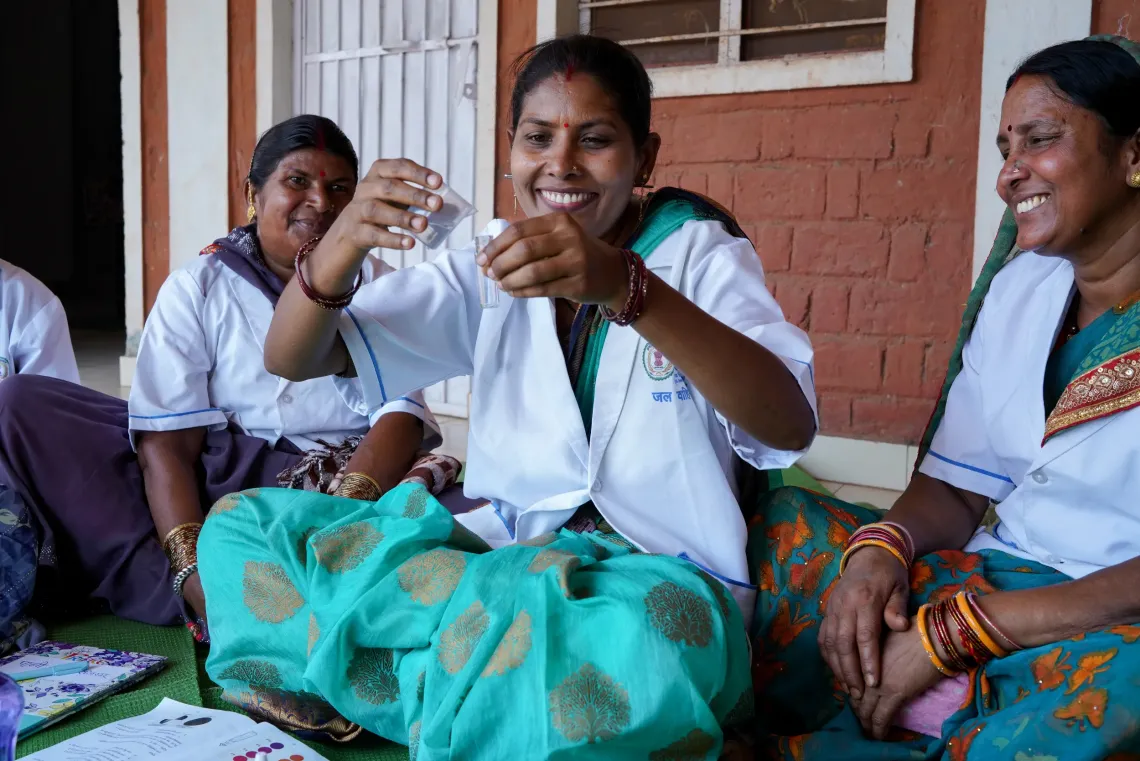
UNICEF supports community participation in water-quality monitoring through trained volunteers and simple Field Testing Kits. The next step is to strengthen checks from the water source to the household tap by combining sanitary inspections, risk-based surveillance, laboratory testing, community monitoring and timely corrective action. The aim is to prevent risks before they reach households, not only detect contamination after it occurs.
Financing Sustainable Services
Sustainable services require reliable and predictable financing. States need resources not only for new infrastructure, but also to operate systems, protect water sources, monitor water quality and respond to breakdowns. Appropriate financing models, including private-sector and community-based approaches where relevant, can help protect investments made under JJM and support long-term service delivery.
In the path ahead, as JJM 2.0 moves from providing access to sustaining service delivery, UNICEF will continue to work with the Ministry of Jal Shakti, state governments, technical institutions and communities. The partnership will focus on what is needed behind every tap: strong local institutions, skilled people, secure water sources, regular repairs and maintenance, reliable water-quality checks and climate-resilient infrastructure and services that remain accountable to households.