UNICEF with Media Leaders and Thematic Experts Champion Responsible Reporting on Children and Adolescents’ Mental Health and Suicide Prevention
Media’s role in challenging stigma, protecting dignity and fostering care and support in mental health reporting
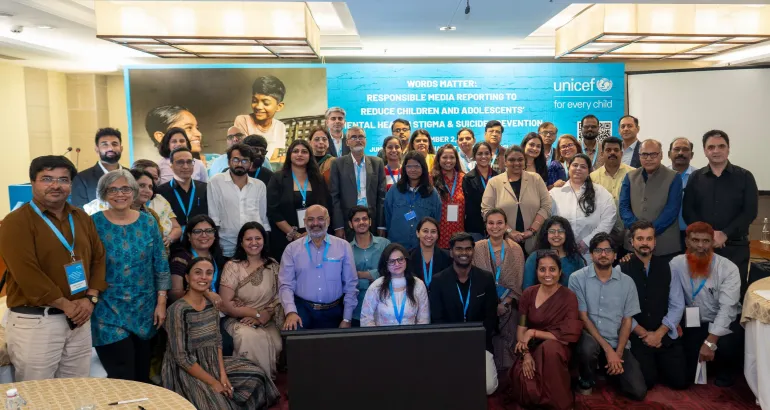
NEW DELHI – UNICEF India convened senior media leaders, media organizations, mental health experts and practitioners, and people with lived experience to deliberate on how responsible media reporting can help build a supportive environment, encourage care-seeking behavior, and reduce stigma in support of the mental well-being of children, adolescents, and young people. The discussion took place at a roundtable, ‘Words Matter: Responsible Media Reporting to Reduce Children and Adolescents’ Mental Health Stigma and Suicide Prevention’ in New Delhi today.
Senior editors from national and state media, journalists, worked with mental health experts and young people with lived experience at the roundtable to examine how media reporting can support informed and sensitive public conversation on mental health.
According to WHO, globally, one in seven adolescents aged 10 to 19 years experiences a mental health condition, with many remaining unrecognized and untreated, significantly affecting health, learning, and development, especially for older adolescents. Half of all mental health conditions begin by age 14, offering a valuable opportunity for early detection and care that can reduce long-term impacts of mental health conditions.
In addition to print and TV, the emergence of many more news platforms – social media, online/ digital platforms that reach audiences in minutes- has made responsible reporting on mental health critical in shaping public understanding. Accurate information, careful use of language, and respect for privacy can help challenge harmful stereotypes, while coverage that lacks context or relies on sensationalism can deepen stigma and cause harm.
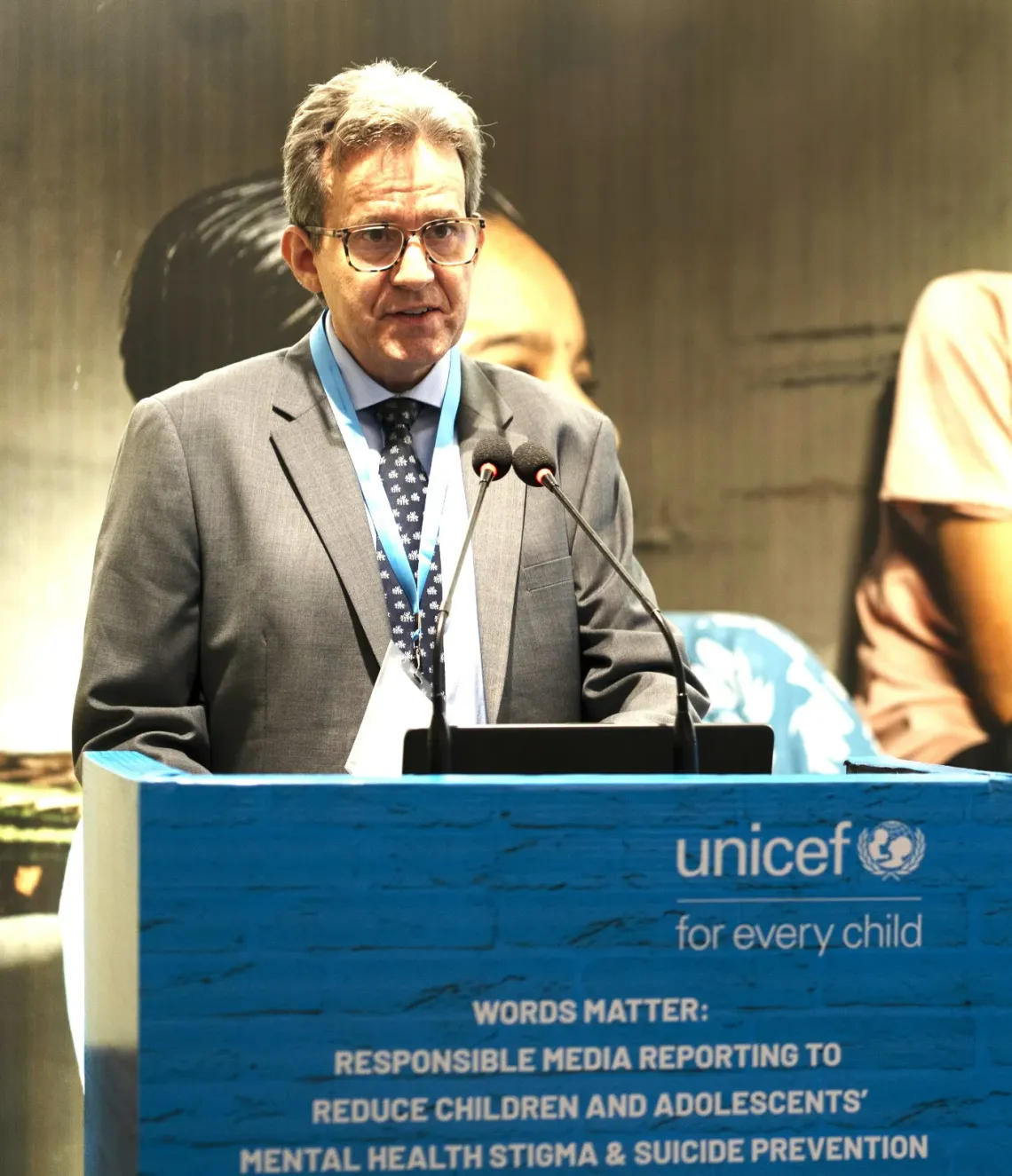
“Mental health and wellbeing are central to children’s rights. Mental health plays a significant role in how children feel, learn, build meaningful relationships, and participate in decisions affecting their lives. However, many children and adolescents hesitate to seek care due to stigma associated with mental health.”
Urging the media to play a constructive role, Moller added, “Reducing stigma requires a public conversation that builds understanding and trust in concerns relating to mental wellbeing. The media can play a vital role in promoting supportive environments, reducing discrimination and encouraging access to care. UNICEF remains committed to strengthening public understanding and advancing every child’s right to mental health and psychosocial wellbeing.”
In India, stigma and limited access to care remain significant barriers for people experiencing mental health issues. The National Mental Health Survey of India 2015-16 estimated the treatment gap for mental disorders at 84.5 per cent, highlighting the need to improve access to care and public understanding.
The National Crime Records Bureau’s Accidental Deaths and Suicides in India 2024 report recorded 170,746 deaths by suicide, including 14,488 students and 11,184 children below 18. These figures, recorded by police departments, do not capture the full extent of suicidal distress, underlining the need for responsible reporting without sensationalism or simplistic explanations.
The government’s existing platforms for child and adolescent mental health include the National Mental Health Programme, District Mental Health Programme, Rashtriya Kishor Swasthya Karyakram and the School Health and Wellness Programme under Ayushman Bharat, Adolescent Friendly Health Centers as safe spaces for adolescents and youth counseling, and the Tele Manas Helpline for digital counseling on mental health.
Discussions explored how newsrooms could apply existing guidelines, use appropriate language, uphold ethical reporting on suicides, protect children’s privacy and dignity, and provide accurate, contextualized coverage. The first session presented an analysis of how media coverage shapes stigma around mental health and suicide prevention.
One of the key takeaways from the group work was that responsible reporting is not only about what we avoid, but also about what we choose to include. Participants highlighted the need to move beyond sensational headlines and single-cause explanations towards stories that provide context, dignity and hope. There was broad agreement on the importance of protecting children’s identities, using accurate, neutral language and sharing helpline and other support-seeking information across platforms and portraying people as more than their moments of crisis.
Mentors from UNICEF India’s Critical Appraisal Skills (CAS) programme emphasized that mental health reporting should not be confined to incidents of suicide, but should explore the wider factors that shape wellbeing, including family circumstances, poverty, disability, climate shocks, school environments and access to support. The discussions reinforced that recovery, resilience and pathways to care are stories in which media can play a vital role in making help-seeking visible, acceptable, possible and destigmatized.
The media roundtable leads up to the ‘Together Against Stigma 2026’ Global Conference, scheduled in New Delhi from 12 to 14 November 2026. The media roundtable aims to strengthen engagement between mental health professionals, researchers, policy makers, media organizations and community stakeholders, promoting evidence-based knowledge and best practices to inform public understanding, challenge stigma and encourage people, especially children and young people, to seek help when they need it.
For photos, please click here: https://weshare.unicef.org/Folder/2AMZIFS6W6W6
Notes to Editors
- Mental health challenges among adolescents are increasing globally. Suicide is among the leading causes of death in this age group, associated with factors such as stigma, academic pressure, social expectations, and limited access to care.
- UNICEF’s Mental Health and Psychosocial Support (MHPSS) Framework adopts a layered, multi-sectoral approach—integrating mental health into primary health care, education systems and community platforms, while strengthening referral pathways to specialized services.
- In India, UNICEF supports flagship programmes across child protection, health, and education such as Mission Vatsalya, Rashtriya Kishor Swasthya Karyakram (RKSK) and the Ayushman Bharat School Health and Wellness Programme (AB-SHWP) to expand access to adolescent-friendly mental health services and promote mental health literacy.
- The World Psychiatric Association’s global conference ‘Together Against Stigma’ is scheduled for November 12-14, 2026, and brings together stakeholders across sectors to advance solutions for reducing mental health stigma and improving access to care, particularly for young people.
Media contacts
About UNICEF
UNICEF strives to uphold the rights of every child, protecting them from harm and all forms of discrimination, so that they can grow up healthy and educated to reach their full potential. This work is in line with UNICEF’s globally recognized mandate and its support of national priorities.
For more information on UNICEF India and its work visit https://www.unicef.org/india/. Follow us on Twitter, Facebook, Instagram, Google+ and LinkedIn