11th Together Against Stigma Conference Calls for Stronger BRICS Cooperation to Address Mental Health Stigma
BRICS High-Level Panel highlights youth participation, school-based interventions, community mental healthcare and policy reforms as priorities for action.
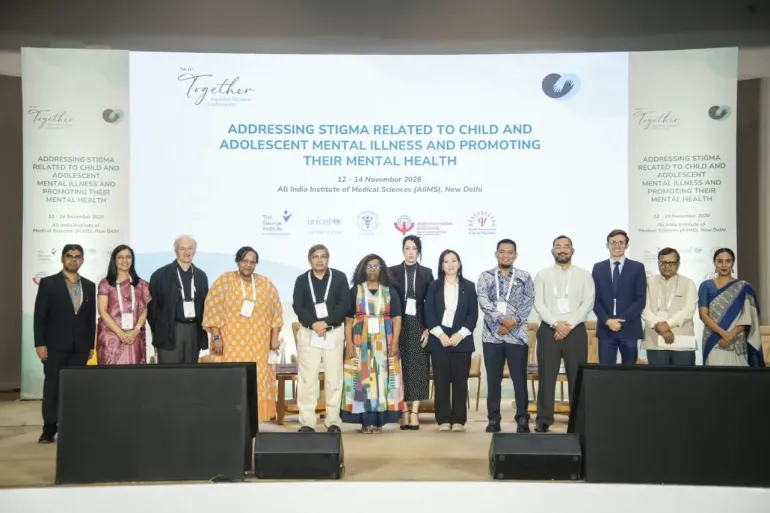
New Delhi - The 11th Together Against Stigma (TAS) Conference has called for stronger cooperation among BRICS countries to address mental health stigma and discrimination, with a focus on making mental health systems more inclusive and accessible for children, adolescents, and young people.
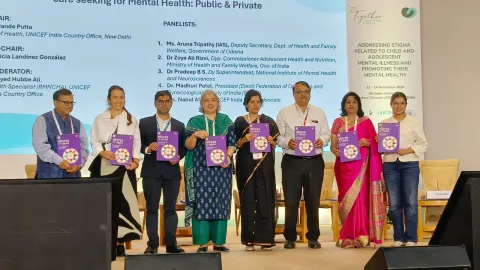
A key highlight of the conference was the BRICS High-Level Panel Discussion, which brought together representatives from India, Brazil, South Africa, Kazakhstan, and Malaysia to discuss shared challenges and identify opportunities for collaboration. The discussion highlighted the need to involve young people and persons with lived experience in shaping mental health policies, strengthen early intervention through schools and communities, and promote evidence-based approaches to reducing stigma.
The panel brought together Dr. Nande Putta, Chief of Health, UNICEF India; Dr. Y. C. Janardhan Reddy, Director, NIMHANS; Dr. Dudu Shiba, Director of Mental Health and Substance Abuse, National Department of Health, Pretoria, South Africa; Dr. Khassanova Mariyam, Head of the Information and Analytical Monitoring Center and Psychiatrist, Republican Scientific and Practical Center for Mental Health, Ministry of Health, Kazakhstan; and Mr. Syed Mohd Hamzah Bin Syed Ab Hamid, Senior Deputy Director, Institute Pendidikan Guru Malaysia.
One of the key messages from the panel was that young people and persons with lived experiences must have a meaningful role in decisions that affect them. Reiterating the principle of “Nothing About Us Without Us”, panellists stressed that young people can play an important role in challenging stigma and encouraging open conversations about mental health in families, schools and communities.
The discussion also identified schools as an important setting for early identification and support. Brazil's experience of training teachers to recognise psychological distress among students and connecting schools with public health services was highlighted as an example of how education systems can contribute to early intervention.
Panellists called for stronger community-based mental healthcare, policy reforms informed by evidence and greater attention to laws and practices that discriminate against people with mental health conditions. They also emphasised the value of sharing research, professional expertise, and successful interventions across BRICS countries, while ensuring that approaches are affordable and relevant to local cultural contexts.
“We are very proud of the National Digital Academy and its growing contribution to strengthening mental healthcare capacity across the country. With 38 accredited courses and 72 programs, the Academy has reached healthcare professionals in every state of India and trained nearly 50,000 professionals, including psychiatrists, psychologists, medical officers, counsellors, and social workers. Through continuous training and capacity-building, we aim to equip healthcare professionals with the skills needed to strengthen mental health services across the country.”
The BRICS Training Hub Network and the BRICS Network of Centres of Excellence, with the National Institute of Mental Health and Neurosciences (NIMHANS) as the coordinating Centre of Excellence, were recognised as important platforms for strengthening research collaboration, capacity building, and knowledge exchange among member countries.
Prof. Pallab Maulik, Director of Research, The George Institute for Global Health India, said, “The discussions at the conference highlighted the importance of sharing experiences and learning from approaches being adopted across countries, particularly within the BRICS region, to address mental health challenges. Sharing research findings and practical experiences helped participants identify effective approaches and explore how evidence can inform stronger mental health responses.”
The conference also highlighted the importance of developing anti-stigma interventions that respond to the needs of different communities and populations. Evidence from The George Institute for Global Health India's ARTEMIS study among adolescents in urban slums and the SATHI study among tribal populations demonstrated the potential of context-specific campaigns to improve attitudes towards people with mental health problems and support better mental health outcomes.
“Our experience with anti-stigma campaigns, including through the ARTEMIS and SATHI studies, has shown that interventions tailored to different communities and contexts can make a difference. Although these studies involved very different populations, the campaigns helped improve attitudes towards people with mental health problems and reduce depression and anxiety among adolescents. This underlines the importance of developing approaches that are grounded in the realities of the communities they seek to reach.”
The conference is being held from 12–14 November 2026 at the All India Institute of Medical Sciences (AIIMS), New Delhi. It is organised by The George Institute for Global Health in collaboration with the Department of Psychiatry, AIIMS New Delhi and UNICEF India, with support from the World Psychiatric Association (WPA) and the World Association of Social Psychiatry (WASP). This is the first time the conference is being hosted in a Global South country.
About the Together Against Stigma Conference:
The Together Against Stigma (TAS) Conference is a global multidisciplinary platform bringing together researchers, practitioners, policymakers, advocates and people with lived experience to advance efforts to reduce mental health stigma and discrimination. It aims to bridge scientific evidence and practical action to promote inclusive societies and improve access to mental healthcare.
About The George Institute for Global Health India
The George Institute for Global Health is an independent medical research institute aiming to improve the health of millions of people worldwide by generating effective, evidence-based, and affordable solutions to the world’s biggest health challenges. Established in Sydney, with major centres in China, India, and the UK, it has projects in more than 45 countries and affiliations with world-class universities. In 2018, The George Institute was ranked the number-one independent research institute in Australia by Times Higher Education. India website
Follow The George Institute on Bluesky / Facebook / LinkedIn / Instagram / YouTube
Media contacts
The George Institute for Global Health via Footprint Global Communications
- Bhavani Giddu | 99995 00262 | [email protected]
- Kajal Yadav | 88059 66194 | [email protected]
Media contacts
About UNICEF
UNICEF strives to uphold the rights of every child, protecting them from harm and all forms of discrimination, so that they can grow up healthy and educated to reach their full potential. This work is in line with UNICEF’s globally recognized mandate and its support of national priorities.
For more information on UNICEF India and its work visit https://www.unicef.org/india/. Follow us on Twitter, Facebook, Instagram, Google+ and LinkedIn