Global conference calls for early action to tackle mental health stigma
11th TAS conference is being organized by The George Institute for Global Health with the Department of Psychiatry, AIIMS New Delhi, and UNICEF India, and supported by WPA and WASP.
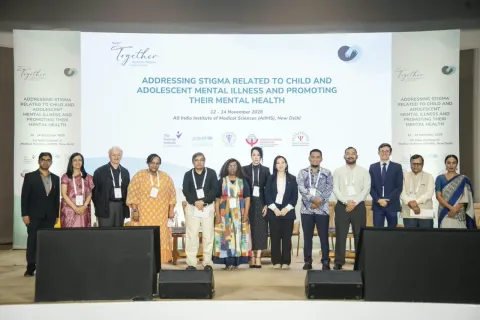
NEW DELHI - Participants at the 11th Together Against Stigma (TAS) conference called for schools, health services and communities to tackle mental health stigma from childhood and make it easier for children and adolescents to get support. The conference opened today at the All India Institute of Medical Sciences (AIIMS), New Delhi, and is being held in the Global South for the first time.
Opening day discussions highlighted the need to introduce age-appropriate mental health education in schools, train teachers and peers to recognise distress, and improve access to support through Adolescent Friendly Health Clinics and Tele-MANAS (14416).
Participants called for sustained action on stigma at every stage, from recognising distress and seeking help to treatment and recovery. They urged policymakers and health services to involve people with lived experience and their caregivers in designing and evaluating policies and services.
Addressing the Conference, Dr M. Srinivas, Member, NITI Aayog, emphasised the need to address mental health stigma across different stages of life, beginning in childhood. He called for coordinated efforts involving the health, education, child development and social welfare sectors, alongside academic and research institutions.
“Through initiatives such as Tele-MANAS, India is working to expand access to mental health support. We must now build on these efforts through collaborative research, pilot programmes, and evidence-based policy recommendations that can be scaled across the country. My request to the experts and researchers gathered here is to translate the knowledge and experience shared at this conference into actionable policies and interventions that make a meaningful difference to people's lives,”
Addressing the gathering, Prof. Pallab Maulik, Director of Research, The George Institute for Global Health India, said, “The discussions so far have highlighted an important point: instead of focusing only on the gaps in mental health care and policies, we need to focus on the positive steps that can bring change.
As Professor Sartorius and Professor Thornicroft highlighted, our priority should be to use existing evidence, promote social contact and turn these discussions into real actions that make a difference beyond this conference.”
“Stigma is the most important obstacle between us and achieving meaningful progress in mental health. Over the years, through the World Psychiatric Association, we have worked to bring together national societies, professionals, journalists and communities to develop programmes that actively address stigma.
One of the important outcomes of these efforts has been the creation of the Global Alliance of Stigma Societies, which enables people working across countries to share experiences, learn from one another and strengthen their initiatives. We must continue to bring together not just mental health professionals, but also people with lived experience, their families and communities, because reducing stigma requires collective effort,” said Prof. Norman Sartorius, President Association for the Improvement of Mental Health Programmes, Geneva
Mr. Jesper Moller, Deputy Representative (Programme) UNICEF India highlighted the importance of placing children and adolescents at the centre of mental health responses.
“Accessibility to mental health is critical and goes hand in hand with ending stigma. Children and adolescents need support closer to where they live, learn, and grow, with needs identified early and timely access to appropriate services. This requires stronger systems functioning across schools, primary healthcare, child protection services, and communities, supported by a workforce equipped to respond to young people’s mental health needs. Through the Together Against Stigma initiative, UNICEF and partners continue working to strengthen the systems and workforce that can make a supportive environment a reality for every child,”
Prof. Rajesh Sagar, Department of Psychiatry, AIIMS New Delhi, highlighted the importance of community participation in changing public perceptions of mental health.
"Government policies lay the essential groundwork, but true stigma reduction happens when community participation transforms public perception. The path forward lies in integrating mental wellness into routine primary care, educating schools and workplaces, and treating mental health with the same dignity and urgency as physical health," he said.
The conference runs until 14 November at the Jawaharlal Nehru Auditorium. The George Institute for Global Health is organising it with the Department of Psychiatry at AIIMS New Delhi and UNICEF India, with support from the World Psychiatric Association (WPA) and the World Association of Social Psychiatry (WASP).
Opening day Events:
A fireside conversation moderated by Dr. Y.K. Sandhya, Programme Lead – Mental Health, The George Institute for Global Health India, with Prof. Sir Graham Thornicroft, Prof. Norman Sartorius and senior journalist Dr. Dinesh C. Sharma, examined the progress made in addressing mental health stigma and the challenges that remain.
The discussion acknowledged improvements in recognizing mental health conditions and expanding access to treatment. However, participants highlighted continuing gaps in the quality and availability of care, standards in institutional hospitalisation and access to legal assistance, particularly in middle-income countries.
Conference highlighted five priorities for sustained action on stigma:
The discussions on the opening day underscored five key principles for strengthening efforts to reduce mental health stigma:
- Context-specific interventions: Mental health programmes must be adapted to local cultures, traditions and community needs.
- Long-term commitment: Stigma reduction requires sustained efforts, guided by the experiences of persons with mental health conditions and their caregivers.
- Greater inclusion: Persons with lived experience must be actively involved as advocates, educators and contributors to policymaking.
- Early intervention and prevention: Schools and early childhood settings must play a greater role in promoting empathy, acceptance and positive attitudes towards mental health.
- Family and community support: Families play an important role in shaping attitudes towards mental health and creating supportive environments for children and adolescents.
Youth Voices on Mental Health booklet
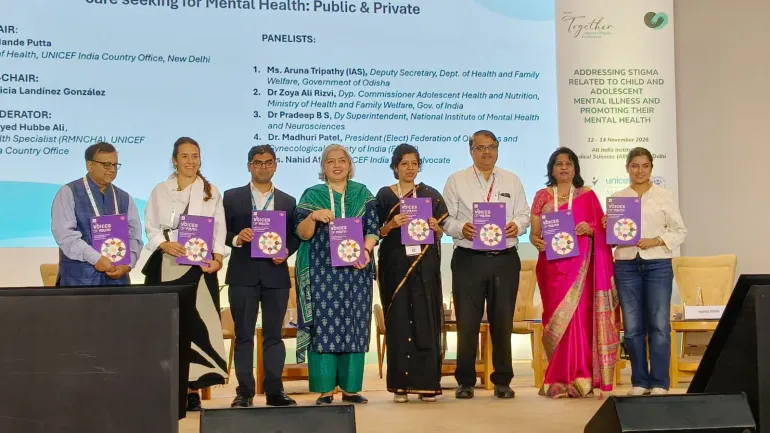
The Youth Voices on Mental Health: Insights from Consultations with Adolescents, Young People and Peer Educators, was released today on the sidelines of the Together Against Stigma conference by National Health Mission - RKSK along with NIMHANS and UNICEF.
The booklet highlights that young people are more likely to seek support when they feel heard, respected and free from stigma. Trust, confidentiality and youth-friendly services are essential to improving mental health help-seeking among adolescents.
These insights emerged from consultations held in Gandhinagar, Gujarat, and Koraput, Odisha, which brought together around 300 participants, including approximately 200 adolescents and young people and 100 peer educators, to identify barriers to seeking support and propose solutions for improving mental health and wellbeing services for adolescents.
UNICEF India and Adolescent Mental health
UNICEF is partnering with the Government of India to expand and strengthen multi-sectoral mental health services for adolescents through learning exchanges, capacity building, and adaptation of training materials.
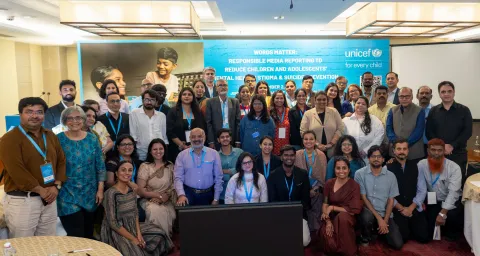
Ahead of the conference, UNICEF and partners have engaged a wide range of stakeholders through roundtables on evidence for children; with mental health professionals; youth consultations; a media roundtable on responsible reporting and suicide prevention, along with technical workshops on integrating evidence-based, non-specialised care into the work of health and social workers and advancing mental health promotion and prevention in school settings.
“This is the first Together Against Stigma conference to be hosted in a country of the Global South, bringing together perspectives, experiences and solutions from our region of the world. It is an important opportunity to ensure that global conversations on mental health stigma reflect the realities and challenges of diverse countries and communities. Over the next few days, I hope we will have honest conversations, build new partnerships and take away practical ideas to reduce stigma. The voices of researchers, clinicians, policymakers, advocates and, most importantly, people with lived experience must remain central to these discussions. Our collective efforts must translate into meaningful action towards a stigma-free future for mental health,”
About Together Against Stigma
The Together Against Stigma conference brings together researchers, policymakers, healthcare professionals, advocates and people with lived experience to advance research, policy and practice on mental health stigma and discrimination. The 11th edition runs from 12 to 14 November 2026 at AIIMS New Delhi. Conference website
About The George Institute for Global Health India
The George Institute for Global Health is an independent medical research institute aiming to improve the health of millions of people worldwide by generating effective, evidence-based, and affordable solutions to the world’s biggest health challenges. Established in Sydney, with major centres in China, India, and the UK, it has projects in more than 45 countries and affiliations with world-class universities. In 2018, The George Institute was ranked the number-one independent research institute in Australia by Times Higher Education. India website
Follow The George Institute on Bluesky / Facebook / LinkedIn / Instagram / YouTube
About AIIMS New Delhi
All India Institute of Medical Sciences (AIIMS), New Delhi was established in 1956 through an Act of Parliament as an autonomous institution of national importance. It provides facilities for medical education, advanced research and patient care, and offers undergraduate and postgraduate programmes in medical and allied disciplines. AIIMS New Delhi website
Media contacts
The George Institute for Global Health via Footprint Global Communications
- Bhavani Giddu | 99995 00262 | [email protected]
- Kajal Yadav | 88059 66194 | [email protected]
Media contacts
About UNICEF
UNICEF strives to uphold the rights of every child, protecting them from harm and all forms of discrimination, so that they can grow up healthy and educated to reach their full potential. This work is in line with UNICEF’s globally recognized mandate and its support of national priorities.
For more information on UNICEF India and its work visit https://www.unicef.org/india/. Follow us on Twitter, Facebook, Instagram, Google+ and LinkedIn