The Collective Power of Trust
How one Mumbai neighbourhood united to protect its children

Malad, Maharashtra- A wise old saying goes that it takes a village to raise a child. But what happens when fear grips a village, or a bustling urban pocket like Pathanwadi in Malad, Mumbai, is gripped by fear? What happens when the anxious whispers of misinformation drown out the steady voice of science?
For a long time, when the health workers knocked on the doors in Pathanwadi to talk about childhood immunization, they would hear the same responses:
"We don’t have kids below 5 at home."
"We have already given our kids vaccines through private clinics."
"I am too busy right now with household chores to have a conversation about my child’s vaccine."
"My husband isn’t home right now, so I can’t make any decision about giving the child a vaccine."
Often, the conversation ended there, before ASHA, Anganwadi, and other health workers could address the family’s concerns.
Post-COVID-19, rumors in Pathanwadi led to a quiet rise in vaccine refusal. By October 2024, 202 children were identified as zero-dose (Children who have not received first dose of Penta vaccine). Among them were 80 children from the close-knit Gujarati Muslim (Chillia) community in Yousuf Bungalow, where decisions rely heavily on collective trust and social norms. It became clear that this was not only a service-delivery challenge. Addressing it would require trusted local leadership and sustained community engagement.
Finding the Right Messengers
When fear and misinformation take hold, awareness alone may not be enough. People are often more willing to reconsider concerns when they hear from someone they already know and trust.
Recognizing this, the DFY (Doctors For You) team, including Fardin Khan, Social Behavior Change Consultant, realized they had to rebuild trust long before vaccination day. They knew that every single family saying "yes" would inspire another to step forward.
So, Doctors For You (DFY), a UNICEF civil society organization partner supported through funding from Gavi, the Vaccine Alliance, brought together a coalition of trusted local voices who could reach families in different ways for children's health. It was a beautiful tapestry of the neighborhood:
- The Faith Guides: Religious leaders who could gently untangle deep-seated fears.
- The Medical Experts: Local family physicians who had looked after these families for decades.
- The Organizers: Former corporators and community influencers who truly understood the neighborhood's heartbeat.
- The Next Generation: A supervised, heartwarming “Bulawa” (calling) group of little children who became tiny messengers, sharing information directly and innocently with their parents.
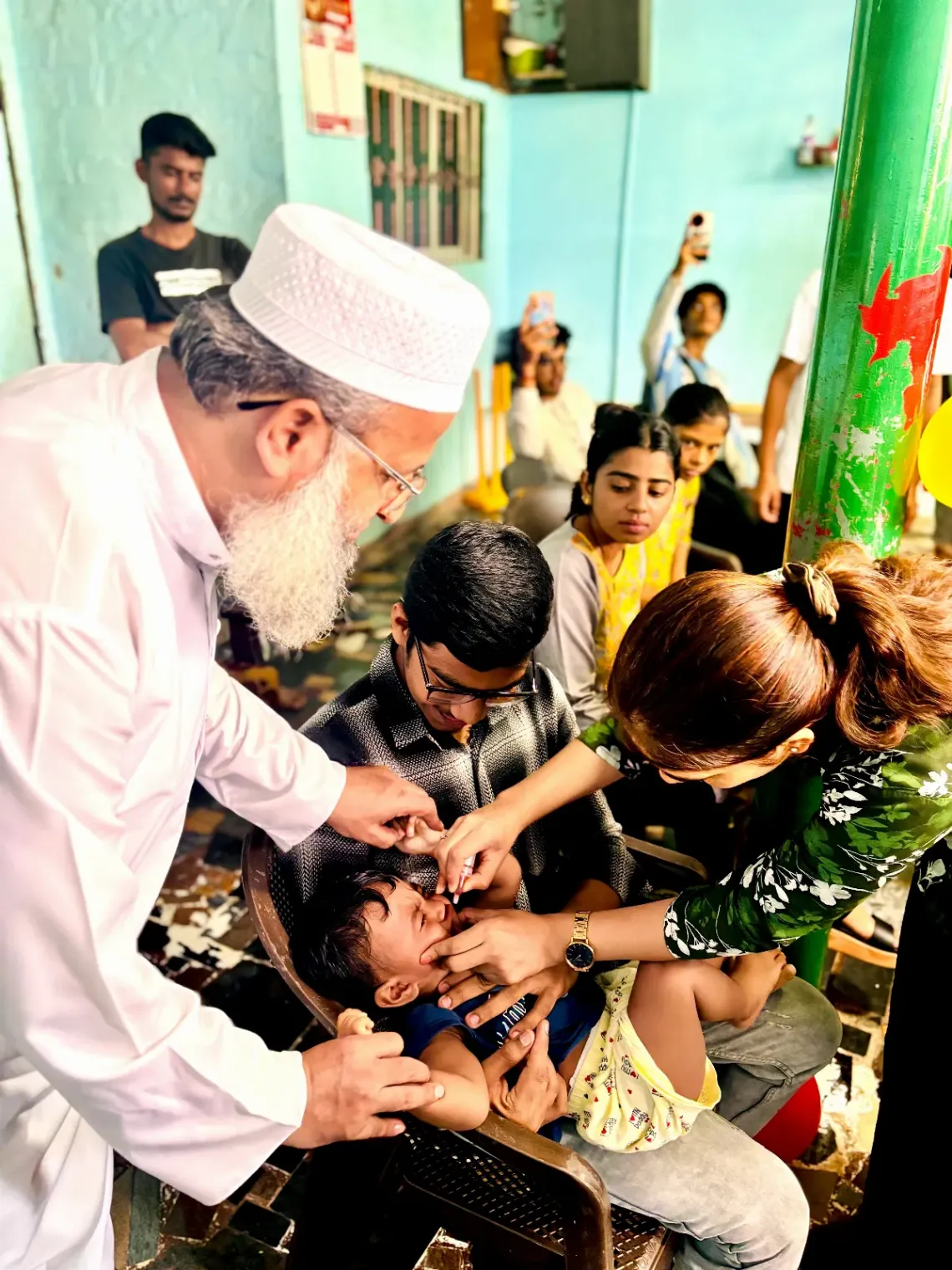
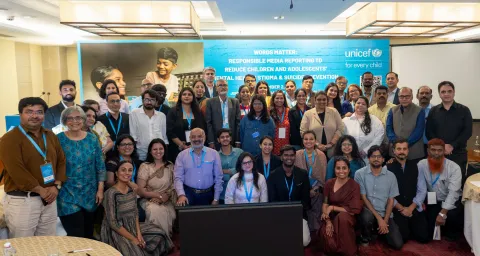
Together, these distinct elements merged. A joint orientation brought these stakeholders together to understand common concerns, align their messages, and agree on a shared approach to families. Suddenly, the medical message became a community-endorsed truth: Different voices. One team. One Dream. No child should be left behind.
Reaching Every Father, Every Family
The approach relied on repeated, respectful conversations rather than confrontation. Families reported concerns about post-vaccination fever, limited awareness about routine immunization, competing household responsibilities, and difficulty making decisions when fathers were away at work.
Reaching fathers, the primary decision makers, was a major hurdle because they worked during the day. To adapt, community influencers and social workers shifted from the usual outreach approach and connected with them personally as neighbors and friends.
With gentle empathy, they held face-to-face counseling sessions and evening lane visits to connect with families in Gujarati. They actively debunked myths about routine immunization, reassuring parents of its safety while nudging them to choose free government services over expensive alternatives. Repeated conversations gradually helped families reconsider their concerns.
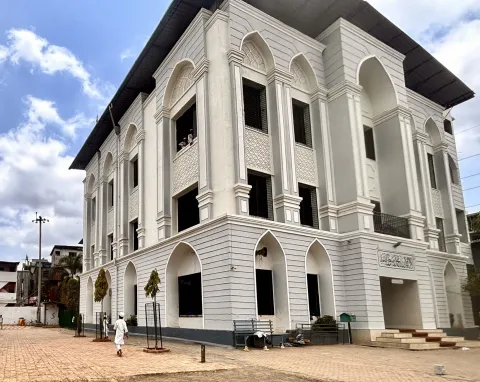
Religious leadership became an important bridge. Maulana Raees, a revered local religious leader, sought guidance from respected Islamic scholars. He stood before the congregation during sacred Friday prayers and shared the fatwa, reassuring everyone that protecting a child's health is a profound act of love and faith.
"To address religious concerns about vaccination, we consulted respected Islamic scholars and shared their fatwa during Friday prayers. We then visited families, and answered questions in Gujarati with compassion. This allowed us to ease their fears about the vaccine and explain the importance of polio drops and other vaccines due under the immunization schedule."
Science, Soul, and Overcoming Myths
Local doctors played a pivotal role in reinforcing the message during daily consultations, grounding the community's faith in medical truth.
Dr. Imtiaz Pathan, a family physician who has been serving Pathanwadi for over 25 years, observed that after COVID-19, fear and misinformation grew stronger than ever. He realized that most concerns stemmed from myths, not science. What changed minds wasn't arguing; it was steady education and compassion.
Dr. Pathan explained that vaccination can prevent vaccine-preventable diseases and reduce the risk of severe illness. Many parents didn't realize that when a child gets sick, it affects the whole family and society, and can compromise the next generation.
"Vaccination doesn’t just prevent disease; it protects families and builds a healthier future."
Another trusted family physician, Dr. Mohammad Ejaz, spent hours addressing practical, everyday anxieties.
He encountered parents whose biggest fear was the fever that sometimes follows a shot. He explained that mild fever can occur after some vaccinations and is often short-lived; he also advised families on warning signs and when to seek medical care if they were concerned. Together, they addressed religious misconceptions by blending medical science with guidance from respected religious institutions.
Local Leadership that Sustained the Effort:
Former Corporator Ahmed Jamal Saudagar recognized that institutional outreach alone would not address the community’s concerns. It required an approach rooted in deep reverence for the community's beliefs:
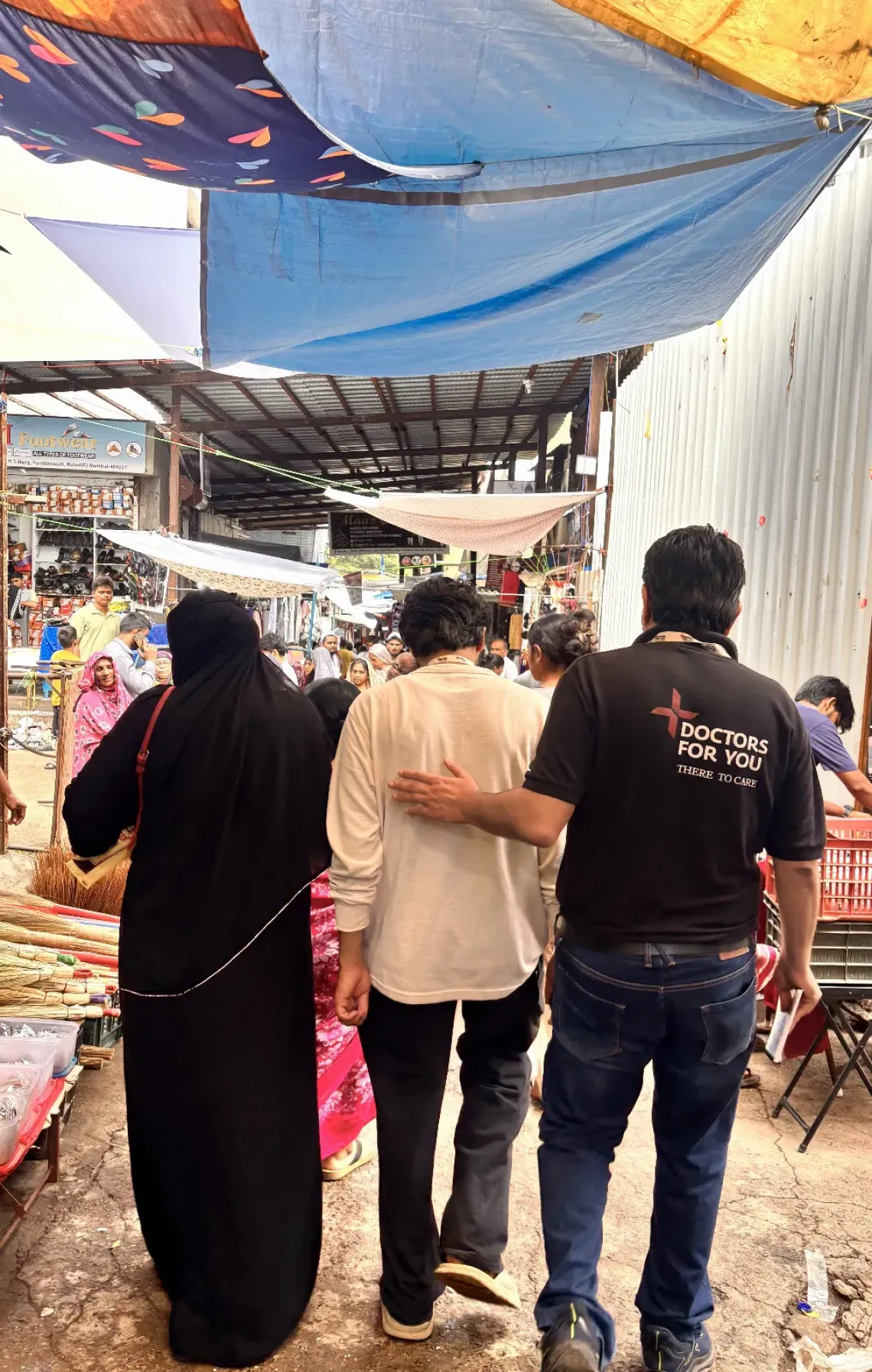
"When the health department approached us, I felt it was our responsibility to support them. Since our community trusted us, we first sought guidance from respected religious scholars. Once the fatwa confirmed that vaccination is permitted and beneficial, we stood firmly behind the campaign."
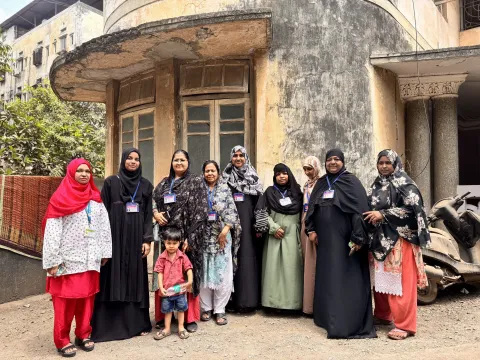
Alongside him stood grassroots champions like Rizwan Charoliya, President of the Charoliya Foundation. Rizwan Charoliya and his team repeatedly engaged families door-to-door who had initially refused vaccination.
“Driven by community trust, our health workers never gave up. They met repeated refusals with patience, reassuring parents with a simple truth: ‘hum bhi chote they’.” Their persistence made all the difference.— Rizwan Charoliya, President, Charoliya Foundation
Children Become Messengers: The ‘Bulawa’ Group
Change didn't just come from the elders. It sparkled in the eyes of the neighborhood’s children.
A vibrant little “Bulawa” (Calling) group of local kids became active community messengers. Armed with bright smiles, infectious energy, and the simple information they learned from community influencers, these children ran from doorstep to doorstep. They became tiny champions, sharing messages on the benefits of timely vaccination with their parents and neighbors and urging them to vaccinate themselves, their younger siblings, and other children in their neighborhood on time.
The breakthrough was nothing short of emotional. After just one major community meeting, the momentum shifted beautifully:
- 12 families stepped forward to vaccinate their children immediately.
- 9 more families joined them the very next day.
As families saw neighbors vaccinating their children and heard consistent reassurance from religious leaders and doctors, others began to come forward.
The Heart of the Matter
While program tracking data showed a drop from 202 to just 46 remaining zero-dose children—a monumental logistical achievement—the truest victory cannot be measured by statistics alone.
The biggest change wasn't the numbers. It was the profound shift in mindset. Through the collective power of doctors, faith leaders, former corporators, dedicated NGO consultants, and the sweet, persistent voices of the little bulawa kids, Families of 156 children chose to begin their children’s vaccination.
Pathanwadi showed that engagement grounded in local language, faith, trusted relationships, and respectful dialogue can reach families whom routine outreach alone may struggle to engage.