Ending Plastic Pollution in Maynaguri, West Bengal
The road that paves the way to a clean and sustainable environment

- English
- हिंदी
Imagine a road that doesn’t just connect a child to school, a mother to healthcare, or a family to their home, but also carries a bold vision. A vision where plastic waste, once clogging rivers and littered across the pavements, is paving the way, literally.
In rural West Bengal, discarded plastics, those stubborn single-use and multi-layer varieties which are usually scattered all around, have found a second life beneath the wheels of progress. Blending plastic into bituminous roads, this initiative is more than infrastructure; it's a transformation.
For 13-year-old Rahul, the bumpy road in his village has transformed into one where he glides with joy on his skates now.
“I lacked a proper surface to practice skating earlier. This road lets me skate twice daily.”
13-Year-Old Rahul Finds His Passion for Skating in Saptibari Village
The use of waste plastic in road constructions is one of the environment-friendly solutions for safe disposal of waste plastic being piloted by the district administration of Jalpaiguri, based on the 2024 Department Order issued under the Swachh Bharat Mission to the Ministry of Rural Development, the Ministry of Housing and Urban Affairs, and the Ministry of Road Transport and Highways.
According to the Swachh Bharat Mission (Grameen) Phase-II operational guidelines, there should be one Plastic Waste Management (PWM) unit in each block for the collection, segregation, and processing of plastic waste. To establish forward linkages, processed plastic may be used in bituminous road construction and manufacturing products of re-used plastic.
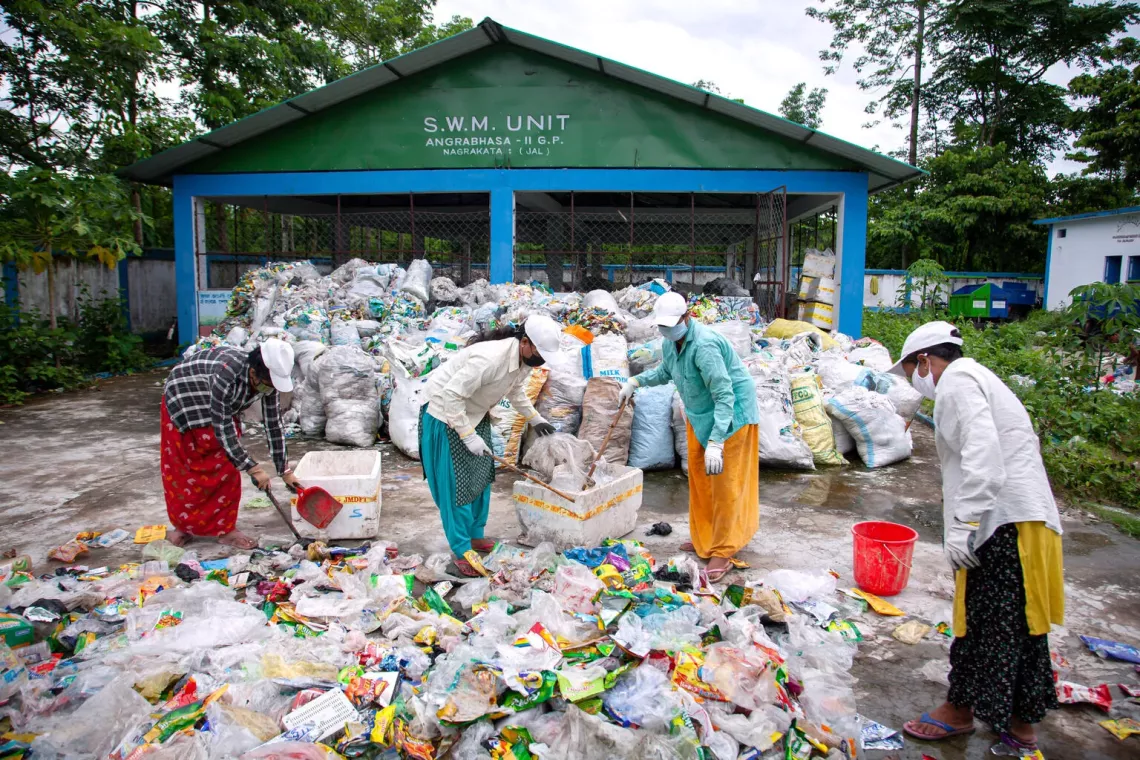
The plastic-bituminous road construction initiative across the block uses plastic waste sourced from the block-level PWM unit in Khagrabari-II Gram Panchayat of Maynaguri, operational since October 2024. The unit receives around 600 kgs of plastic daily from 15 gram panchayats and one municipality of the block.
This volume alone speaks to the scale of plastic waste being managed, most of which is Low-density Polyethylene (LDPE), a prominent plastic pollutant, commonly found in single-use plastics such as polythene bags and multi-layered packaging like food wrappers.

The waste is processed into either finer shreds or granules and sold to contractors/vendors for use in plastic-bituminous road construction and manufacturing waste-plastic products.
The PWM unit is operated by five male and two female workers, who earn a daily wage of INR 202. On the same premises as the PWM unit, a Solid Waste Management (SWM) unit has been operational since 2021. Initially, the local youth were hesitant to join the unit due to the stigma surrounding waste handling, which was often perceived as unclean and harmful.
However, with exposure to this new idea, due to the limited other employment options in the village, and assurance on the provision of PPE kits and quarterly health check-ups of workers, the unit presented a rare opportunity for income while ensuring workers’ safety.

Chaitali Modak, a 35-year-old mother of two, faced scepticism from her relatives and neighbours when she decided to take up work in waste management. But she remained clear about her reasons.
“By doing this ‘dirty’ work, society will improve, and both my children will have a better future.”
At 35, Chaitali Modak Stands Strong as a Sanitation Warrior
Initially driven by financial need, Chaitali soon found a deeper purpose in her work. Over time, it sparked a change not just in her own habits but in those of her family as well. Today, they are more mindful about waste and the environment.
Chaitali’s experience is not unique. All 21 workers of the SWM and PWM in Maynaguri have influenced their families and neighborhoods in similar ways. Their everyday efforts have contributed to less littering, visibly cleaner surroundings, and even a cleaner stretch of the Jarda River that flows through the block.
What started as a job has gradually turned into a quiet movement — one that’s helping Maynaguri become a cleaner and more aware community.

“The plastic waste management and plastic-bituminous road projects are excellent examples of how we can turn an environmental challenge into an opportunity. By converting plastic waste into a valuable resource, we’re not only reducing landfill pressure and protecting our rivers but also building more durable roads that improve rural connectivity and support economic growth. With continued public participation and strong government backing, we can scale these efforts across Jalpaiguri for a more sustainable and resilient future.”
— Shri Raunak Agarwal, ADM & AEO, Jalpaiguri Zilla Parishad
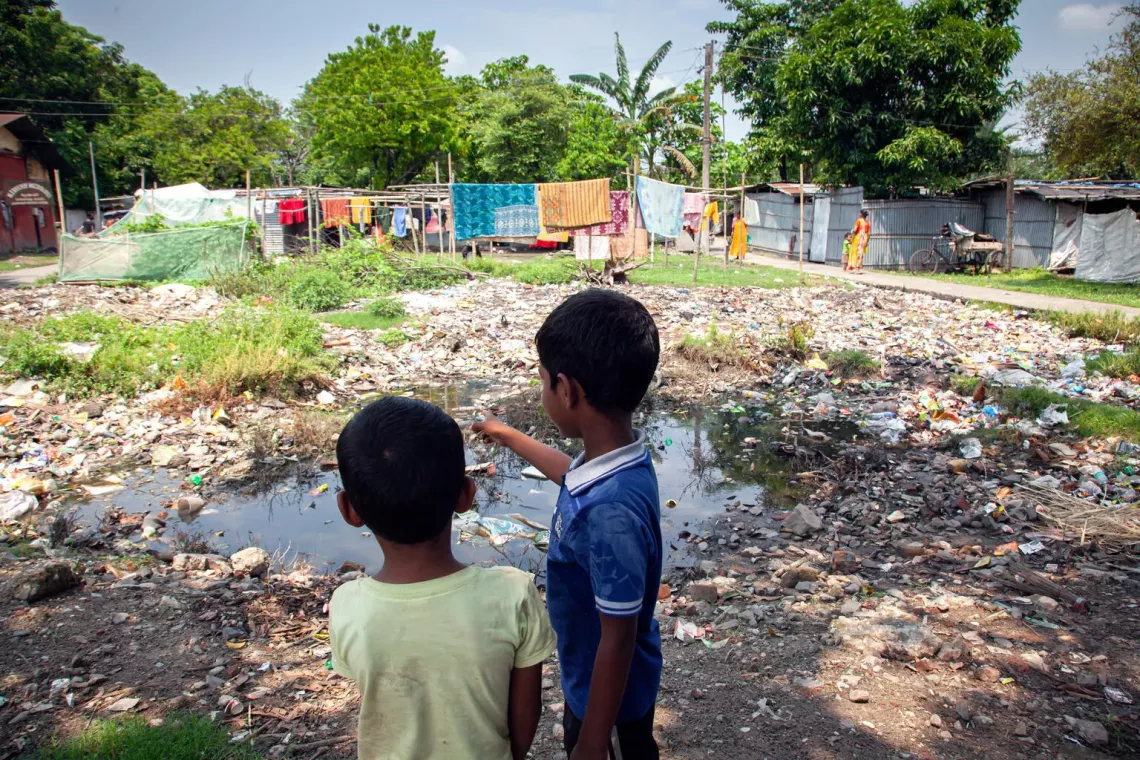
In a nation grappling with one of the world’s highest plastic waste burdens, this initiative transcends mere solutions; it’s a transformative force. By converting discarded plastic into roads, it weaves together innovation, sustainability, and economic empowerment.
Its strength lies in being adaptable, scalable and benefiting communities. With sustained support, this model can scale up nationwide, positioning rural India as a leader in environmental sustainability and stronger local economic growth.

In partnership with the Government of West Bengal, UNICEF has been playing a key role in strengthening rural sanitation through focused state-level support for capacity building and monitoring.
Since 2023–24, UNICEF has supported statewide trainings and Training of Trainers (ToTs) on ODF Plus, with a strong emphasis on SLWM and PWM in rural areas.
So far, 244 km of roads have been constructed using plastic waste in bituminous roads. 221 participants have been provided with hands-on training to operationalise and ensure the effective operation and maintenance of PWM units, engaging unit supervisors, operators, and officials across functional and soon-to-be-functional block-level units.
1,331 sanitation workers have also received targeted training to strengthen frontline implementation. To guide and standardize efforts, the state is now finalizing policy and technical guidelines for SLWM, along with SoPs for PWM, SWM, and Grey Water Management (GWM).
By turning trash into a tool for change, communities are building cleaner futures, one plastic- and bituminous road at a time. What was once a waste now fuels innovation, strengthens resilience, and drives sustainability.