

Justice for children
Working together to strengthen of all parts of child protection systems, including justice mechanisms, to operate in the best interests of the child.
- English
- हिंदी
Children can be in contact with the justice system as a victim, witness or offender. Yet the justice system is often structured to deal with adults, not allowing the necessary space for a child to participate.
A child, particularly as a victim requires additional safeguards to understand the proceedings, and if an alleged or convicted perpetrator, the balance between the punishment and the rehabilitation must lean towards rehabilitation.
Child victims and witnesses of crime are often re-victimized by justice systems that are not adapted to their rights and needs. Professionals – including the police, prosecutors and judges – often lack specialized training in dealing with child victims and witnesses. Related procedures are rarely child-sensitive.
Child victims’ access to justice is often impeded by obstacles such as lack of knowledge about their rights, court and legal representation fees and dependence on adults to bring rights violations to justice.
Children may also be in contact with the judicial system in cases on civil or family law, such as custody, divorce hearings, witnesses to domestic violence, placement in alternative care. Often, like in criminal proceedings, they are not heard.
Children’s cases are often processed through justice systems designed for adults that are not adapted to children’s rights and specific needs.
In breach of the principle that the deprivation of liberty be used only as a measure of last resort and for the shortest appropriate period of time, deprivation of freedom remains a common form of punishment for juvenile offenders, who are often detained for several years and, in some cases, for indeterminate periods of time.
Across South Asia, children are also detained in the context of immigration, mental health or for their own ‘protection’.
While decisions to administratively detain a child may vary in context, rationale, and legal framework, it is common for the decision to be made not by a judge or court, but by another body or a professional who is not independent of the executive branch of government.
Setting the minimum age of criminal responsibility too low also has a detrimental effect on children. The minimum age of criminal responsibility in India is 7, which is below the international standard.
The arrest, detention, or imprisonment of a child should be used only as a measure of last resort and for the shortest appropriate period. Laws, regulations, and policies should be adapted accordingly, and professionals trained, and community-based alternatives established where they do not exist.
UNICEF promotes alternatives to detention, such as diversion, as well as restorative justice approaches and alternatives to deprivation of liberty that are generally more conducive to the realisation of children’s rights. They are also in the interests of public safety and have proven to be more cost-effective.
Justice for children is an approach designed to benefit all children in contact with the justice system, ensuring they are better served and protected. The approach promotes the strengthening of all parts of child protection systems, including justice mechanisms, to operate in the best interests of the child.
UNICEFs Role
UNICEF works with those professionals to put in place child-sensitive procedures for child victims and witnesses of crime, and professionals are trained accordingly.
Such procedures, for example, preclude contact between the child and the alleged perpetrator, allow for the child’s full-fledged participation in the process and ensure that he or she is treated with dignity and compassion at all times.
We work to ensure that all children, including excluded and marginalised children, are informed about their rights and about the avenues to seek redress for violations and receive support during these processes.
UNICEF supports the training of police, prosecutors, judges, lawyers, social services and health professionals to effectively protect children in contact with the justice system.
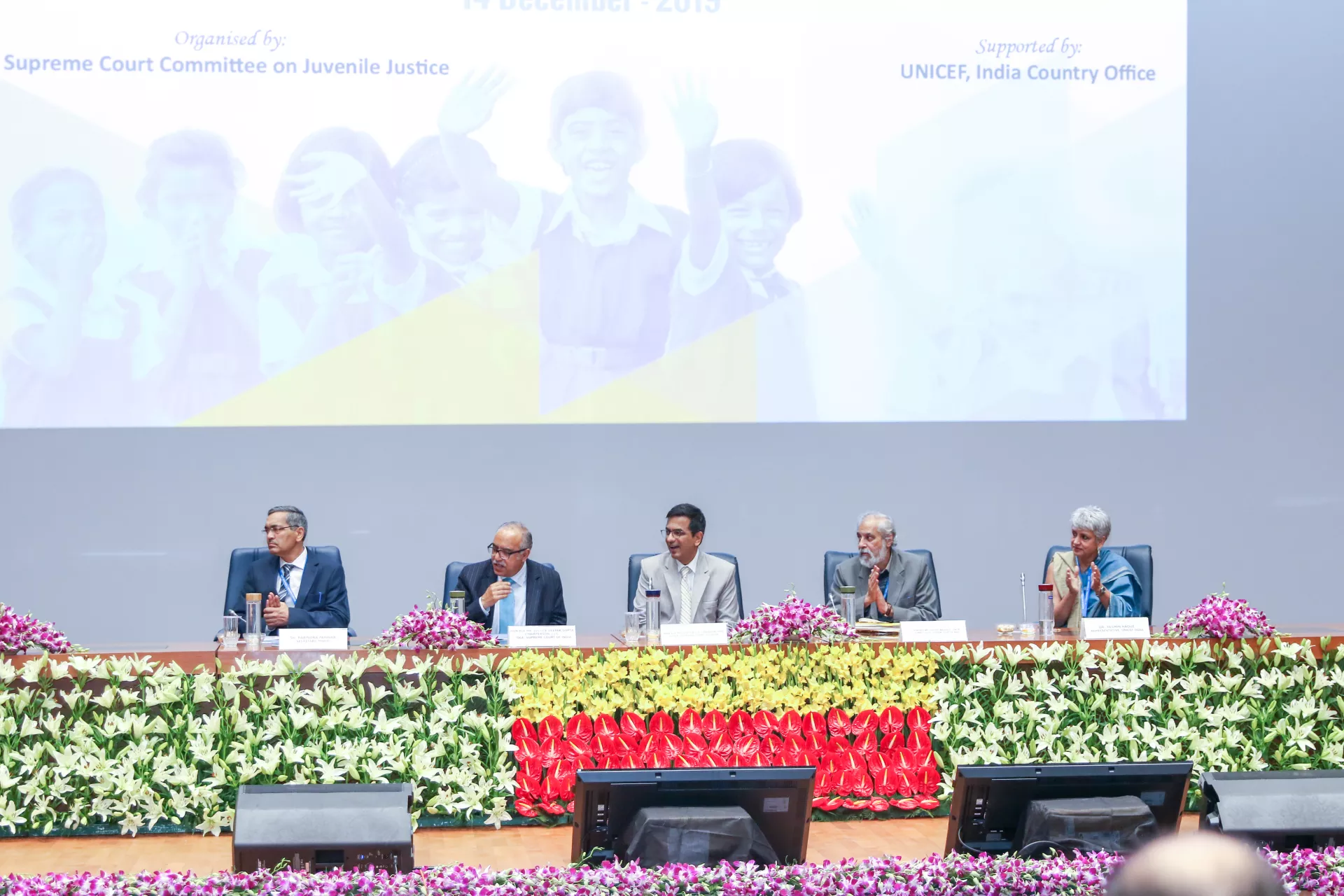
In partnership with the Supreme Court, UNICEF India supported a series of state-level consultations to review the status of rehabilitation of children in the justice system, with a special focus on sexual abuse victims and children in conflict with the law, which led to innovations and improvements in oversight and accountability mechanisms.