UNICEF India, PIB, Western Zone and AIIMS, Nagpur Conclude Two-Day Media Capacity-Building Workshop to Strengthen Reporting on Childhood NCDs
Media Persons Gain First-Hand Exposure to Childhood Non-Communicable Diseases Care at Centre of Excellence, AIIMS Nagpur
- English
- हिंदी
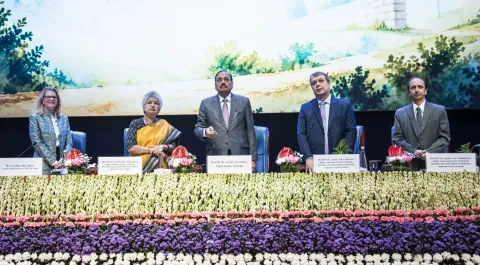
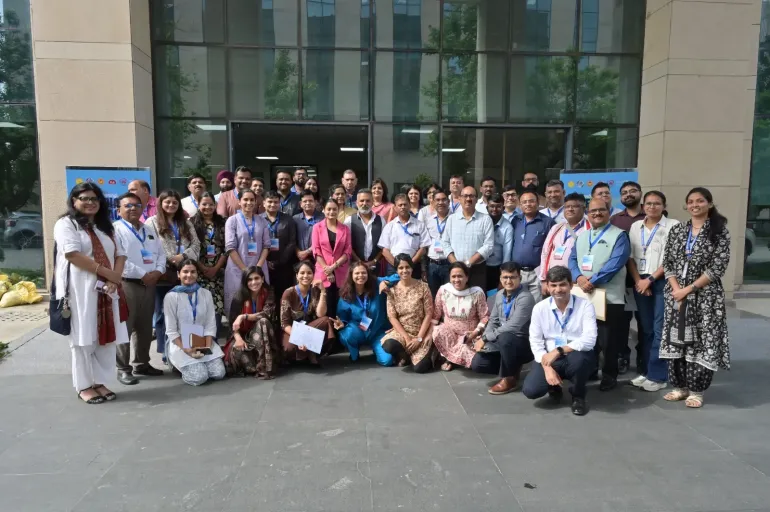
Nagpur – Over 30 media persons from Western India came together to strengthen coverage on childhood non-communicable diseases (NCDs) at a two-day media capacity-building workshop that concluded today at AIIMS, Nagpur.
The workshop was co-organised by UNICEF India, Press Information Bureau (Western Zone), and AIIMS Nagpur. During the workshop, the media persons gained direct exposure to how childhood NCDs are diagnosed, treated, and managed, as well as best practices for enhancing health reporting.
The workshop was aimed at highlighting the rising risk of NCDs among children aged 5 to 9 and adolescents aged 10 to 19. While childhood NCDs in tribal and rural parts of western and central India often unfold alongside the limited access to diagnosis and specialist care, urban centres are witnessing a parallel rise in conditions such as childhood obesity, diabetes and mental health disorders, driven by sedentary lifestyles, screen time and dietary changes. Childhood conditions frequently remain undetected until complications develop, whether in rural, tribal or urban settings.
Speaking on the occasion, Smita Vats Sharma, Director General, Press Information Bureau (Western Zone), Ministry of Information and Broadcasting, said, “Public health reporting shapes awareness and public action. Journalists have an important responsibility to present evidence-based information and tell stories that help citizens understand emerging health challenges affecting children.”
“Childhood non-communicable diseases have a long incubation period and start from childhood; hence, it is imperative and important to demand early diagnosis, continuous care and strong public health systems. AIIMS Nagpur is committed to developing models of care that can be scaled across the country. The media can help families recognise symptoms early and encourage timely treatment.”
Dr Tushar N Nale, ADG, DGHS, Ministry of Health and Family Welfare, gave an overview of the government’s NCD programme.
Zafrin Chowdhury, Chief of Communication, Advocacy and Partnership, UNICEF India, said, “When the media reports on childhood NCDs with accuracy and compassion, it shines light on a hidden issue, encourages early detection, challenges stigma, and reinforces that these conditions are preventable and treatable.
UNICEF is proud to partner with PIB, AIIMS Maharashtra and journalists to amplify these stories. Together, we can inform, inspire action, and help children survive and thrive.”
Earlier this year, the Government of Maharashtra signed a Memorandum of Understanding with AIIMS Nagpur, with strategic support from UNICEF India, to strengthen prevention and management of childhood NCDs across the state. The partnership positions AIIMS Nagpur as the technical Centre of Excellence for this work.
Sanjay Singh, Chief of UNICEF Maharashtra, said, “Childhood NCDs are no longer rare conditions. They are an emerging public health priority. Through our partnership with AIIMS Nagpur and the Government of Maharashtra, we are working to strengthen early detection, referral systems and quality care so that every child receives the support they need.”
A highlight of the workshop was a visit to the Centre of Excellence for childhood NCD at AIIMS Nagpur, where journalists met doctors, children and caregivers and saw first-hand the realities of long-term care. Journalists also took part in an interactive quiz that tested and built their understanding of childhood NCDs, and worked in groups to develop story ideas and reporting angles they can carry back to their newsrooms.
The workshop began with a curtain-raiser session featuring an insightful address by Dr Meenakshi Girish, Professor & Head, Paediatrics, AIIMS Nagpur, on understanding childhood NCDs.
The workshop also put a spotlight on Government of India resources available to media persons for health reporting and on how journalists can make use of PIB for regular, up-to-date content on health-related news in multiple languages. Focus was placed on easily accessible cross-Ministry resources such as NFHS and SRS surveys, the POSHAN-tracker website and others.
The workshop marks the start of a sustained engagement that will run through to NCD Week in September 2026. Over the coming months, participating journalists will receive continued support with data, expert contacts and story leads, and will be able to share their published stories on a dedicated online dashboard. Selected reporting will be showcased at a flagship event in Mumbai during NCD Week, bringing together delegates from 20 countries.
The initiative is part of a broader effort to improve public understanding of childhood NCDs and strengthen evidence-based health reporting.
Media contacts
About UNICEF
UNICEF strives to uphold the rights of every child, protecting them from harm and all forms of discrimination, so that they can grow up healthy and educated to reach their full potential. This work is in line with UNICEF’s globally recognized mandate and its support of national priorities.
For more information on UNICEF India and its work visit https://www.unicef.org/india/. Follow us on Twitter, Facebook, Instagram, Google+ and LinkedIn