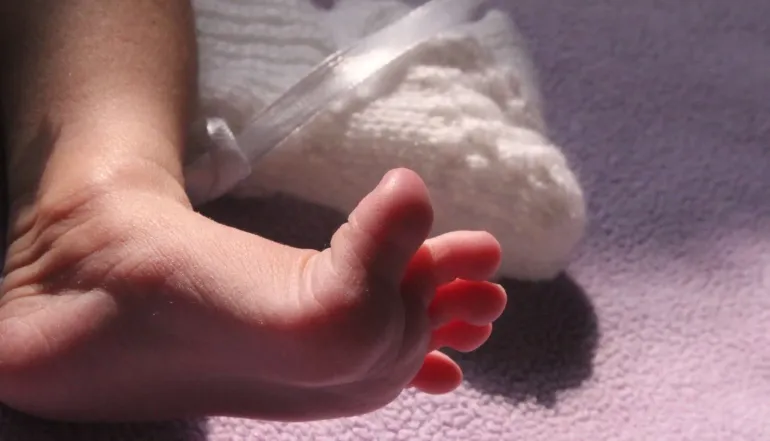
In between feeds are some of the most priceless moments in a new mother’s life. I came to understand this 11 years ago, only when I gave birth to my daughter.
I would try to steal a few minutes to take a quick shower, tidy up her clothes, or, if she had been kind enough to sleep a little longer, knit a tiny mitten for her little feet. Every pause between feeds felt like an invitation to fit in a hundred little tasks.
Yes, motherhood is vast, and young mothers experience something like rebirth.
But today, I want to speak about something quieter and deeper: how a mother does not simply become a parent overnight. She quite literally becomes food for her child.
I often wondered how my daughter’s twinkling eyes looked at me with such love and desire. I now know that perhaps more than half of that expression came from the fact that I was her source of nourishment.
And yet, it was never only that. I played with her, spoke to her, sang to her, and every small response from her made my day as our bond grew quietly, beautifully stronger.
And yet, there was so much I could not give her in those early days.
She missed receiving the nutritious first milk, despite my knowing how important it was for an infant. Why? Because I was still unconscious when the nurses had already given her top feed.
After that, the struggle began. Or perhaps I should say she struggled more than I did to latch properly and for my milk supply to regulate. I was told about the demand and supply cycle. The more the baby feeds, the more milk the mother produces.
But feeding every two hours quickly became exhausting. Since she could not latch well, each feed stretched to nearly an hour. Then, almost before I could breathe, it was time to feed again.
My in-between-feed moments were shrinking, and my breasts were sore.
Because the latch was weak, the intervals between feeds grew shorter, and even my little playtime with her sometimes suffered as I was stretched thin.
Breastfeeding is also a deeply hunger- and thirst-inducing process for the mother. And what she needs is not just a nutritious meal waiting on the table. In those early days, she often needs that meal to be made and served to her too, because the infant may not let her move away for even a moment. Family members were a big help, no doubt, and that is where the true meaning of support and nurturing care came in.
A new mother carries so much, in her body, in her mind, and in her heart. When breastfeeding is filled with challenges, it can feel overwhelming.
Looking back, I realize that a new mother is in one of the most vulnerable phases of a woman’s life. The right support from family, community, and doctors can make a lasting difference, not only for her but for the child as well.
An informed caretaker in the hospital can oversee the process. An aware hospital staff can step in when breastfeeding becomes difficult. Caring family members can look after the mother’s nutritional needs. A supportive partner can take turns burping the baby and be there to share other responsibilities.
Not every mother gets that support. Not every family understands how essential it is for her to have a nutritious meal, enough rest, and time to heal. This cannot rest on the mother alone. Family, media, workplaces, communities must all come together.
Yes, feeding your child for two years is one of the best healthy starts you can give an infant. But for mothers who are unable to do so fully because of certain factors beyond their control, there are ways for babies to receive nourishment. What matters is not judgment, but support.
Flexible workplaces are equally important. Mothers need spaces and systems that allow them to feed their children without fear or discomfort. At my workplace, I had access to a baby room, and it made me feel far more relaxed and supported. That simple provision made a real difference.
Also, baby feeding is not something to hide. It is simply a child eating, and a mother doing what only she can do with love, patience, and her body. A mother gives life in the quietest, fullest ways, and caring for her child, she should never be left uncared for, because that care matters for every child.