When Rohini first met Savitri at a routine antenatal health camp in Nashik district, she noticed something that could easily have gone unnoticed.
Savitri was quiet. Her shoulders drooped. She avoided eye contact. She had not attended any antenatal check-ups before. As the conversation unfolded, the weight she had been carrying began to surface.
At 27, she was already raising four children. Her family wanted another son. Her husband and father-in-law struggled with alcohol use. Household responsibilities, farm work, financial pressures and anxiety about the future had slowly eroded her sense of well-being. What appeared at first to be silence was, in fact, distress.
Because a new maternal mental health initiative had recently been integrated into routine care in her area, Rohini did something many health workers had never previously been trained to do: she asked questions about emotional well-being. The moment the screening began, Savitri broke down in tears. Further assessment suggested signs of depression. The standard referral pathway required her to travel nearly 150 kilometres to access specialist mental health services. She declined.
For many women, that might have been where the story ended.
Instead, the local health team adapted.
Rohini and the ASHA worker began visiting Savitri regularly. Sometimes they met at her home. Sometimes they spoke across the road at a neighbour's house where she felt safer talking. They provided counselling, maintained contact with specialists, encouraged her to attend check-ups, helped her navigate referrals and gradually involved family members in conversations about her health and well-being.
Progress did not come overnight.
It came through trust.
Over time, Savitri began attending appointments. She resumed taking her supplements. Her family became more supportive. Her mother-in-law started accompanying her to check-ups. Her husband became more engaged in her care. Eventually, she gave birth safely and both mother and child continued to receive follow-up support.
Savitri's story is deeply personal.
But it is not unique.
And that is precisely why it matters.
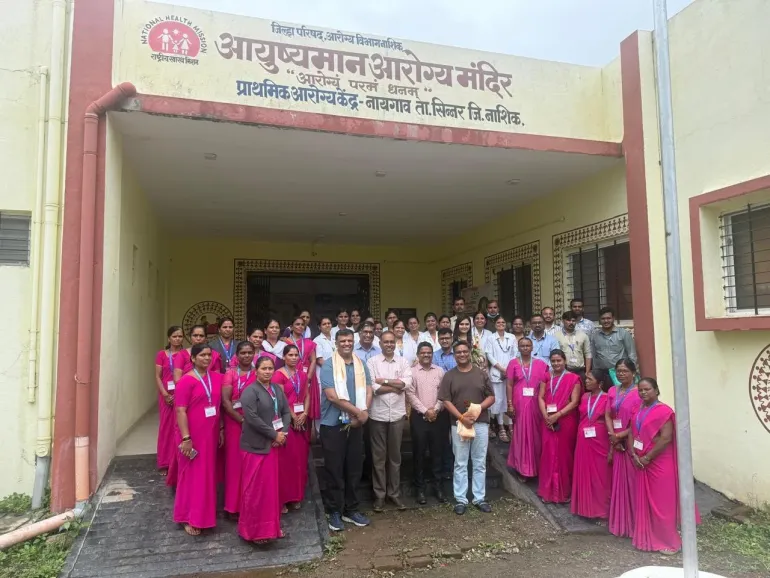
When I visited Nashik recently, another conversation stayed with me.
An ASHA worker told me about a woman from her village who had died by suicide years ago. At the time, she did not have the training, tools or support to recognise what that woman was going through. As we discussed the maternal mental health initiative.
She paused and said quietly, "If we had this programme then, maybe we could have saved her."
The room fell silent.
We often talk about systems in terms of policies, budgets, protocols and indicators. Yet, in that moment, the value of a stronger system felt much simpler. It was about giving frontline workers the confidence to notice distress, the skills to respond, and somewhere to refer women before a crisis becomes a tragedy.
That conversation has stayed with me ever since.
The hidden challenge hiding in plain sight
Pregnancy and childbirth are often discussed in terms of physical health. Yet for millions of women, they are also periods of profound emotional and psychological vulnerability.
Perinatal mental health conditions, including depression and anxiety during pregnancy and the first year after childbirth, remain among the most under-recognised challenges in maternal health. Evidence from India suggests that postpartum depression affects approximately 22 per cent of mothers. Women experiencing poverty, violence, difficult childbirth, poor nutrition, weak social support or previous mental illness face even greater risks. Pregnant adolescents often encounter additional pressures, including stigma, interrupted education and reduced agency.
The consequences extend far beyond mental health alone.
They can influence care-seeking behaviour, maternal nutrition, pregnancy outcomes, breastfeeding, parent-child bonding and children's cognitive and emotional development. In many cases, mothers suffer in silence, not because support does not exist, but because systems are not designed to identify and respond to their needs.
The challenge is not the absence of commitment.
It is the absence of integration.
Mental health, maternal health, adolescent services and protection systems often operate separately, while women experience them all simultaneously.
A different approach from Nashik
Over the past two years, an important lesson has emerged from Nashik.
The most significant achievement has not been that individual women received support.
It has been that the public health system learned how to provide that support.
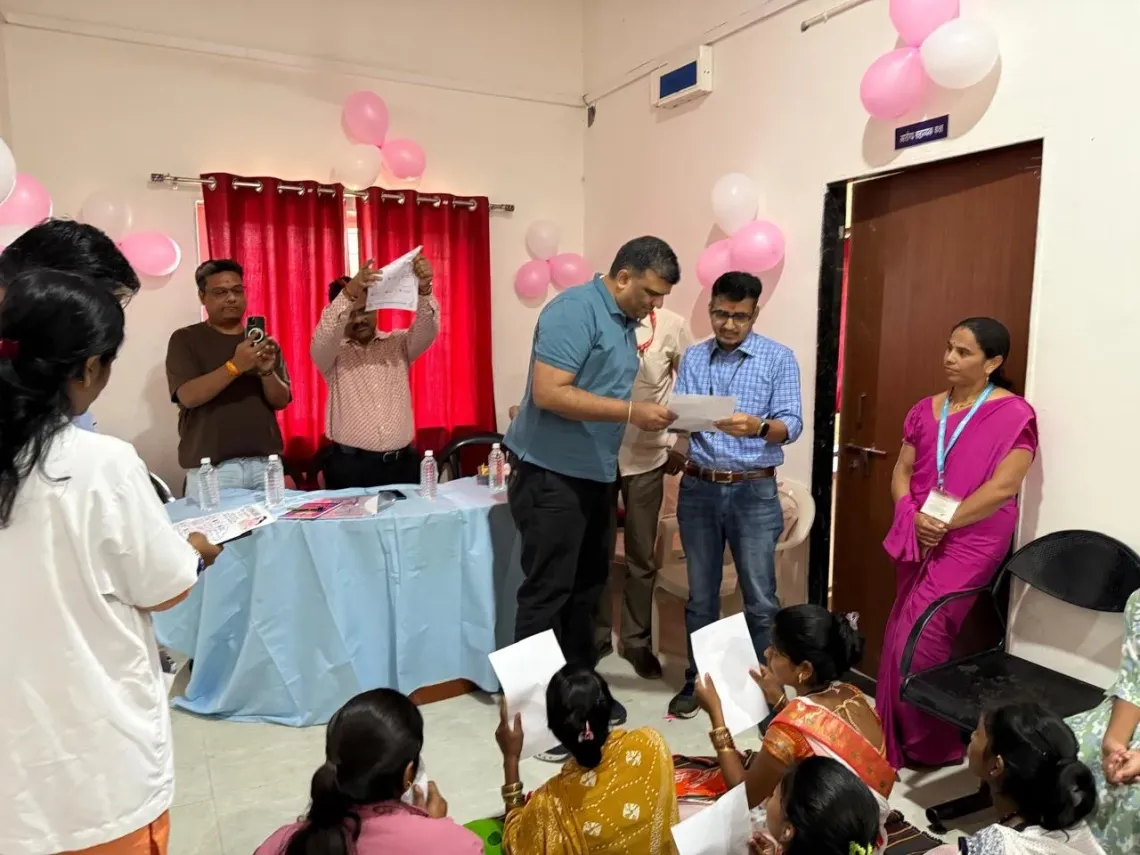
Rather than creating a parallel programme, the initiative focused on embedding maternal mental health within existing government systems and frontline services. Screening, counselling, referral and follow-up were integrated into routine maternal and child health platforms. Health workers received training. Referral pathways were strengthened. Data systems were developed. Communities were engaged to reduce stigma and encourage support-seeking behaviour.
The result is not a stand-alone project.
It is a practical demonstration that maternal mental health can become part of routine care.
That distinction matters.
Too often, successful pilots remain isolated examples. They generate evidence but never become systems. The real value of the Nashik experience lies in showing how existing health systems can recognise, support and respond to maternal mental health needs within everyday service delivery.
From one district to a stronger system
The question today is no longer whether maternal mental health should be integrated into public health programmes.
The evidence increasingly suggests that it must be.
The more important question is how.
How do we move from isolated examples to institutionalised practice?
How do we ensure that support does not depend on where a woman lives or whether she happens to encounter an especially committed frontline worker?
How do we make maternal mental health as routine as antenatal check-ups, nutrition counselling or immunisation?
Answering these questions requires more than training.
It requires stronger systems.
Policies that recognise maternal mental health as a public health priority.
Workforces equipped to identify and support women early.
Referral pathways that function reliably.
Community engagement that reduces stigma.
Digital systems that track progress and accountability.
And sustainable public financing that allows successful approaches to endure.
These foundations turn innovation into scale.
The opportunity ahead
As I left Nashik, I wasn't thinking about a project.
I was thinking about a possibility.
For years, India has invested in ensuring more mothers survive pregnancy and childbirth. That work has saved countless lives and transformed maternal and child health outcomes across the country.
But perhaps the next frontier is ensuring mothers don't just survive.
They thrive.
What gives me optimism is that this does not require building an entirely new system. The building blocks already exist. The health workers are there. The government platforms are there. The community networks are there.
Nashik has shown that maternal mental health does not have to remain a niche issue addressed through isolated pilots or specialist programmes. It can become part of the routine care that millions of women already receive.
The question is not whether we can afford to integrate maternal mental health into maternal healthcare.
The question is whether we can afford not to.
Because behind every statistic is a woman like Savitri.
And somewhere today, another frontline worker is wondering whether she has the tools to help.
I believe we can give her those tools.
And in doing so, give many more mothers the support they deserve.