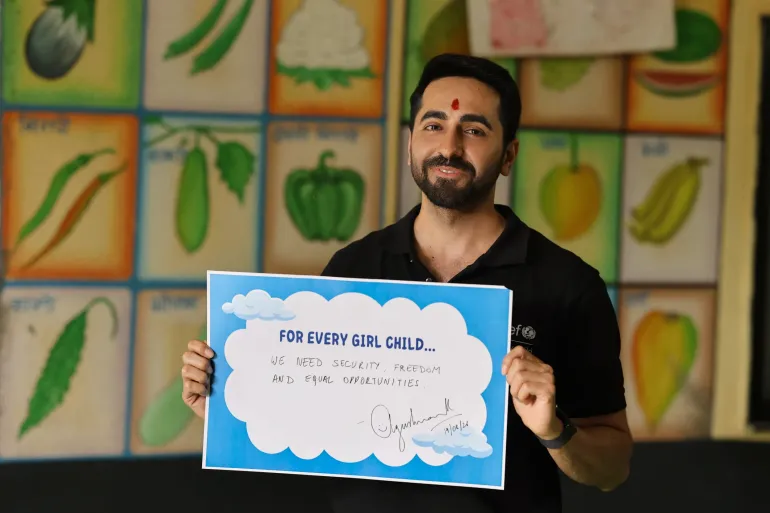
I have walked red carpets. I have stood in front of a thousand cameras and felt rather unmoved.
Those moments in spotlight, I realized, did not quite prepare me for the heartwarming welcome extended to me with dhol beats and lezim sticks in Chandai Tepli village of Jalna district in Maharashtra.
This was my first field visit as UNICEF India's National Ambassador. To be honest, I didn't know what to expect. I had read the briefing notes about seasonal migration, kinship care, numbers and statistics. But numbers don't necessarily tell you for about real-life impact.
UNICEF's National Ambassador visit took me to Jalna district in Maharashtra’s drought-prone Marathwada region, where seasonal migration has shaped the rhythm of life for generations. Every October, as the fields dry up and work runs out, thousands of families pack up and leave to find a livelihood elsewhere – to sugarcane farms, brick kilns and construction sites, often taking their children along into unstable and unsafe conditions.
The children get little or no access to schools, healthcare, or healthy diets. Sometimes they are left behind with grandparents carrying a different kind of strain.
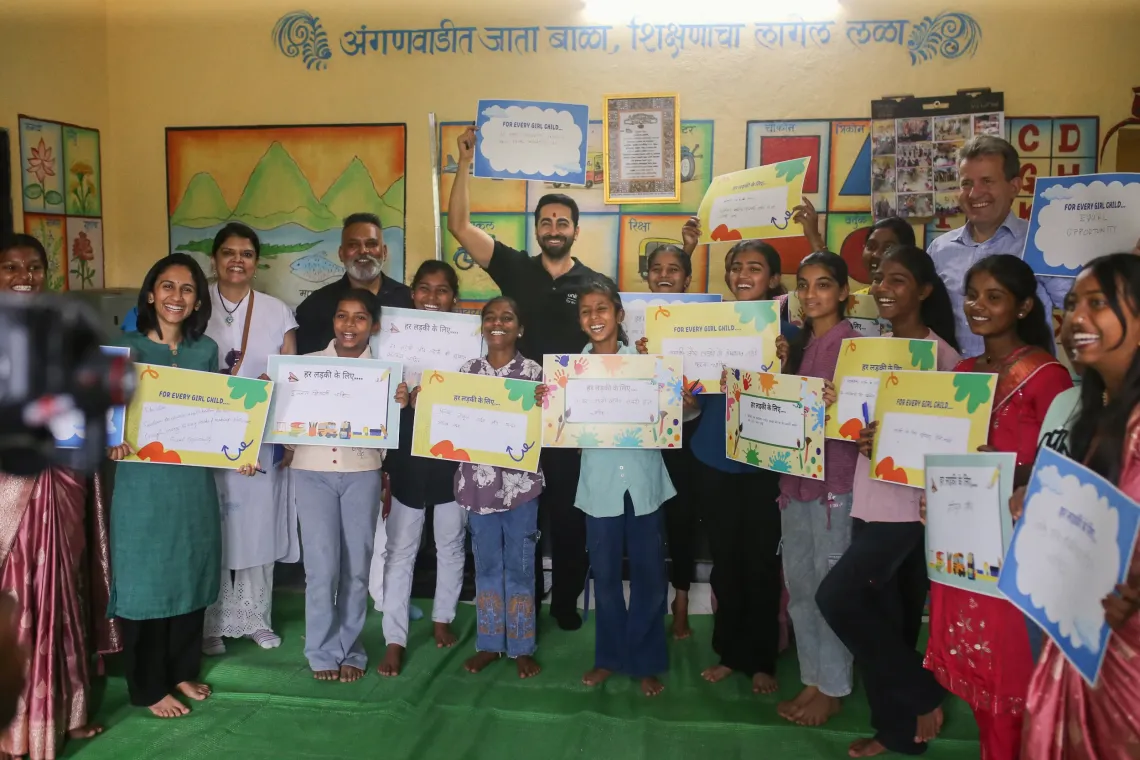
For over a decade, Jalna district administration has worked with UNICEF and local NGO partners, SACRED and Swaraj to change that story of children through a community-led kinship care model. The modality supports children stay rooted in their villages, cared for by trusted family or neighbours, supported by a network of young volunteers called Balmitras and connected to school, healthcare and psycho-social support.
In my meeting with the District Collector of Jalna, Ashima Mittal, I realized the impact of strong leadership in institutionalizing the model, reflecting her belief in its potential to scale. Today, years of that quiet, consistent and patient work resulted in thousands of children receiving support across hundreds of villages and a whole ecosystem of care built by ordinary people that I saw for myself at Chandai Tepli village.
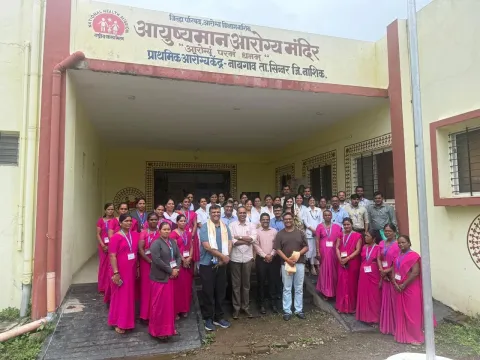
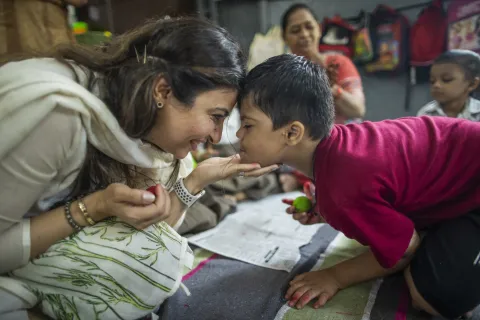
Children were waiting at the school entrance as we reached the village by midmorning. Someone put a tilak on my forehead and handed me a bunch of flowers. For a moment, I just stood there, absorbing the simple acts, as children and the community surrounding me in waves.
We entered a classroom, and sat down with the Sarpanch, teachers, ASHA workers, and a room full of people who have invested years holding a village together. They spoke in detail about what triggered migration, how families leave every October for the sugarcane fields, some taking children with them, while some leave them behind. It made me reflect on how casually we use the word “migration” in conversations. In the reality of these village, it is a compelled separation every single year.
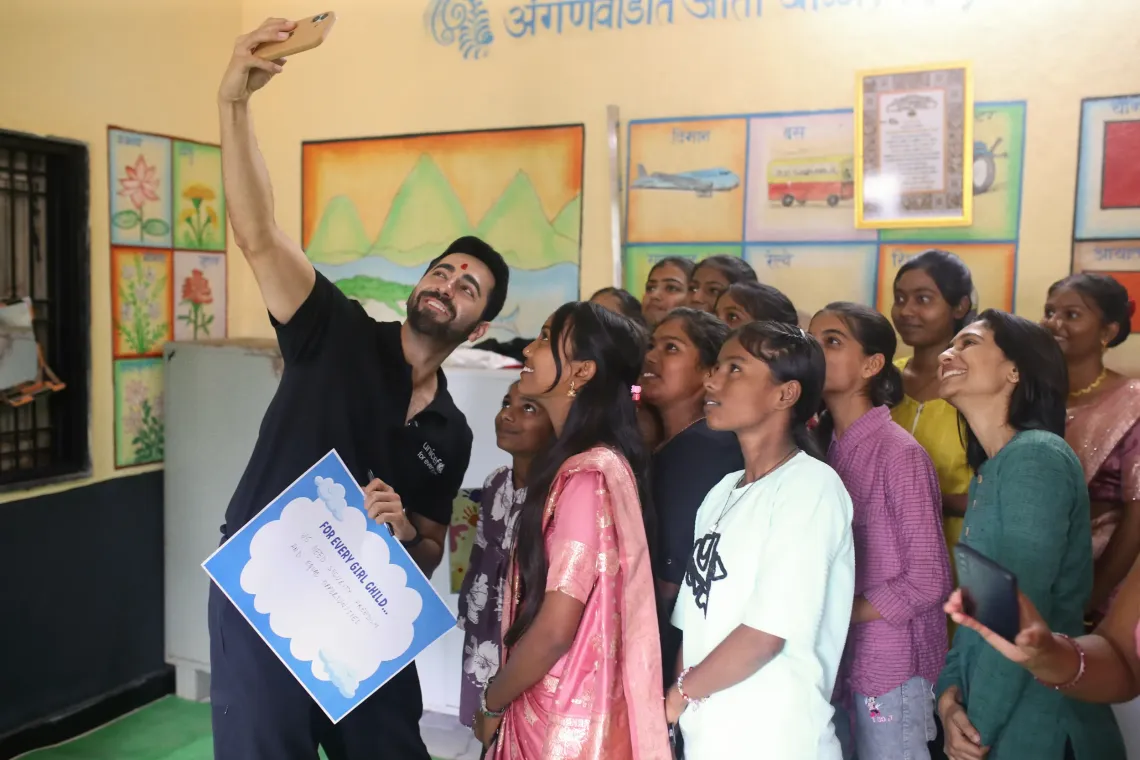
I needed to learn more. Ten girls sat with me in a circle on the ground. Their stories poured in even without an icebreaker; the girls were bold enough to speak up about their lived experiences. Together, we then wove a ‘web of hope,’ passing a ball of yarn around, each of us saying one wish for girls everywhere.
By the end, we were all joined together, literally, by a web of string and words like safety, education, joy. I don’t think I have ever felt more connected to a bunch of young people I had just met
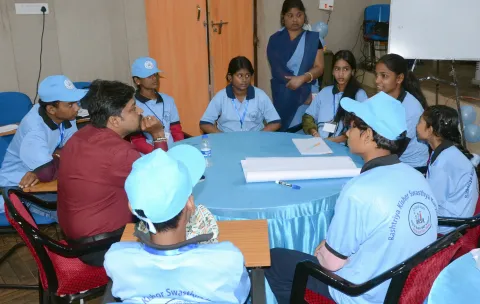
The Balmitras, young peer volunteers, some still in in their teens and others just beyond, who have lived through the effects of migration they now help other children to avoid. Their powerful lived experiences guide and support children facing similar circumstances.
By championing children’s rights, safety and well-being, they help children stay in school and reduce their vulnerability to child labour and child marriage, so that every child has the support and opportunity to grow, learn and thrive. Their work brings to life the protective intent of India’s laws, including the Juvenile Justice (Care and Protection of Children) Act, 2015, which marks 10 years since it came into force.
And then I met Radha aaji and Uttam aajoba, grandparents who chose to stay rooted in their village after an unimaginable loss, so their grandchildren could keep going to school instead of following the harvest.
I visited Jalna to better understand UNICEF's work on the ground. I returned with something far more valuable. It was a powerful reminder that childhood, safety, and well-being are not abstract ideals. They are built every day through the quiet dedication of people who rarely seek recognition and often work far away from the spotlight. I was privileged to witness it.