“Being labelled as ‘Baya (mad) or Bhakua (idiot) does make us feel dejected, but it hurts even more, when they ignore us, stop listening to us or make us feel alienated.” These were the voices of adolescents from the tribal community of Koraput, Odisha, when asked about how mental health stigma look and feel in their daily life.
“We do not know whom to tell our problems or seek help. Some of the people we have known often laugh and label us, so it’s better to stay silent.”
These words reveal painful reality of tribal adolescents who prefer to suffer silently than being ridiculed by their own people whom they trust.
Adolescents and Mental Health
According to the National Crime Records Bureau (Accidental Deaths & Suicides in India, 2024), Odisha, with 15 million adolescents, consistently reports over 5,000–6,000 suicide deaths annually, with a gradual increase over recent years.
Mental health conditions such as depression and anxiety are some of the underlying factors which adolescent girls and boys experience due to gender discrimination, early marriage, academic pressure, social restrictions and harmful social norms. The insights from the National Mental Health Survey 2015-16 estimates suggest that only 7–9% of adolescents experience diagnosable mental health disorders, with a larger proportion experiencing emotional distress that often goes unrecognized.
These challenges compound in tribal and remote districts, where geographic isolation, poverty, limited access to adolescent-friendly health services and low mental health literacy exacerbate risks. Stigma and silence around mental health issues continue to impede early identification and help-seeking behaviour.
Adolescent Voices Matters
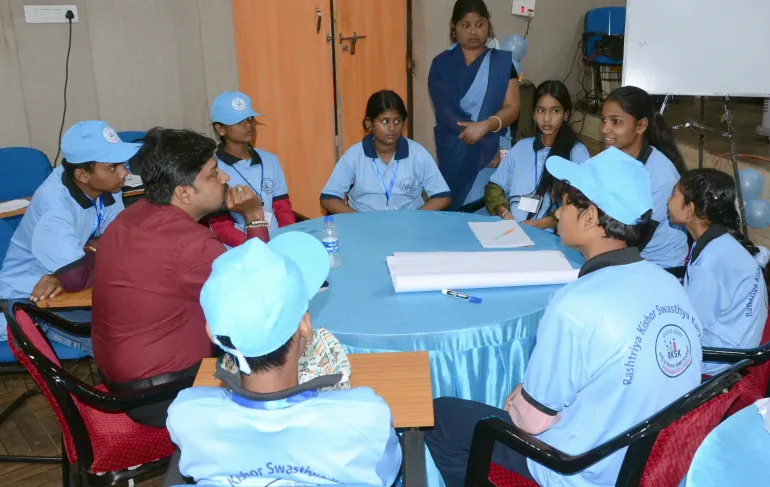
To understand adolescents’ perceptions of stigma, myths and social barriers that restrict help-seeking for mental health care and support, an interaction was organized with 40 adolescents and young people from tribal communities in Koraput. The session was conducted in collaboration with the Health and Family Welfare Department and the Women and Child Development Department, Government of Odisha, along with The George Institute for Global Health.
The participants were divided into five groups. The first four groups deliberated on the four themes:
- What does stigma look and feel like?
- What happens when someone is labelled or excluded?
- Why do they choose silence?
- What can make it easy and safe to seek help?
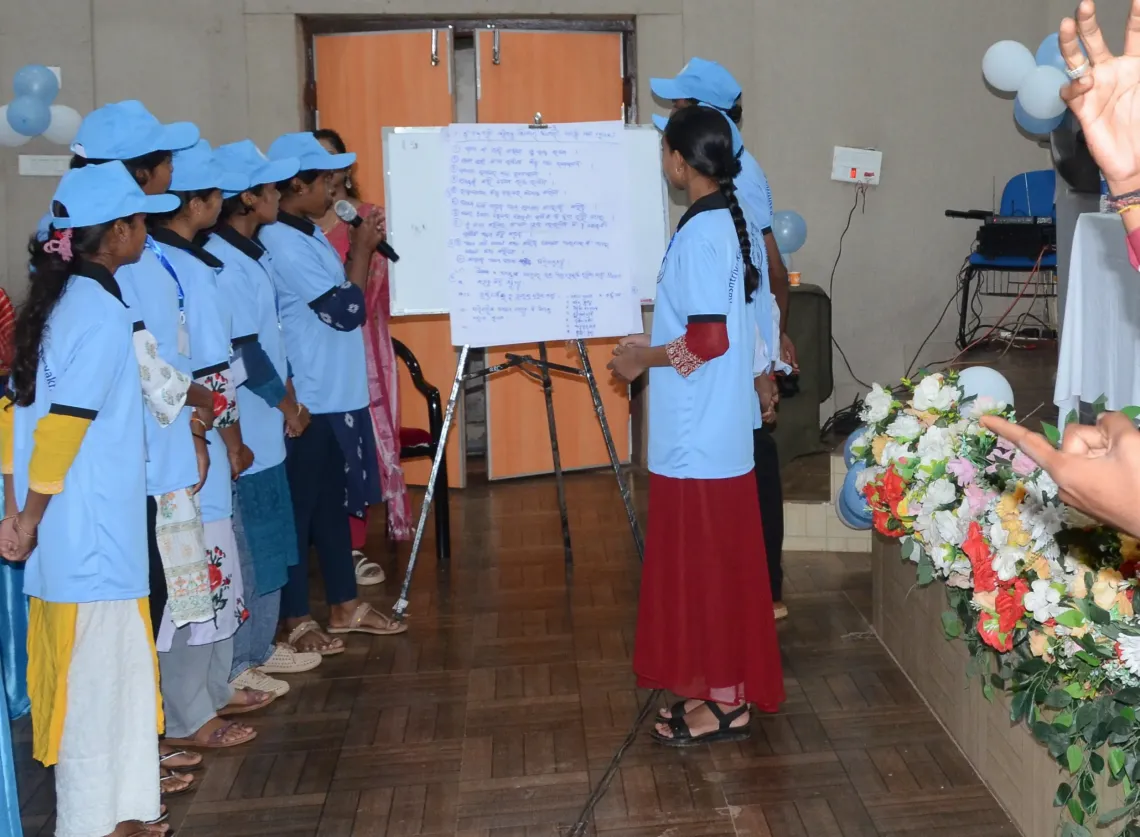
After intense group discussion, four groups narrated their lived experiences, which calls for immediate attention and action.
The composite voices inspired by the group discussion are outlined below:
- “Calling us Baya (mad) or Bhakua (idiot) hurts. But sometimes it hurts even more when people we know avoid us, exclude us, or stop listening to us. In due course, we are made to feel, maybe, that we don’t matter to them.”
- “When people laugh at us, humiliate us or ridicule us, something changes inside us. We lose confidence. Initially we hesitate, and later we stop engaging with our peers and elders in the family, schools and community. We prefer to stay away, not just want to be left alone, but being alone hurts less than being disregarded again and again.”
- “There are times when we want to say, ‘we are not okay.’ But then we are even scared to think, - of our parents scolding, friends laughing, and community gossiping. When you don’t know who will understand and who will judge you, silence is the best option, and we feel safe. So, we smile, stay quiet and keep all the distress inside.”
- “We may not always need someone to have all the answers. Sometimes, we just need someone who will sit beside us, listen without laughing, and say, ‘I am here for you.’ When we know we will not be judged, finding the courage to speak becomes a little easier.”
- “Before asking us to speak, give us someone whom we can trust to listen.”
These adolescent voices strongly illustrate how the fear of stigma creates an invisible barrier to seeking care and support. Silence with a smile is a preferred defence mechanism against the pain of being ridiculed, humiliated and judged. They expressed that the bruise of exclusion is more than verbal abuse. Young people need safe, trusted, and non-judgmental support to build the courage to speak up.
The fifth group discussed being co-creators of change.
Adolescents as co-creators of change
The fifth group proposed practical ways for adolescents and young people to be part of the solution. They called for safe spaces where they can interact with trusted people. Rather than relying only on traditional interventions, they advocated peer-led creative storytelling, playback theatre and social media as ways to challenge stigma.
“Don’t only tell us to speak up without creating spaces where we don’t feel safe. Let us talk to our friends, families and teachers. Let us use our stories, theatre, videos and voices to reach other young people. If stigma is making adolescents silent, then perhaps our voices can help break that silence.”
Role of Social and Behaviour Change (SBC)
Adolescents’ voices call for focused social and behaviour change engagement not for them but with them. Stigma and discrimination around mental health are not caused only by a lack of knowledge or awareness; they are rooted in deeply ingrained harmful social norms. Encouraging adolescents to speak up must therefore go hand in hand with creating an enabling environment where they can express themselves without fear of judgment or ridicule.
SBC engagement helps shift the focus beyond adolescents to the wider ecosystem where friends choose empathy over humiliation, parents listen before judging, teachers and community workers notice and respond with care, and communities replace ostracization with acceptance. It also means creating safe spaces where seeking support is seen not as weakness, but as positive and courageous behaviour.